



Reliability Engineering Fundamentals: Definition, Objectives, and Practical Techniques
How do you evaluate the quality of the products you purchase? Traditional factory‑based quality control checks whether a product meets predefined specifications at the point of sale. Yet, if you find yourself filing warranty claims repeatedly, you’re not truly buying a quality item.
Reliability engineering adds the dimension of time to this equation. Instead of asking only whether a product performs on day one, we ask whether it will continue to function reliably under normal operating conditions for as long as possible.
Beyond product design, reliability engineering guides maintenance teams on how to extend MTBF (mean time between failures) and overall asset lifespan. By identifying potential failure modes early, engineers can prevent costly redesigns and reduce long‑term support costs.
In the sections that follow, we’ll cover:
- The concept of reliability
- Core principles of reliability engineering
- Basics of reliability assessment
- Ways reliability engineers can enhance equipment reliability
What Is Reliability?
Reliability describes a component or system’s ability to meet performance standards over a specified period under normal operating conditions. When two identical systems operate side by side, the one that continues to perform with fewer interruptions is deemed more reliable.
Because future performance can’t be predicted with certainty, reliability is expressed probabilistically. Typically, a system’s reliability starts high and declines over time, reflecting the cumulative likelihood of failure.
Reliability is often conflated with durability, quality, and availability. Below is a quick guide to each term:
Reliability vs. Durability
Durability refers to a product’s capacity to remain functional without excessive maintenance or repair throughout its intended lifespan. Reliability, by contrast, focuses on minimizing the number and frequency of failures, regardless of whether the product survives them.
Durability is usually measured in hours of use, cycles, or years, and it applies primarily to physical items. Reliability can be applied to both physical and virtual systems.
Reliability vs. Quality
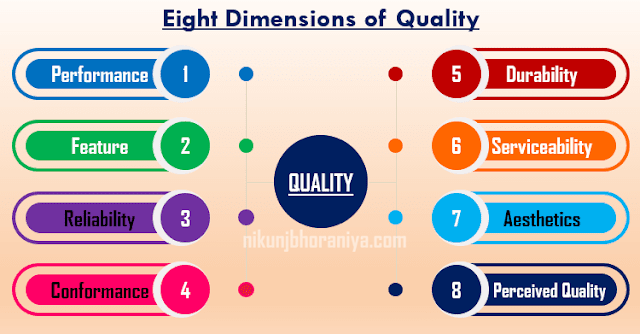
Quality is a broader concept encompassing several dimensions. Reliability—and durability when considered—constitutes one of those dimensions. In essence, a reliable system maintains its quality over time.
Reliability vs. Availability
Availability measures the proportion of time a system is fully operational. In IT, a 99.99% availability target translates to roughly 52 minutes of downtime per year. Availability depends on both reliability (fewer failures) and maintainability (quick repairs).
What Is Reliability Engineering?
Reliability engineering is the disciplined application of engineering best practices to produce more dependable products cost‑effectively. It spans the entire product lifecycle—from design and manufacturing to operation and maintenance.
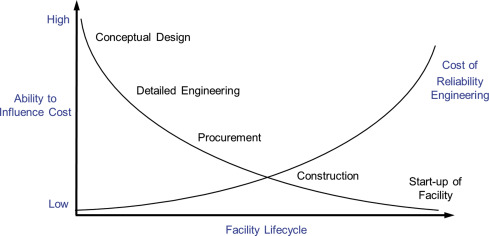
Early detection of reliability issues yields substantial savings. The graph below illustrates how addressing problems at the design stage can avoid expensive post‑market redesigns.
Key objectives of reliability engineering include:
- Using engineering knowledge to prevent failure modes and reduce failure likelihood.
- Identifying and correcting root causes of failures that still occur.
- Developing strategies to manage unavoidable failures.
- Estimating the reliability of new designs and analyzing reliability data.
These steps should be followed sequentially to ensure cost‑effective reliability practices.
Basics of Reliability Assessment
The ultimate goal is to produce a robust set of qualitative and quantitative evidence that a component or system will not pose an unacceptable risk. In reliability engineering, “risk” is the product of failure probability and failure severity (safety impact, cost, downtime, etc.).
Understanding Failure Mechanisms and Modes
Complex systems must be broken down into components to analyze how they fail and why. Interactions with users and the environment also play a critical role, as misuse and harsh conditions can erode reliability.
Common Tasks and Techniques
Reliability engineers deploy a variety of methods depending on system complexity:
- Root Cause Analysis (RCA)
- Reliability Centered Maintenance (RCM)
- FMEA and FMECA (Design & Process)
- Physics of Failure (PoF)
- Built‑in Self‑Test
- Reliability Block Analysis
- Field Data Analysis
- Fault‑Tree Analysis
- Single‑Point‑of‑Failure (SPOF) Elimination
- Human‑Error Analysis
- Operational Hazard Analysis
- Maintenance History Review
- Stress‑Test Data Collection
- …
These methods expose weak points and estimate the probability of malfunctions. When the perceived risk is high, corrective actions such as design changes (e.g., redundancy), detection controls, maintenance guidelines, and user training are warranted.
Quantifying Reliability
Reliability engineering relies on statistical data and probability. It’s essential that all stakeholders agree on acceptable risk thresholds. Many practitioners emphasize focusing on the “why” rather than the “when” of failures. As Patrick D. T. O’Connor notes in Practical Reliability Engineering, understanding failure causes leads to design and process improvements more effectively than predicting exact failure times.
For part/system failures, reliability engineers should concentrate more on the “why and how,” rather than predicting “when.” Understanding “why” a failure has occurred is far more likely to lead to improvement than quantifying “when” a failure is likely to occur.
O’Connor, Patrick D. T. (2002), Practical Reliability Engineering
How Reliability Engineers Improve Facility Equipment Reliability
Reliability engineers can drive tangible improvements across design, maintenance, and operational processes:
Designing and Developing Spare Parts
Regular wear and tear demands high‑quality spare parts. Companies with CNC or 3‑D printing capabilities can produce custom components on demand, eliminating inventory bottlenecks and ensuring parts meet reliability standards.
Root Cause Analysis
By scrutinizing OEM manuals, maintenance logs, and failure data, reliability engineers uncover root causes and recommend targeted mitigations. Applying RCM principles often yields significant reliability gains.
Aligning Maintenance Actions with Failure Modes
Maintenance teams may still experience breakdowns if they address the wrong failure modes or perform obsolete tasks. Reliability engineers review maintenance practices, update procedures, and verify that CMMS data reflects accurate, value‑adding preventive actions.
For more on CMMS, see our guide What is a CMMS and how does it work.
Additionally, reliability engineers help select appropriate condition‑monitoring sensors and implement advanced strategies such as condition‑based and predictive maintenance.
Final Thoughts
Effective reliability engineering delivers real, measurable results. With the right knowledge and techniques, companies of any size can achieve higher product quality, smoother maintenance, and happier users—a true win‑win‑win.
Are you a reliability engineer or maintenance professional? Let us know if we missed a critical point—share your thoughts in the comments below.
Equipment Maintenance and Repair
- Reliability: The Comprehensive Guide to Asset Management
- Allied Launches Reliability Engineering Services Division to Cut Downtime and Boost Profitability
- Reliability Engineering Fundamentals for Plant Engineers
- Quality Control: The Cornerstone of Motor Reliability
- Engineering Tolerances Explained: Definition, Types, and Practical Applications
- Rapid Prototyping Explained: Definitions, Processes, Types, and Key Techniques
- Terotechnology Explained: Definition, Goals, and Business Benefits
- SPA Vympel Elevates Gas System Reliability Using Swagelok Components
- Top Quality Control Techniques for Ensuring Product Excellence
- Engineering Tolerance Explained: Definition, Types, and Practical Applications