



Maintenance Mechanic Career: Duties, Skills, Salary & Advancement
A maintenance mechanic is the linchpin that keeps industrial and commercial operations running smoothly. They blend routine upkeep with the installation and repair of complex machinery, ensuring that equipment stays reliable and safe.
What Is a Maintenance Mechanic?
Unlike general maintenance technicians, who focus on facilities, a maintenance mechanic specializes in the mechanical and electrical systems of equipment. Their day‑to‑day responsibilities include assembling new machines, performing preventative maintenance, diagnosing failures, and fabricating or installing replacement parts.
Industries That Need Maintenance Mechanics
According to the Bureau of Labor Statistics, employment for industrial machinery mechanics, machinery maintenance workers, and millwrights is projected to grow 19% from 2020 to 2030—well above the average for all occupations.
Key sectors include:
- Aviation
- Construction
- Electronics
- Energy
- Manufacturing
Core Responsibilities
- Install and assemble new equipment
- Maintain a scheduled preventative maintenance program
- Diagnose and repair machine failures
- Fabricate parts using machine shop tools
- Use power and hand tools to execute work orders
- Adhere to SOPs, LOTO procedures, and safety standards
- Document maintenance activities via paper or a CMMS
Career progression often leads to supervisory roles where you design schedules, assign tasks, and mentor junior staff.
Key Skills for Success
Problem‑Solving
Quickly identify root causes of breakdowns and devise effective solutions under pressure.
Technical Proficiency
Read schematics, employ precision measurement tools, and understand mechanical systems across industries.
Physical Fitness
Endure long hours, lift heavy tools, and work in awkward positions to keep equipment operational.
Manual Dexterity
Hands‑on mechanical aptitude and willingness to get hands dirty are essential.
Basic Computer Literacy
Navigate email, mobile apps, and basic software—skills increasingly required in modern maintenance departments.
Leveraging a CMMS
Many facilities now use Computerized Maintenance Management Systems (CMMS) to streamline workflows, track performance, and reduce costs. Mastering a CMMS like Limble can set you apart and position you for advancement.
Path to Becoming a Maintenance Mechanic
Typical steps include:
- Earn a high school diploma, GED, or equivalent.
- Identify a niche—aviation, construction, automotive, etc.
- Consider a two‑year associate’s degree or industry certification (e.g., from the International Maintenance Institute).
- Gain hands‑on experience through apprenticeships or entry‑level roles.
Stand Out with Certifications
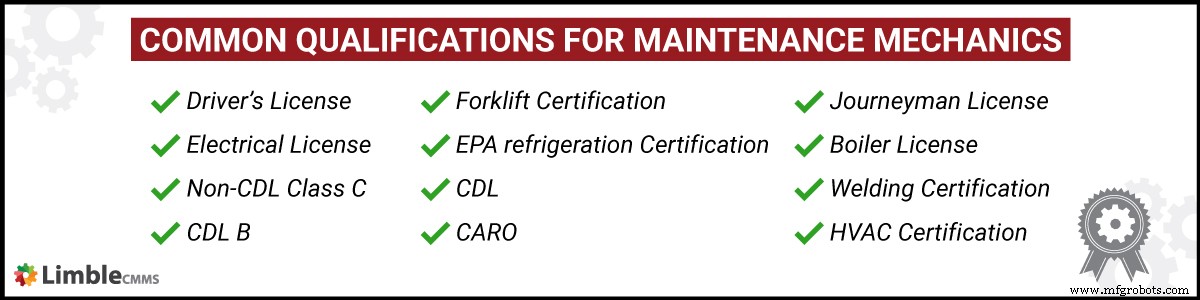
- Certified Maintenance Technician (CMT) or Certified Maintenance Professional (CMP) from the International Maintenance Institute.
- Industrial Maintenance Mechanic certification from the National Center for Construction Education & Research.
Compensation Overview
Average U.S. salaries range from $41,600 to $58,000 annually. Glassdoor reports a private‑sector average of $53k, while government roles average around $61k. Specialized fields such as airline mechanics can earn up to $64k, and experienced professionals with 10+ years often surpass $60k.
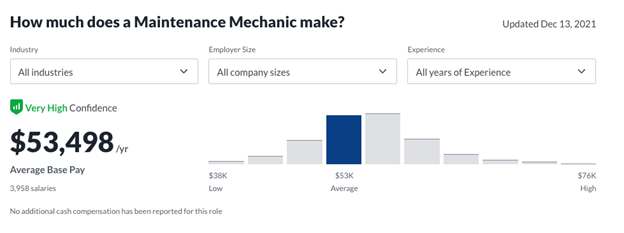
Source: Glassdoor
Entry‑level positions typically start near $38k, growing with experience and responsibility.
Climbing to Management
Promotion requires time, experience, and a proactive mindset. Consider:
- Obtaining a bachelor’s degree or advanced trade school coursework.
- Gaining leadership experience by managing projects or teams.
- Acquiring industry‑specific certifications.
- Offering process improvements and communicating ideas to leadership.
- Expanding skill sets: advanced technical knowledge, safety protocols, time management, communication, and computer proficiency.
Adopting a robust CMMS can greatly enhance a manager’s ability to coordinate maintenance across a facility.
Take the Next Step
Whether you’re starting as a mechanic or advancing to a managerial role, mastering the skills and tools discussed here will position you for success. Limble CMMS and our dedicated customer success team are ready to support you at every stage.
Contact us today for a demo and discover how to elevate your maintenance career.
Equipment Maintenance and Repair
- Industrial Maintenance Mechanics: Enhancing Facility Performance & Profitability
- Strategic Guide to Outsourcing Maintenance: Turning Contractors into Trusted Partners
- ISA Transfers Certified Industrial Maintenance Mechanic Certification to SMRP
- Pepperidge Farm Boosts Maintenance Excellence Through Targeted Training at North Central State College
- Essential Industrial Maintenance Tools for Mechanics: Boost Reliability & Efficiency
- Maintenance Coordinator Role: Duties, Skills, Salary, and Career Path
- Maintenance Supervisor Role: Duties, Skills, Salary & Career Path
- Maintenance Worker Job Guide: Duties, Skills, Salary, and Hiring Tips
- Maintenance Technician Guide: Duties, Skills, Salary & Career Path
- Can AI Replace Your Maintenance Job? Insights from a Predictive Maintenance Expert