



Maintenance Supervisor Role: Duties, Skills, Salary & Career Path
 \n
\n
\n
A maintenance supervisor is the linchpin of any sizable maintenance organization. By coordinating daily tasks, overseeing staff, and ensuring compliance, they safeguard business continuity and keep operational headaches at bay. In this guide, we explore their core responsibilities, the essential skills they need, and how much they can earn annually.
\nWho Are Maintenance Supervisors?
\nMaintenance supervisors bridge senior management and the on‑ground maintenance team. While they belong to the maintenance crew, their role is fundamentally managerial—more akin to middle management than to technicians or mechanics. They organize, motivate, and direct the workforce, reporting to titles such as maintenance manager, facilities manager, or director.
\nIn small firms, a technically adept technician may double as a supervisor, or a maintenance manager may take on supervisory duties. Large organizations, however, require dedicated supervisors to manage dozens of technicians and keep operations running smoothly.
\n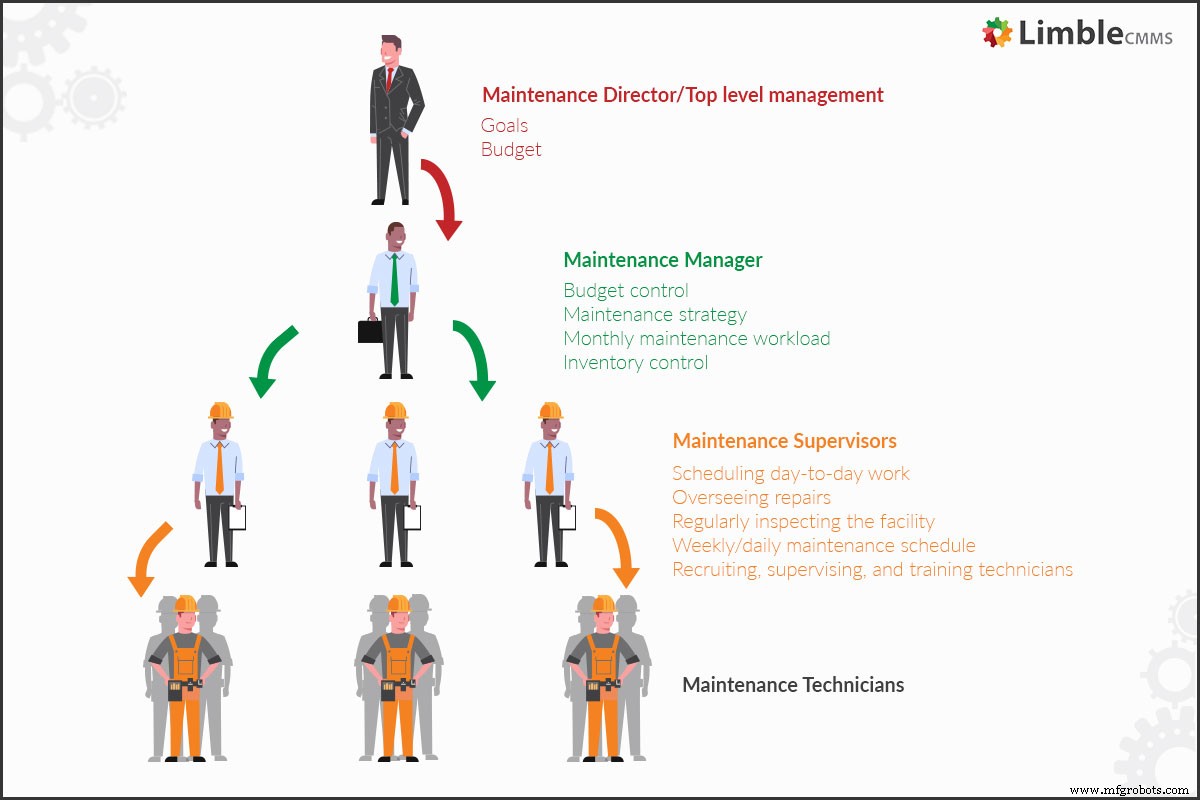 \n
\nRegardless of company size, a maintenance supervisor’s mandate is consistent: ensure a well‑trained, organized team with the tools and parts needed to deliver quality work.
\nKey Duties and Responsibilities
\nAcross industries, supervisors perform similar tasks, though nuances exist based on the environment. Typical duties include:
\n- \n
- Develop and maintain maintenance schedules aligned with organizational goals and preventive maintenance (PM) compliance. \n
- Conduct routine inspections to identify potential issues early and recommend corrective actions. \n
- Lead recruitment, onboarding, and ongoing training of staff. \n
- Enforce rigorous record‑keeping, whether via paper or a CMMS such as Limble. \n
- Create detailed work orders, assign tasks to qualified technicians, and monitor progress. \n
- Review completed work for quality and adherence to standards. \n
- Communicate policies, updates, and expectations to the maintenance team. \n
- Ensure projects finish on time, within budget, and meet safety requirements. \n
- Coordinate with vendors, contractors, and outsourced providers to protect facility interests. \n
- Track inventory of materials and spare parts. \n
- Design preventive maintenance programs and update procedures. \n
- Contribute to annual budgeting and recommend capital improvements. \n
- Participate in renovation or remodeling projects. \n
- Address staff concerns and communicate challenges to senior leadership. \n
- Assist with hands‑on maintenance tasks when necessary. \n
- Verify compliance with safety regulations and building codes. \n
- Engage directly with building occupants to resolve service requests. \n
Three Common Supervisor Specializations
\n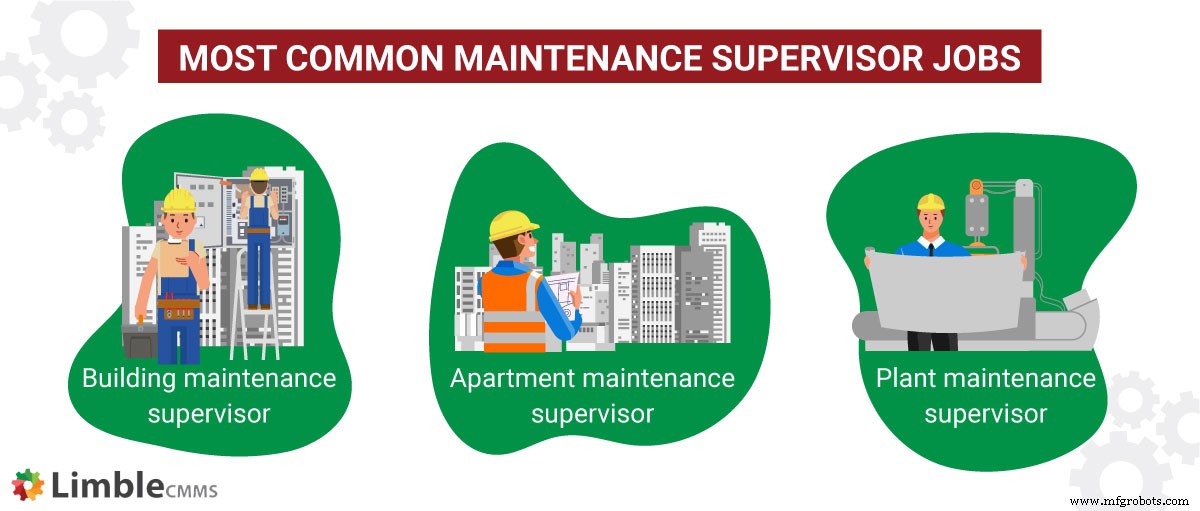 \n
\nMaintenance supervisors thrive in various settings. The most prevalent specializations are:
\nBuilding Maintenance Supervisor
\nOversees a team responsible for the upkeep of a commercial property, guiding technicians through daily tasks and interacting with occupants to communicate upcoming work.
\nApartment Maintenance Supervisor
\nManages maintenance in residential complexes, balancing continuous occupancy with the need for timely repairs and minimizing disruption to residents.
\nPlant Maintenance Supervisor
\nOperates within industrial plants, supervising complex equipment and ensuring production targets are met while upholding stringent safety standards—critical in light of OSHA’s focus on manufacturing injuries.
\nCompensation Overview
\nSalary varies by industry, company size, and experience. Aggregated data from leading job platforms shows:
\n- \n
- Salary.com: median annual salary ~$80,000. \n
- Totaljobs (UK): average £38.7k (~$53.7k). \n
- Glassdoor: average base pay $60.4k per year. \n
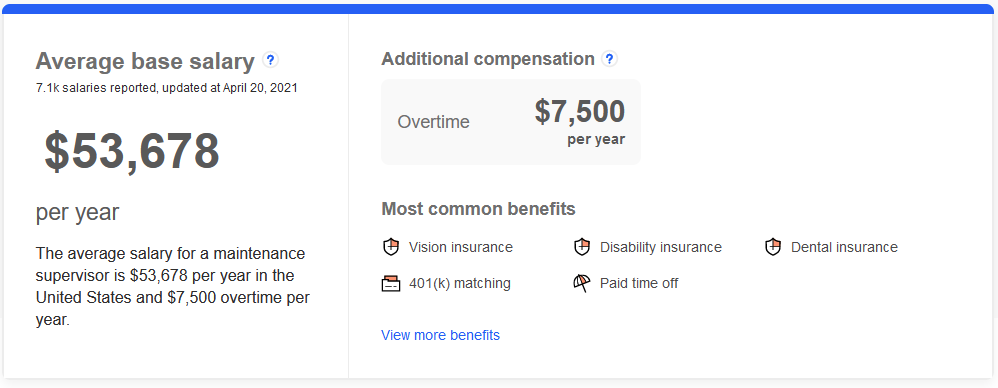
- Indeed: annual base $53.6k plus $7.5k overtime. \n
 \n
\nWhile the base range aligns closely with technicians, supervisors can command higher earnings at the top end—particularly in high‑responsibility roles.
\nEssential Skills and Qualifications
\nTechnical Proficiency
\nSupervisors must possess solid industry‑specific knowledge to guide technicians, develop PM checklists, and handle emergencies effectively.
\nAttention to Detail
\nSpotting subtle signs of wear or potential failure is critical for proactive maintenance and safety compliance.
\nEmotional Intelligence & Leadership
\nEffective supervisors inspire confidence, manage team dynamics, and maintain composure during crises—directly influencing work quality.
\nEducation & Experience
\nMost employers require a high‑school diploma; many prefer post‑secondary credentials or a bachelor’s degree. Practical experience—often through progression from technician roles—remains a highly valued pathway.
\nFamiliarity with CMMS, building automation, inventory systems, and mobile workflow apps enhances efficiency and competitiveness.
\nRecommended Certifications
\n- \n
- Building Systems Maintenance Certificate (SMC) – BOMI International (covers HVAC, water systems, energy control). \n
- Certified Maintenance & Reliability Professional (CMRP) – Society for Maintenance & Reliability Professionals. \n
- Certified Maintenance & Reliability Technician (CMRT) – SMLP. \n
Attracting and Retaining Skilled Supervisors
\nAccording to our 2021 maintenance survey, recruiting qualified supervisors is a top challenge. Clear role definitions, competitive compensation, and tangible benefits can make positions more attractive. Promoting seasoned technicians also signals a merit‑based culture and can retain top talent.
\nEquipment Maintenance and Repair
- Optimizing Maintenance Contracts: Long‑Term Strategies for Reliability
- Pepperidge Farm Boosts Maintenance Excellence Through Targeted Training at North Central State College
- Reevaluating Maintenance Supervisors: From Desk to Floor
- Why Maintenance Departments Decline Over Time and How to Counteract It
- Maintenance Coordinator Role: Duties, Skills, Salary, and Career Path
- Maintenance Worker Job Guide: Duties, Skills, Salary, and Hiring Tips
- Maintenance Mechanic Career: Duties, Skills, Salary & Advancement
- Maintenance Technician Guide: Duties, Skills, Salary & Career Path
- Can AI Replace Your Maintenance Job? Insights from a Predictive Maintenance Expert
- Mastering Maintenance Scheduling: Boost Efficiency & Cut Costs