



Fairfield Works Launches Innovative Maintenance Training Program to Secure Skilled Workforce
“It takes many people, doing things right, to keep the stacks smoking, morning through night. ... The hot strip, cold strip and the mills that run plate. Need the deliveries on time, can’t afford to be late. Keep those flatbeds rolling, get them out of the gate. ...
“Hey, the mill just went down, go find the trouble. Grab your tools, man, and work another double.” Orange hats, yellow hats, white hats and more. Who cares about the color, get the steel out the door. ...
“The weekend is gone, let’s get back to the grind. You can work many jobs, but it’s tough to find ... a better group of people in this world, I feel, than the ones who are working to make American steel.”
Excerpt from the poem “The Steel Mill” by George Konig
Maintaining an American steel mill is a collective effort that demands precision, dedication, and teamwork. In Fairfield, Alabama—an industrial community that once thrived as a company town for the Tennessee Coal, Iron and Railroad Company, later acquired by U.S. Steel in 1907—finding skilled maintenance talent has become increasingly challenging.
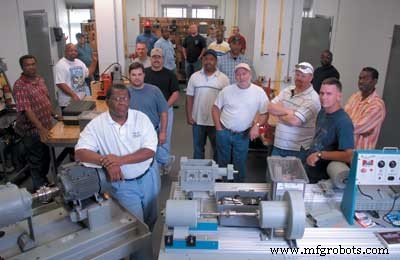
Instructor James Hammonds (front left in white shirt) poses with students at Fairfield Works’ maintenance training center.
Today, Fairfield Works employs approximately 2,100 workers, of whom 450 are in maintenance. The plant produces 2.4 million tons of raw steel annually, feeding both sheet and seamless tubular products for the automotive, appliance, and building‑materials markets.
While advanced automation and modern manufacturing processes keep the production line lean, the maintenance workforce faces a steep decline. From 600 technicians in 2002, the department has shrunk to 450—a 25 % reduction—primarily due to the retirement of Baby Boomer experts who each brought three decades or more of experience.
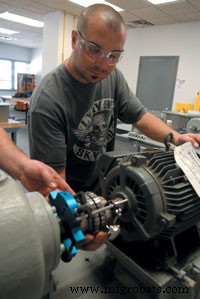
New maintenance employee Danny Davis works on a shaft alignment project.
"The retirements came too quickly,” says Andrew Bissot, a maintenance shift manager who joined the team in 2001. “Maintenance workers seized retirement opportunities, and the resulting tap‑outs overwhelmed us.”
Historically, Fairfield relied on help‑wanted ads to fill vacancies with seasoned technicians. Today, that strategy is ineffective because:
- Low unemployment: The Greater Birmingham area reports an unemployment rate of under 3 %.
- Automotive industry growth: New plants for Mercedes, Hyundai, Honda, and Toyota in Alabama intensify competition for maintenance talent.
- Skilled‑tech shortage: Parents encourage college careers in accounting and medicine, leaving trade schools under‑utilized.
- Competing Gulf Region incentives: Post‑Katrina reconstruction in Louisiana and Mississippi offers high salaries and benefits to skilled workers.
This talent gap is urgent. With an average maintenance age in the 50‑plus range, many employees could retire within the next decade. To address this, Fairfield plans to hire roughly 200 new maintenance staff over the next five years.
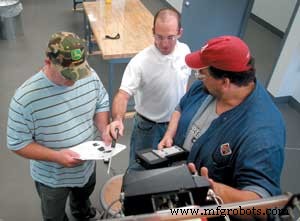
Training center manager Andrew Bissot (center) makes a point as students Mike Freeman (left) and Phillip Thomas (right) calibrate a proportional feedback valve.
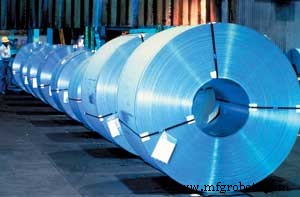
Hot‑rolled, cold‑rolled and galvanized sheet products are made for the metal building components, automotive, and appliance industries.
Despite challenges, Fairfield Works has a legacy of resilience, having survived the Great Depression, two world wars, and numerous corporate and economic shifts. The solution? A college‑style maintenance training center designed to attract candidates and cultivate the next generation of skilled technicians.
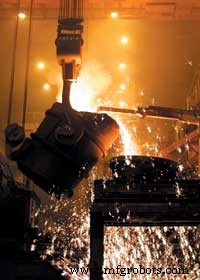
Maintaining the plant’s unique blend of equipment is a challenge.
“We couldn’t find maintenance employees, so we had to do something different,” says Borman. “We had to select, train and develop our own.” In just over a year, the center evolved from concept to a fully operational education hub, training 37 new maintenance technicians.
Just the Facts
Site: U.S. Steel’s Fairfield Works, located in Fairfield, Ala., seven miles southwest of Birmingham. The site was established in the 1890s as a steel and mining plant for the Tennessee Coal, Iron and Railroad Co. The site was purchased by U.S. Steel in 1907. Site size: approximately 1,200 acres.
Plant employment: Roughly 2,100 employees, including 450 in maintenance. Hourly workers are represented by the United Steelworkers union.
Products: The plant makes sheet and tubular products; hot‑rolled, cold‑rolled and galvanized sheet products serve the metal building components, automotive and appliance industries; the seamless pipe mill produces tubular products (4.5 to 9.875 inches OD) for the oil industry.
Fairfield Works facilities include: blast furnace, three basic oxygen process furnaces, ladle metallurgy facility, twin slab caster, four‑strand billet caster, hot strip mill, pickle line, six‑stand cold reduction line, galvanize line, anneal and temper line, rotary piercing mill, stretch reducing mill, Austenitizing furnace, quench unit, temper furnace and sizing mill.
THE NEED FOR AGGRESSION
As the maintenance talent pool thinned at the turn of the century, Fairfield Works reevaluated its training and workforce development strategy. Earlier approaches—sending green technicians or operators to local technical colleges, using the plant’s Institute for Career Development (ICD), or offering informal on‑the‑job training (OJT)—were insufficient for several reasons:
- Employees had to fit classes around busy schedules, often sacrificing overtime.
- ICD’s broad curriculum included non‑technical subjects like guitar lessons and real‑estate classes, which did not align with Fairfield’s needs.
- The curriculum was not regularly updated to reflect evolving technology.
- Technical college courses were too generic for the steel industry’s specific requirements.
- OJT quality varied, making it hard to ensure consistent, best‑practice instruction.
“We knew we had a labor shortage. We had to fill those positions inside the plant while maintaining mill efficiency,” says Bissot. “The only way to do that was to get more aggressive in our training.”
In March 2005, Fairfield hired General Physics (GP), a consulting firm specializing in technical workforce performance. GP conducted a comprehensive assessment, identified gaps, and helped design an internal maintenance training center. Bissot, a 28‑year‑old maintenance shift manager from the cold reduction mill, became the training manager.
The 11,000‑sq‑ft training center occupies a section of the historic Flintridge Building, formerly U.S. Steel’s Southern District headquarters, less than a mile from the plant.
CORE CONTENT
Program development began in January 2006. Bissot and GP’s Don Langley crafted curricula for Maintenance Technician Electrical (MTE) and Maintenance Technician Mechanical (MTM) tracks, following a month‑long fact‑finding mission that included interviews with front‑line technicians.
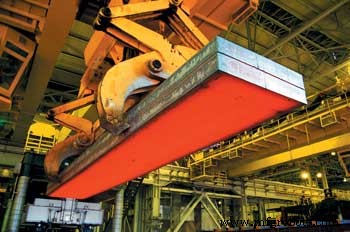
Fairfield Works manufactures 2.4 million tons’ worth of sheet and seamless tubular steel products each year.
“We visited every mill shack and interviewed the wrench‑turners,” says Bissot. “We asked what training gaps exist, which equipment needs deeper instruction, and what works or doesn’t work in our traditional approach.”
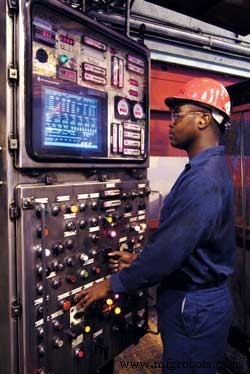
The maintenance training center also provides instruction for mill operators.
Bissot presented the curriculum to plant management, HR, and United Steelworkers union leaders. After minor adjustments, the educational framework was approved.
The 33‑module MTE sequence covers industrial electricity, electronics, process control, instrumentation, welding, hydraulics, pneumatics, AC and DC drives, fiber optics, and control elements. The 30‑module MTM sequence includes clutches, brakes, couplings, chains, belts, shaft alignment, hydraulics, welding, drives, and crane control theory. GP assembled the detailed content for each module.
Prospective candidates—current operations employees or external applicants—apply to become maintenance technicians and, consequently, students. Applicants take a written technical exam. Those who pass advance to a 10‑hour hands‑on Skills Performance Measurement. Successful candidates receive job offers.
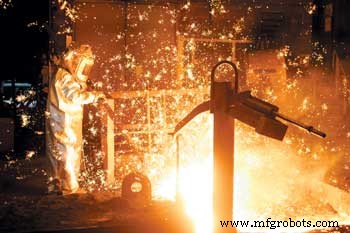
2007 will mark Fairfield Works’ 100th year as a U.S. Steel site.
Each new employee’s strengths and weaknesses are assessed to create a personalized training plan. If a trainee already masters a subject, that module is skipped. The remaining modules are scheduled in coordination with the center.
New hires split their time between the training center and the plant floor. During a two‑week core course—30 % classroom instruction via textbooks and PowerPoint, 70 % lab work—students complete written exams and hands‑on projects.
After the two weeks, each student receives three OJT assignments. An experienced technician acts as the OJT trainer, supervising progress and providing feedback. Completed assignments are reviewed by the course instructor for credit.
DEMOCRATIC REDEVELOPMENT
While course and testing frameworks were being finalized, the center’s new home received a makeover.
“When we got here, this area had purple‑painted walls and flowery wallpaper. The floors had 20‑year‑old carpeting and asbestos tile,” says Bissot. “We knocked down walls, performed construction and abatement, and installed new electrical.”
By the end of the month, the shell looked modern. In February and March, Bissot leveraged his budget and creativity to furnish classrooms and labs with hands‑on equipment—specialty labs for crane boards, process control, electromechanical systems, motors, drives, bearings, and more.
“We wanted to give them real‑life exposure,” he says. “We purchased new equipment and also repurposed unused machinery from our own mills.”
For instance, a 2.5‑inch back‑pressure regulator slated for scrap was salvaged, cut, and painted to highlight pressure‑drop zones. A mill with surplus belts donated two belts and spares for a soon‑to‑be‑disposed air compressor. Bissot sent emails to warehouse managers across Fairfield and other U.S. Steel sites, requesting surplus or non‑used items.
When a blast furnace upgraded its hydraulic pumps, Bissot quickly retrieved the functional but redundant pumps. One now serves as a rebuild trainer, another as a cut‑away demonstrator.
The center became well‑stocked through these efforts.
“We were just a bunch of Legomaniacs,” he says. “It took outside‑the‑box thinking.”
The project was completed at roughly half the original budget estimate.
“We had to report on every item that moved from the plant to here. The reports fill a file folder that’s three inches thick,” he says.
Frugality was paramount because U.S. Steel fully funded the project. While Birmingham and the state of Alabama offer workforce training grants, those funds are earmarked for companies established for 15 years or fewer.
INSTRUCTORS INSTALLED
With curriculum and facilities in place, the next step was to recruit instructors and students.
In April, the center opened applications to bargaining‑unit employees for five instructor positions. Why recruit hourly maintenance workers? “They understand the plant and its equipment,” says Borman. “They bring real‑world experience.”
Langley and GP’s VP Chuck Kooistra conducted extensive interviews with 21 applicants. Candidates delivered a 15‑minute teaching demo to a full classroom. Based on technical knowledge, experience, and teaching effectiveness, GP recommended five instructors, who were approved by plant leadership.
The instructors and their focus areas are:
- James Hammonds – automation
- Sidney Franklin – electrical
- Sam Gothard – mechanical & power transmission
- Jerry George – hydraulics & pneumatics
- David Dawson – welding
Hammonds exemplifies the expertise of the center’s faculty. A 28‑year veteran at U.S. Steel, he has worked as an instrument, electronic, and systems repairman, and as a foreman. In his spare time, he teaches night classes at Bessemer Technical College, Lawson State Community College, and RETS Electronics Institute, and coaches youth football.
“I enjoy training because everyone learns something,” says Hammonds. “From children learning to walk to athletes learning to tackle, training is essential.” He will teach math basics, PLCs, process control, industrial electricity, and electronics.
Guest instructors also enrich the program. For example, Johnny Rutledge—an 83‑year‑old plant veteran who has worked since 1941—shares his safety and mechanical knowledge. Ray Widener, an electronics shop specialist, teaches DC crane controls.
“If we want our students to be the best, we must bring in the best,” says Bissot.
WINNING THEM OVER
The training center’s success hinges on attracting students. To win the battle for skilled talent, Fairfield Works offers competitive wages, comprehensive benefits, and a clear message that its training program cultivates multi‑skilled, in‑demand professionals.
In its initial search in April, Fairfield received 140 applications—mostly from current plant operators and newspaper ads. Of these, 65 passed the written test, qualifying as Labor Grade 3 or 4 maintenance employees. Forty‑six achieved the Skills Performance Measurement score and were offered jobs. Thirty‑seven accepted—26 were Fairfield operators and 11 came from outside the plant. The first classes began on June 5, covering lockout/tagout, rigging, scaffolding, and math basics.
Why would a Fairfield operator switch to maintenance? “Maintenance is a better job,” says Mike Freeman, 33, former pipe‑mill operator. “If something happens here, you have the experience to handle it. Before U.S. Steel, I worked in maintenance at a water‑treatment plant.”
Why would an outsider choose Fairfield? “The training here is top‑notch,” says Wade Murchison, 40, a former chemical‑plant welder. “It’s like an associate degree and it trains you to be well‑rounded, not just a specialist.”
Phillip Thomas, 38, who left a maintenance job at International Diesel, describes the program as a career catalyst: “You can immediately apply classroom knowledge on the mill floor.”
Jim Bennett, Alabama’s labor commissioner, praised the initiative: “U.S. Steel is investing in workforce development and providing lifelong skills to our community.”
Fairfield is intensifying recruiting—posting online applications, advertising in regional papers, and expanding the ICD curriculum to serve current operators. The public‑relations team has issued press releases to broaden visibility.
“The area’s unemployment is low, but we can still attract technically skilled people,” says Bissot. “Many are in unrelated trades or hold auto‑mechanic certificates—those are the folks we want to reach.”
IMMEDIATE IMPACT
The training program has already improved safety and plant reliability. Fresh perspectives from students, combined with a culture of questioning “why do we do it that way,” have led to troubleshooting solutions and updates to standard operating procedures. For example, a rigging assignment identified worn shackles and broken slings, prompting replacement and preventing future incidents.
“We’re enforcing standardized practices and safe habits that enhance reliability,” says Hammonds.
Students also bring their clean‑and‑neat mindset to the mills, reinforcing the importance of cleanliness for easier troubleshooting.
IT’S ALL GOOD
Momentum at Fairfield’s training center is strong. Bissot’s greeting—“Maintenance training center, the home of the professionals”—encapsulates the center’s mission. Other manufacturers now call to tour and benchmark the program.
By November, 8‑10 of the first‑group students will complete their MTE or MTM curriculum.
“We are rebuilding the organization with these maintenance people,” says plant general manager Merle Stein. “It’s good for the employees, the plant, U.S. Steel, and the Fairfield community.”
POETRY IN MOTION
Fairfield Works continues to write a new chapter in its nearly 100‑year history. In homage to Konig, the following verse captures the center’s spirit:
“It takes experienced and new people, doing things right, to keep the stacks smoking, morning through night. “
“The training center draws in smart new recruits. They learn and explore and get hands‑on, to boot. “
“With full brains and skilled hands, they’ll hit the plant floor. They’ll increase reliability and get the steel out the door. “
“The job market’s tough, but fresh ideas have revealed … the next wave of techs who help make American steel.”
Equipment Maintenance and Repair
- U.S. Steel Launches 11,000‑Square‑Foot Maintenance Training Center in Fairfield, Alabama
- Caribbean Airlines Adopts Boeing’s Web‑Based Maintenance Toolbox to Enhance Fleet Reliability
- Pepperidge Farm Boosts Maintenance Excellence Through Targeted Training at North Central State College
- TOTAL partners with SKF to craft integrated maintenance & inspection strategy for Indonesian gas plants
- Maintenance Coordinator Role: Duties, Skills, Salary, and Career Path
- Maintenance Worker Job Guide: Duties, Skills, Salary, and Hiring Tips
- Inconel vs Stainless Steel: Selecting the Right Alloy for High‑Temperature, Corrosion‑Resistant Applications
- The Role of Nitrogen in Steel Performance
- Professional Colour Coating for Steel: Durable Protection & Aesthetic Appeal
- Tool Steel: The Ultimate Durable Alloy for Precision Cutting