



Leveraging Weight‑Loss Discipline to Build Sustainable Maintenance Excellence
While weight loss is often framed as eating less and exercising more, the same principles of discipline, early problem detection, and systematic planning underpin successful maintenance programs. Many organizations struggle with both weight‑loss and maintenance because they overlook these shared fundamentals. This article offers practical guidance to apply proven weight‑loss strategies to maintenance improvement.
Maintenance Management and Weight Loss
Typical weight‑loss approaches involve reducing caloric intake, increasing physical activity, or a mix of both, followed by strict discipline. The parallel for maintenance is simple: avoid unnecessary wear (exercise), identify and fix root causes early (eat less), and follow a structured plan (discipline). Yet, many plants and individuals fail to embed these basic practices.
Why We Fail
Statistics show that 95% of diet‑only weight‑loss attempts fail within three to five years. While maintenance‑failure data are less explicit, common root causes overlap: relying on a single metric, making short‑term changes without addressing underlying behaviors, overcomplicating plans, ignoring resource or attitude imbalances, overrelying on technology, and attempting solo effort.
- Overreliance on one measure
- Temporary fixes without tackling root behavior
- Overly complex plans
- Ignoring resource or attitude imbalances
- Overreliance on tech or “silver bullets”
- Solo execution
These pitfalls apply to both maintenance and weight loss. The key is to identify critical decision points and avoid them.
Recognize the Need
First, acknowledge the problem collectively. Denial is the biggest barrier. In maintenance, this often manifests as “our preventive program is fine” when, in fact, the ROI can be 100:1 or higher. Building awareness among management and front‑line staff is essential before moving forward.
Create Vision, Mission, and Goals
Once the need is recognized, secure support across all levels. Like a weight‑loss journey, it cannot be a solo mission. Invite key managers and operators to visit successful facilities, conduct self‑assessments, and define a clear future state. Without measurable targets—akin to a scale for weight loss—progress cannot be tracked.
Transparency is critical: share goals publicly to create accountability. When colleagues see your commitment, they’re more likely to support you, just as a peer can help you resist a chocolate bar.
Identify Key Success Proxies
Success proxies are the actionable practices that directly drive the desired outcome. For a dieter, they might be avoiding high‑carb foods; for maintenance, they could be precision alignment, dynamic balancing, lubricant filtration, root‑cause elimination, and scheduled work planning. These proxies span documentation, execution, and follow‑up, engaging all organizational layers.
A comprehensive best‑practice audit—internal or external—helps map these proxies and identify associated metrics. The audit offers a realistic baseline, highlights gaps, and ensures the plan remains relevant to front‑line staff.
Success Proxy Metrics
Metrics should reflect the success proxies rather than distant goals. For maintenance, focus on % of PM rounds completed, % of rotating equipment aligned to spec, and % of parts‑available status updates. These indicators are actionable each day, mirroring how a dieter tracks daily carb intake instead of long‑term weight loss.
In sales, for instance, knowing that 10 cold calls yield one $8,000 sale allows precise forecasting—an approach equally applicable to maintenance planning.
Illustrative Model
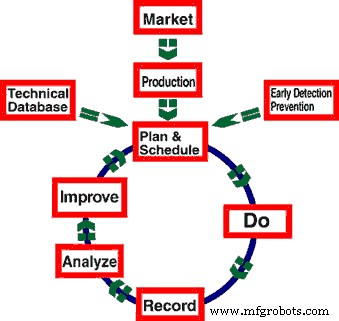
Figure 2. Productivity Improvement Circle – the core of a success proxy.
Conclusion
Embed success proxies and their metrics into your plan, schedule regular reviews, and allocate resources accordingly. Remember that lasting improvement is a long‑term commitment, not a project with a fixed end date. Sustainable change requires new habits, continuous learning, and organizational buy‑in.
I hope this perspective helps you advance both your maintenance program and, if relevant, your weight‑loss journey.
About the Author
Michael Lippig is the Business Development Manager at IDCON Inc., a Raleigh, N.C.‑based consulting firm specializing in reliability and maintenance management. For more information, visit www.idcon.com or email info@idcon.com.
Equipment Maintenance and Repair
- A Practical Guide to Building a Robust Predictive Maintenance Program
- Mastering Preventive Maintenance: Strategies to Optimize Your PM Program
- Four Pillars of Successful Maintenance Programs: Boost OEE, Cut Costs, Reduce Downtime
- Key Metrics for Demonstrating Predictive Maintenance Success
- Launching Predictive Maintenance: Key Questions and Practical Steps
- Penske Earns ASE Certification for Comprehensive Vehicle Maintenance Training Program
- UT Launches Reliability & Maintainability Center, Refocusing on Reliability Excellence
- Developing a Robust Electrical Maintenance Program: A Practical Guide
- 50 Proven Strategies to Build a High‑Performance Maintenance Program
- Build a High-Impact Maintenance Training Program: A Practical Guide