



Four Pillars of Successful Maintenance Programs: Boost OEE, Cut Costs, Reduce Downtime

According to a 2017 Aberdeen Group study, the manufacturing sector loses more than $50 billion each year to unplanned downtime. Yet many firms still struggle to benchmark maintenance performance and roll out programs that deliver measurable results. A robust maintenance strategy not only cuts downtime but also extends asset life and slashes repair times.
The same study identified the top‑20 % of manufacturers—those with 90 % overall equipment effectiveness (OEE) and an 11 % annual reduction in maintenance spend—as industry benchmarks. How do they get there?
This article dissects the four foundational elements that lift maintenance programs from average to outstanding: (1) streamlining work‑order management, (2) harnessing technology, (3) turning data into actionable asset intelligence, and (4) shifting from reactive fixes to proactive maintenance. By mastering these pillars, companies can drive productivity, reduce costs, and protect their bottom line.
Prioritization
Maintenance teams confront a maze of challenges. The first step toward excellence is to identify and rank the most critical issues. Figure 1 lists the common pain points that cross industries.
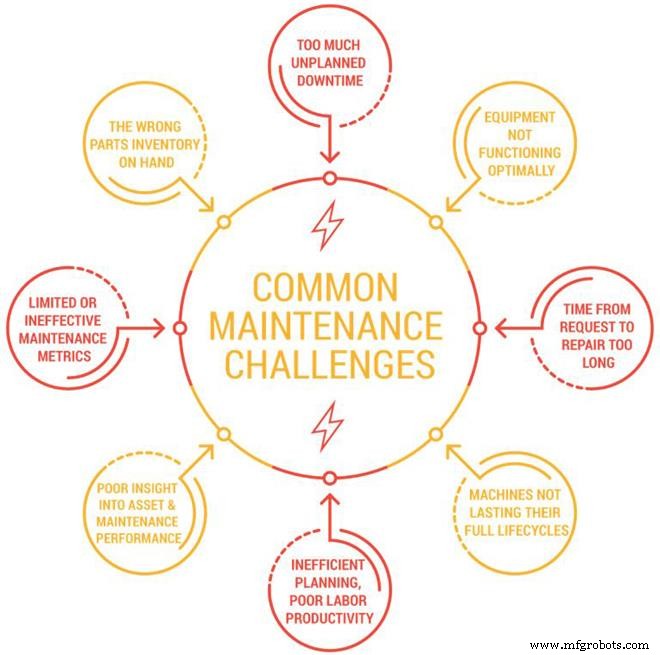
Figure 1. Common maintenance challenges
These hurdles directly erode performance and corporate profitability—$50 billion lost annually in manufacturing alone underscores their gravity.
Figure 2 outlines the typical goals that drive a maintenance program.
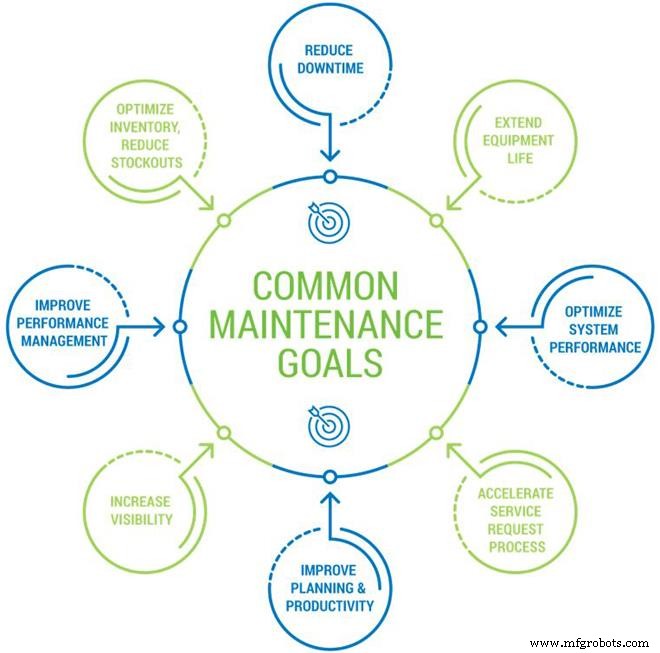
Figure 2. Common maintenance goals
Four critical building blocks—shown in Figure 3—provide the foundation for lasting success.
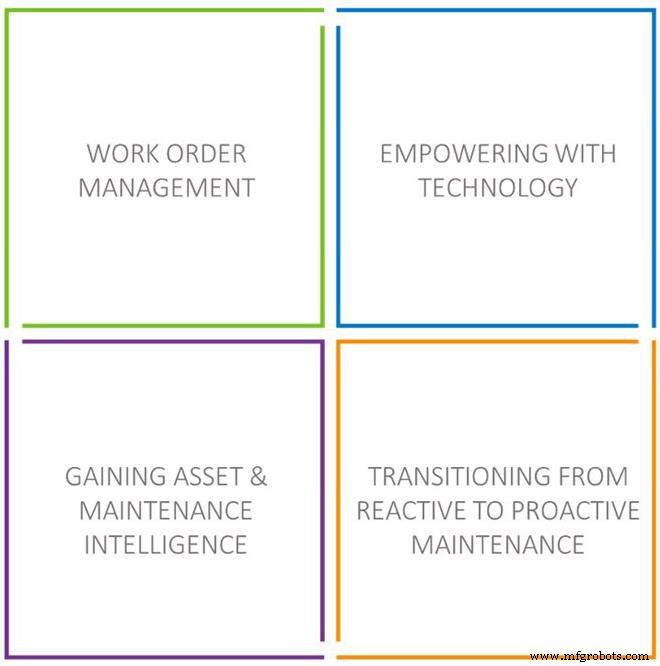
Figure 3. Four building blocks of maintenance program success
Organizations vary in complexity and maturity. Some remain reactive with no preventive maintenance (PM) framework, while others have begun PM initiatives but still lag in proactive practices. Even modest improvements in each of the four pillars can yield significant business gains.
Work‑Order Management
At the core of every maintenance program lies an efficient work‑order system—turning requests into completed tasks while preserving accurate records.
Methodology depends on scale and workforce: paper, spreadsheets, or a computerized maintenance management system (CMMS)/enterprise asset management (EAM) solution.
Paper remains viable for very small shops but hampers quick access to equipment history and hinders sustainability goals.
Spreadsheets, while familiar, become unwieldy for midsize or large fleets and obstruct real‑time visibility for field technicians. Revision control is also a risk.
A CMMS/EAM delivers real‑time asset and maintenance history, integrated parts lists, and documentation links. The learning curve can be steep for non‑tech‑savvy staff, but the payoff—streamlined processes, reduced labor, and data integrity—is undeniable.
Regardless of the chosen method, the work‑order workflow must be intentional. Figure 4 depicts the essential stages: request, assignment, scheduling, execution, documentation, and closure.

Figure 4. Basic work‑order management process
Each step carries nuanced decisions—prioritizing urgency, allocating skills, anticipating downtime, managing spare parts, and recording post‑job data. Mastery of these details unlocks the full value of a robust system.
Figure 5 summarizes the tangible benefits of a well‑executed work‑order program: reduced downtime, improved asset life, lower maintenance costs, and higher labor productivity.
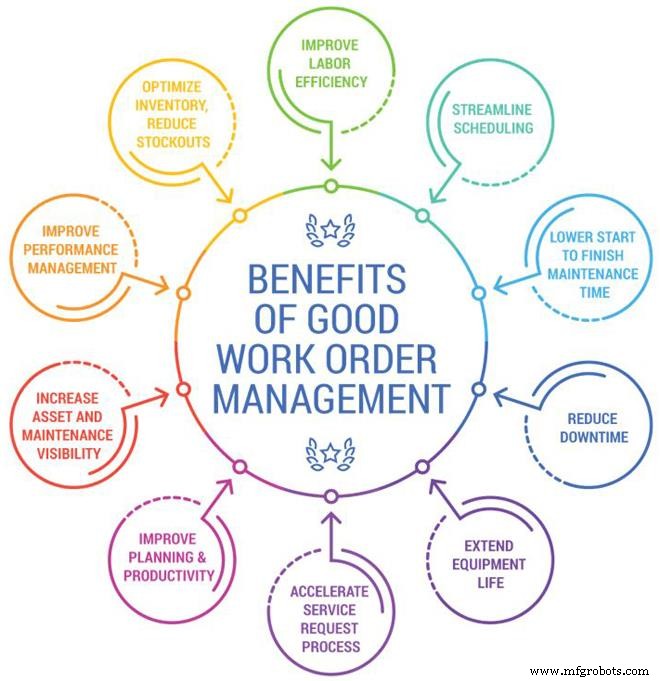
Figure 5. Benefits of good work‑order management
Technology Empowerment
Modern maintenance leverages a spectrum of technologies—CMMS/EAM, IoT, mobile, analytics, robotics, and AI. Each can accelerate performance, but the right mix depends on a plant’s unique context.
CMMS/EAM remains the cornerstone, building a searchable history that fuels trend analysis, preventive schedules, and rapid repairs. Mobility enables technicians to pull real‑time data and log job completions on the spot, tightening accuracy and shortening cycle times.
Robotics brings consistency and safety to repetitive tasks, though it demands a broadened skill set for technicians and can increase annual service requirements.
IoT devices—vibration sensors, temperature probes, and predictive algorithms—generate real‑time alerts that trigger preemptive work orders before failure manifests, translating directly into saved downtime and maintenance dollars.
By deploying the appropriate tools, companies empower their workforce, improve decision‑making, and elevate overall maintenance performance.
Asset & Maintenance Intelligence
Data is only as valuable as the insight it delivers. The first step is determining which asset and maintenance metrics matter most—purchase dates, run hours, failure histories, parts inventories, reference drawings, and procedural docs.
Building a comprehensive library, ideally within a CMMS/EAM, centralizes information where it’s most needed—executives, plant managers, and field crews alike.
Transforming raw data into intelligence requires trend analysis and actionable outputs. For instance, noticing that a pump tends to fail after 2,000 operating hours can trigger a scheduled PM at that threshold, preventing costly outages.
Such intelligence feeds predictive maintenance models, refines KPIs, and sharpens resource allocation.
From Reactive to Proactive
Reactive maintenance—“fix when it breaks”—drives high downtime, shortened equipment life, and inflated costs. Transitioning to a proactive regime begins with reliable data collection and trend analysis, foundations that CMMS/EAM systems provide.
Once intelligence is actionable, schedules can shift from ad‑hoc fixes to planned preventive and predictive work. While zero unplanned downtime is unrealistic, the shift reduces incidents, improves labor utilization, and extends asset longevity.
Building the Foundation for Success
Maintenance challenges are universal, but solutions must be tailored. By focusing on the four pillars—work‑order mastery, technology adoption, data intelligence, and proactive strategy—companies can realize measurable gains: reduced downtime, heightened productivity, extended equipment life, and lower total maintenance spend.
This article was originally presented at the 2019 Reliable Plant Conference Proceedings.
Equipment Maintenance and Repair
- Key Metrics for Demonstrating Predictive Maintenance Success
- Key Lessons for Senior Management on Condition‑Based Maintenance
- Hamilton Sundstrand Secures 10-Year Maintenance Deal for Singapore Airlines' Airbus A380 Fleet
- Penske Earns ASE Certification for Comprehensive Vehicle Maintenance Training Program
- Unlock CMMS Potential: Systematic Follow‑Up Drives Efficiency
- Three Proven Steps to Build a Sustainable Reliability Program
- 6 Proven Strategies for World-Class Equipment Asset Management
- 50 Proven Strategies to Build a High‑Performance Maintenance Program
- The Critical Role of Preventative Maintenance in Manufacturing Equipment
- 8 Essential Tips for a Successful Preventive Maintenance Program