



Designing and Managing an Effective Maintenance Shop: A Practical Guide

Maintenance and repair often cannot be performed on-site. In those situations, a dedicated maintenance shop becomes the central hub where all assets are serviced, inspected, and restored to optimal performance.
Across industries—from aviation to heavy equipment, IT, housing, and infrastructure—maintenance shops are the invisible backbone that keeps services running smoothly. Whether a facility’s own assets or a shared pool for multiple clients, the core function remains the same: preserve reliability, extend asset life, and control costs.
Workshop Layout and Variants
Workshop design is highly context‑specific. The layout, equipment, and processes must reflect the industry, regulatory environment, and business model.
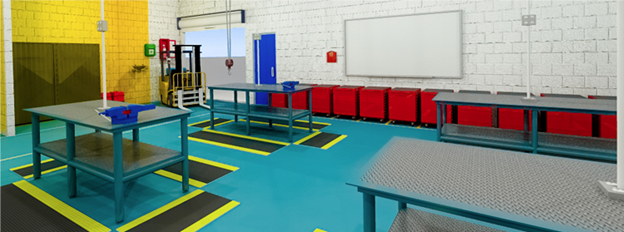
Maintenance workshop design. Source: Industry Maintenance Engineering Inc.
A well‑planned shop includes workstations, vehicle access, IT systems, inventory and tool storage, a dispatch area, clean rooms, waste handling zones, and staff offices. The key distinction lies in purpose:
- Internal shops tailored to a single organization’s assets.
- Shared shops that serve a diverse client base.
Internal shops usually sit on‑premises and are customized to the company’s equipment. Shared shops are strategically located in a catchment area and equipped for a broader range of maintenance tasks.
Organizing Your Maintenance Shop
While every shop is unique, the following framework offers a proven path from concept to operation.
Step 1 – Define the Shop’s Purpose
Clarify the shop’s mission: ensuring asset reliability, minimizing downtime, and supporting the organization’s strategic goals. Align the shop’s objectives with business outcomes to avoid wasted effort.
Step 2 – Conduct Thorough Planning and Consultation
Engage all stakeholders—engineers, technicians, production staff, compliance officers, local authorities, and neighbors—to surface requirements and constraints. Key questions include:
- Will maintenance run 24/7 or only during business hours?
- What equipment will be serviced and to what depth?
- Is the design scalable for future growth?
- What regulations apply (safety, environmental, labor)?
- How many technicians will the shop accommodate?
Addressing these factors early prevents costly redesigns later.
Step 3 – Design Efficient Layout and Workflows
Apply the same “workflow triangle” logic used in kitchen design: minimize travel distances between key points (receipt, cleaning, repair, storage). Map out every stage of a repair cycle:
- Receipt and tracking of incoming items.
- Cleaning or quarantine procedures.
- Sequential workstations or single‑desk repair paths.
- Material handling and aisle width requirements.
- Secure storage for sub‑components.
- Tool management and calibration schedules.
- Spare parts inventory zones.
- Waiting areas for parts on order.
Conduct walk‑throughs with technicians to uncover hidden bottlenecks.
Consider integrating mobile maintenance software to capture tool usage, spare inventory, SOPs, and safety data—streamlining every workflow.
Step 4 – Meet Environmental and Regulatory Standards
Compliance is non‑negotiable. Design for emergency egress, adequate lighting, ventilation, accessibility, and space per technician. Mitigate noise, fumes, visual impact, and waste disposal to protect neighbors and the workforce.
Step 5 – Implement Robust Inventory Management
Choose a system that handles receiving, segregation, work‑in‑progress tracking, costing, and dispatch. Physical space (rooms, cabinets) and software (parts database, barcoding) must work together.
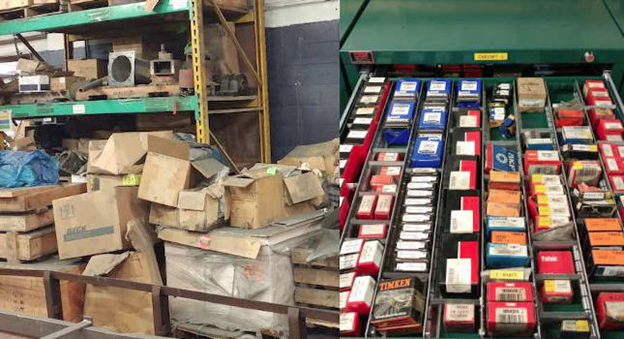
Be on the right side of inventory control. Source: Plant Engineering
Step 6 – Manage Tooling Effectively
Tools are high‑value assets. Procure sufficient numbers, track via barcodes, store securely, calibrate regularly, and make them readily available to technicians. A CMMS can automate this process.
Step 7 – Centralize Maintenance Information
Decision‑making must be data‑driven. Ensure that all documentation—SOPs, safety guidelines, shop plans—is current, version‑controlled, component‑specific, and easily accessible.
Keeping Your Shop Organized
Operational excellence requires a three‑tiered approach: strategic, tactical, and operational.
Strategic Level – Craft a Maintenance Policy
Publish a formal policy that articulates senior leadership’s expectations, aligns maintenance with business outcomes, and sets clear boundaries.
Tactical Level – Deploy Standard Operating Procedures (SOPs)
Derive SOPs from the policy to standardize critical tasks. For example, hot‑work or welding procedures must include:
- Installation of fire screens.
- Deactivation of local fire sensors.
- Proper fume extraction setup.
- Appropriate fire extinguisher placement.
- Correct personal protective equipment.
Embed these SOPs into training and onboarding to ensure compliance.
Operational Level – Adopt a CMMS
Transition from paper to a Computerized Maintenance Management System. A CMMS tracks work orders, schedules preventive maintenance, predicts failures, manages spare inventory, calibrates tools, and stores maintenance knowledge.
Benefits include reduced downtime, higher labor efficiency, lower inventory costs, and transparent maintenance spending.
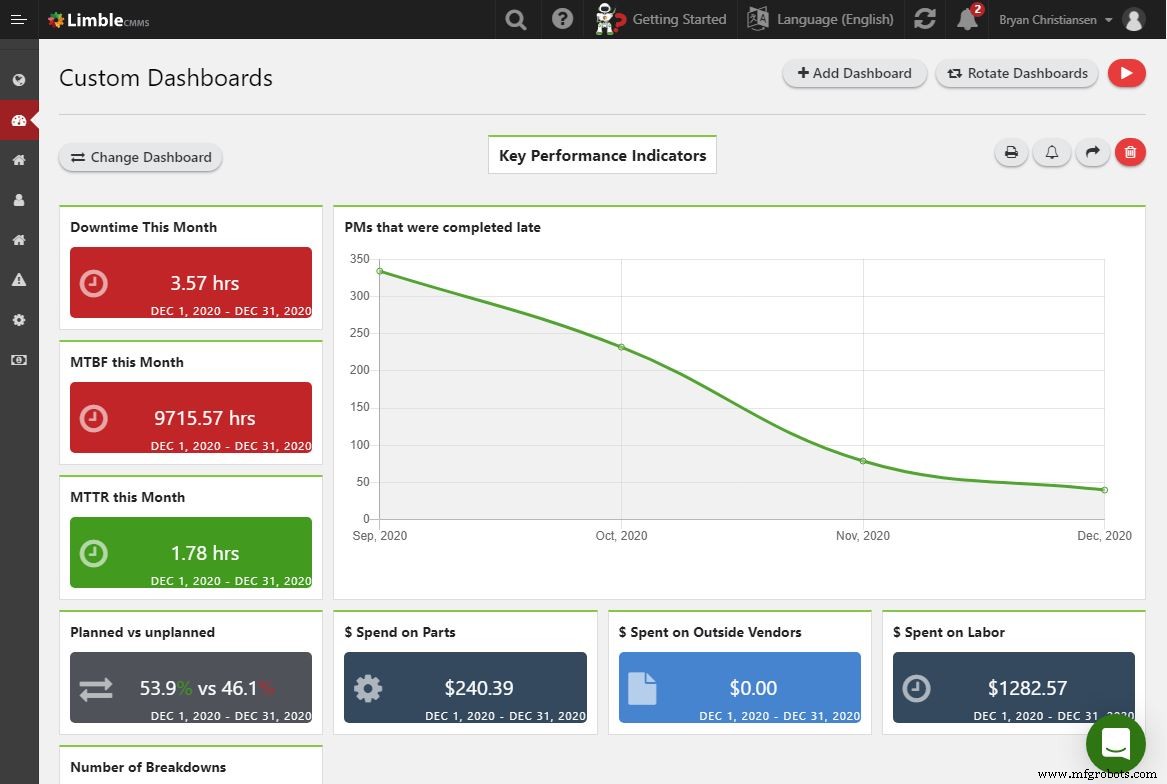
Limble CMMS automatically tracks maintenance costs and KPIs
With a modern CMMS, your shop can thrive in today’s competitive environment.
Plan Ahead
Building a maintenance shop is a complex, multi‑stakeholder effort. Comprehensive planning, clear procedures, and the right technology are essential to avoid costly rework and to deliver a reliable, efficient service.
Interested in how CMMS can transform your shop? Contact our team or schedule a free demo of Limble CMMS.
Equipment Maintenance and Repair
- Plate Clamps: Design, Function, and Benefits for Heavy‑Duty Lifting
- Thrust Bearings Explained: Types, Functionality, and Selection Guide
- Flat Springs Explained: Design, Function, and Selection Guide
- Adjustable Glides: What They Are, How They Work, and Their Benefits
- Locking Washers Explained: Types, Functions, and Why They Matter
- Coaching Cards: A Proven Tool for Sustaining Change Management Success
- CMMS Failure Codes: What They Are and How to Use Them Effectively
- I/O Cards Explained: How They Work and Why They Matter
- Heat Sinks Explained: Function, Design, and Manufacturing Process
- Understanding Drum Brakes: Function, Features, and Maintenance Tips