



Reactive Maintenance: Common Challenges, Proven Solutions, and the Path to Proactive Asset Management

In today’s competitive environment, asset reliability is more than a KPI—it’s a business imperative. While many organizations still rely on reactive maintenance, the hidden costs and operational risks are undeniable. This article offers an evidence‑based look at the drawbacks of reactive maintenance, presents actionable solutions, and outlines a clear roadmap to proactive asset management.
What Is Reactive Maintenance?
Reactive maintenance, also known as breakdown or corrective maintenance, is the simplest form of asset management. Assets run until they fail, at which point technicians are called to repair the problem. The approach requires little planning, no scheduled inspections, and minimal upfront investment.
However, this “repair‑when‑it‑breaks” mindset often leads to:
- Unplanned downtime that disrupts production schedules
- Escalating repair costs due to part degradation or emergency labor rates
- Safety hazards from equipment failure
- Shortened asset life and lower return on investment
Pros and Cons of a Reactive Maintenance Strategy
Below is a concise comparison of the key advantages and disadvantages. If you’re already familiar with these points, feel free to skip this section.
Advantages:
- Low implementation cost
- Reduced permanent staffing requirements
- No scheduled inspection downtime
- Minimal planning effort
Disadvantages:
- Unexpected shutdowns at inconvenient times
- Prolonged downtime due to spare part or technician shortages
- Increased safety risks during breakdowns
- Challenging inventory management
- High repair costs after parts deteriorate beyond economical repair
- Extended periods of reduced machine efficiency
- Misuse of assets, shortening useful life
- Unpredictable maintenance budgets
Industry studies show that preventive maintenance can reduce maintenance spend by 30%–100% compared to reactive strategies. Yet many organizations continue to struggle with the transition due to leadership buy‑in, resource constraints, and fear of change.
Practical Solutions for Reactive Maintenance Pain Points
Challenge 1: Managing Spare Parts Inventory
Reactive maintenance makes it difficult to determine what spares to keep in stock, how many to hold, and how quickly to replenish. Over‑stocking ties up capital, while under‑stocking extends downtime and spikes emergency purchase costs.
Solution: Leverage Inventory Management Software
Modern Asset Inventory Management Systems (AIMS) provide real‑time analytics on spare utilization, repair costs, and turnaround times. By analyzing historical data, you can calculate optimal reorder points and economic order quantities (EOQ), reducing holding costs and improving availability.
Software implementation requires an upfront investment, but it pays off by simplifying inventory decisions and standardizing procedures.
How Limble CMMS Helps
Limble’s parts‑management module automates purchase prompts based on current inventory, offers disposal recommendations for unused parts, and tracks usage via barcode or QR codes. Technicians enter parts used during a work order, ensuring the database stays current.
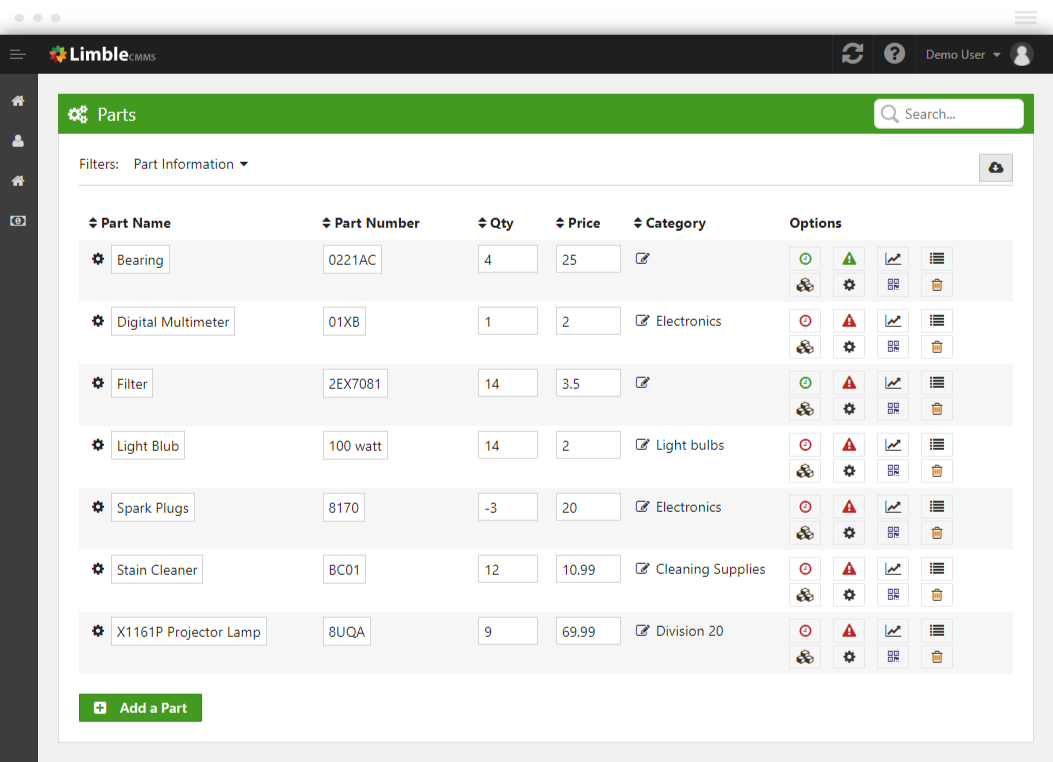
Parts list view inside Limble CMMS
Challenge 2: Scheduling Technicians Amid Workload Spikes
Reactive maintenance often triggers after‑hours calls and reassignments, disrupting planned schedules and driving up labor costs.
Solution: Outsource Select Maintenance Tasks
Long‑term maintenance contracts with specialized vendors shift the administrative burden and provide guaranteed response times. A well‑drafted Service Level Agreement (SLA) specifies maximum response times, technician supply, safety standards, and rework cost agreements. Historical performance data can establish KPIs that reward or penalize the vendor.
How Limble CMMS Helps
Limble’s vendor‑management features let you link assets to contractors, share work orders directly, capture vendor actions, attach invoices, and trigger notifications upon completion.
- Share work orders with the vendor.
- Vendor logs work with comments and photos.
- Vendor attaches invoice to the work order.
- Automated notifications confirm completion.
For a visual walkthrough, see the video demonstration.
Challenge 3: Constant Operational Disruptions
Breakdowns interrupt machine operators, divert technicians, and force managers to coordinate emergency repairs, leading to widespread downtime.
Solution: Standardize Failure‑Response Procedures
Develop a cross‑functional team to create decision‑tree SOPs that guide staff through the most effective actions when a failure occurs. This pre‑planned approach reduces Mean Time To Repair (MTTR) and limits downtime.
How Limble CMMS Helps
Limble CMMS stores and updates SOPs, maintenance checklists, and safety guidelines in a cloud‑based platform. Mobile access ensures staff can retrieve procedures on the job, no matter where they are.
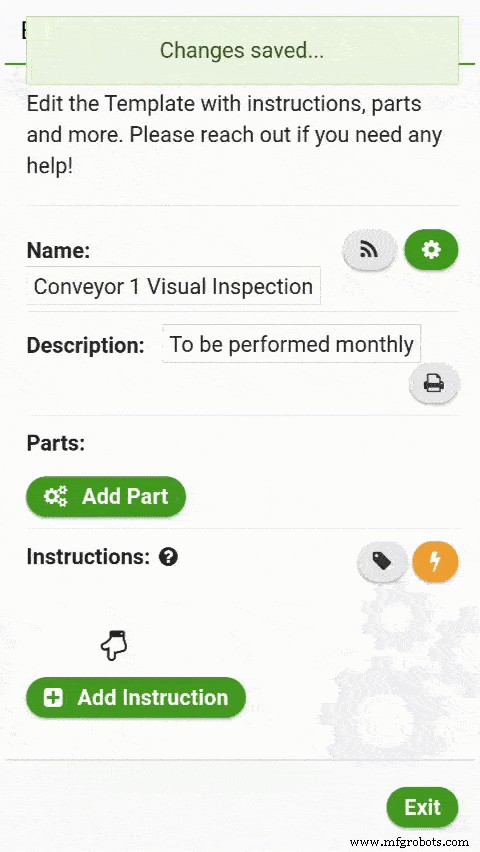
Creating checklists and procedures in Limble CMMS
Challenge 4: Compromised Safety
Poorly maintained equipment can trigger hazardous incidents—from hydraulic hose ruptures that spray high‑pressure fluid to grinding operations that eject high‑velocity fragments. Courts scrutinize reactive maintenance when safety incidents arise.
Solution: Conduct Failure Mode, Effects & Criticality Analysis (FMECA)
FMECA provides a structured, qualitative assessment of potential failure modes, ranking them by criticality. By understanding the safety impact of each failure, you can prioritize preventive actions, early detection, or design modifications.
How Limble CMMS Helps
Limble CMMS supplies the data needed for FMECA studies and coordinates the implementation of mitigation measures—whether through additional training, SOP updates, or preventive maintenance plans.
Challenge 5: Lack of Insight into Failure and Asset Data
Without metrics like Mean Time Between Failures (MTBF) or Total Cost of Ownership (TCO), organizations cannot effectively manage asset performance.
Solution: Capture Key Performance Data
A robust CMMS records asset cycles, operation hours, failure modes, and availability. Historical data enable identification of problematic assets, informing tactical changes that reduce maintenance costs and improve uptime.
Data collection also lays the groundwork for predictive or prescriptive maintenance strategies.
How Limble CMMS Helps
Limble provides instant access to all maintenance data—both auto‑captured and user‑entered. Custom fields allow you to build complex reports, create dashboards, and monitor real‑time metrics.
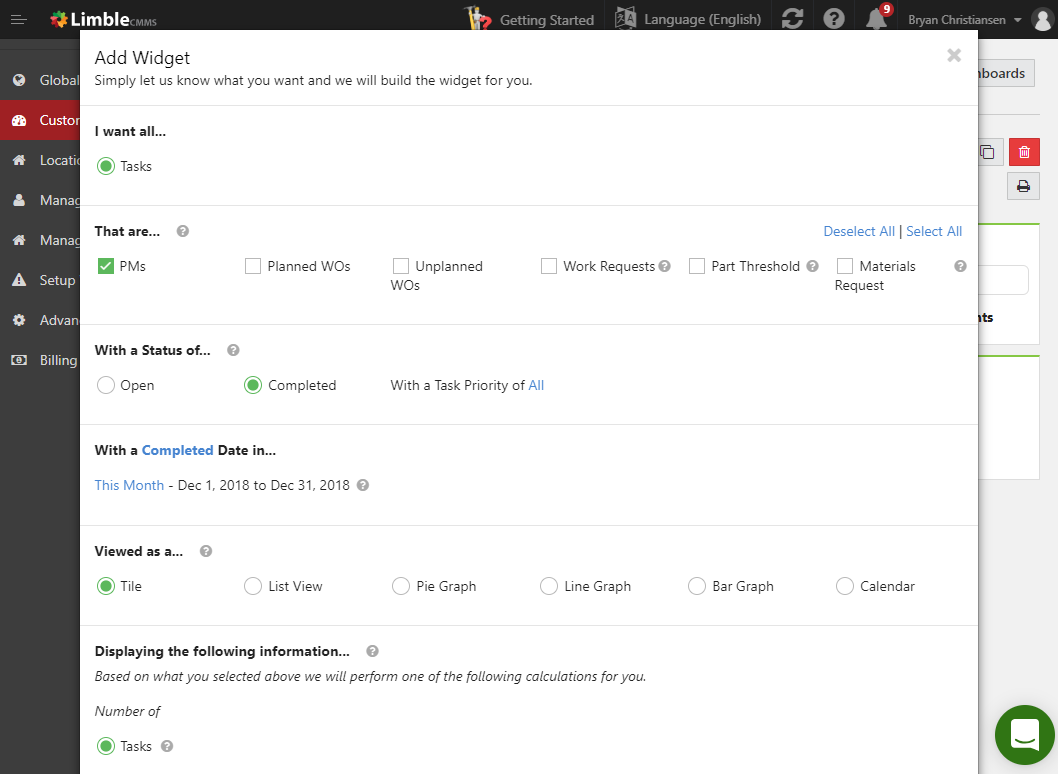
Limble’s custom report builder
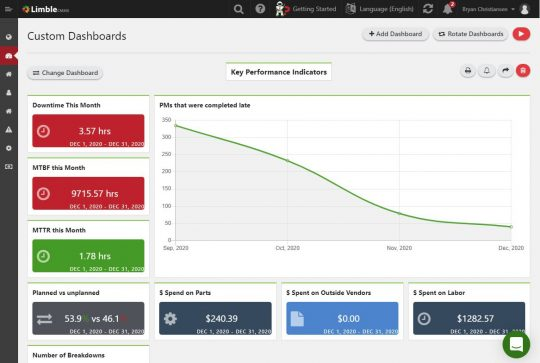
Example dashboard inside Limble CMMS
Moving From Reactive to Proactive Maintenance
While preventive maintenance delivers lower costs, higher asset utilization, and extended economic life, the transition can be daunting. The following resources will help you make the shift:
- A Complete Guide to Preventative Maintenance
- Reactive Maintenance To Preventive Maintenance – Complete Transition Guide
- How To Start A Preventive Maintenance Plan (Ridiculously Simple Guide)
Adopting a capable CMMS like Limble accelerates this transition. Try it risk‑free with a free 30‑day trial, request a live demo, or explore our online self‑demo.
Equipment Maintenance and Repair
- Synchronizing Asynchronous Resets in ASICs and FPGAs: Challenges, Best Practices, and Advanced Solutions
- Predictive Maintenance: The Complete Guide to Reducing Downtime and Maximizing ROI
- U.S. Army Advances Condition‑Based Maintenance with Innovative Sensors and Predictive Analytics
- Avoiding Reactive Maintenance Pitfalls: Keep Equipment Running Smoothly
- Enhancing Industrial Performance: Overcoming Monitoring Challenges with IoT & Analytics
- Metal 3D Printing: Overcoming Key Challenges & Harnessing Emerging Solutions
- Industrial IoT Security: Overcoming Challenges and Implementing Robust Solutions
- Key Challenges in Managing Equipment Effectively
- Avoid These Common Hydraulic Maintenance Errors to Save Time and Money
- Common 3D Printing Issues & Expert Solutions