



Predictive Maintenance: The Critical Role of Trend Analysis in Vibration Diagnostics
This case study examines a packaging facility’s proactive maintenance approach. During a pre‑machine care evaluation, the vibration integrity of Module 8J0’s packer was assessed, revealing a deteriorating bearing in the folding arm gearbox.
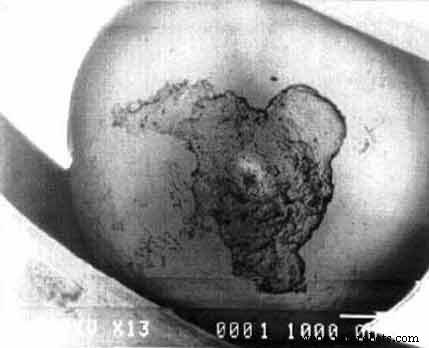
Fiber‑optic camera footage of the packer’s roller bearing damage.
The gearbox is housed in a hard‑to‑reach section, and separating the machine’s two halves for repair adds a two‑day downtime penalty. The maintenance leader questioned the technician’s vibration call, threatening disciplinary action if the assessment proved incorrect. This pressure forced the technician to seek additional evidence beyond the initial vibration signature, which highlighted a 36.9 Hz peak with side bands at 0.10 IPS—a frequency that, by itself, is not typically considered critical.
To confirm the diagnosis, the following steps were executed:
- Re‑examined monthly trend data for the gearbox.
- Retrieved detailed gearbox drawings to identify the bearing type, drive conditions, and gear configuration.
- Conducted supplementary tests to strengthen the call’s validity.
Analysis of the drawings identified a 1208 roller bearing. While the vibration frequency matched the bearing’s characteristic range, minor discrepancies introduced uncertainty. Trend data confirmed a four‑month rise in amplitude, raising the risk of catastrophic failure that could cost millions in parts, labor, and lost production.
To eliminate doubt, a fiber‑optic camera was deployed. The packer was shut down, oil drained, and inspection covers removed. The camera, viewed live by the maintenance team and leader, confirmed visible damage to the bearing rollers (see photo).
With the diagnosis validated, the gearbox was disassembled for a comprehensive visual inspection. Findings revealed:
- Cam follower bearing failure caused significant cam damage.
- Tooth damage on the gear adjacent to the gearbox.
- The 1208 bearing was a double roller type, contrary to the drawing’s single roller specification, explaining the frequency misalignment.
Post‑repair, the lessons learned were documented:
- Trend data is indispensable for accurate vibration calls.
- Two distinct roller configurations share the same stock number, leading to potential misidentification.
- The cam follower bearing was inadequately robust for its service load.
- The maintenance leader now trusts the technician’s vibration assessments.
- Investing in additional reliability tools, such as fiber‑optic cameras, is warranted.
Ultimately, the reliability department’s mandate is clear: “Trend, trend, and trend.” Understanding, documenting, and disseminating these insights are essential to sustaining operational excellence.
Equipment Maintenance and Repair
- Predictive Maintenance: The Complete Guide to Reducing Downtime and Maximizing ROI
- The Critical Role of Maintenance in Research Laboratories
- Unlocking Predictive Maintenance: The Future of Manufacturing Reliability
- Predictive Maintenance Evolution: From Reactive Failures to Proactive Success
- The Critical Role of a Structured Equipment Maintenance Workflow
- Preventive Maintenance Explained: Key Benefits for Asset Reliability
- Predictive Maintenance Explained: Why It’s Essential for Modern Facilities
- Facility Maintenance Explained: Why It Matters for Safety, Efficiency, and Value
- Sustainable Maintenance: Why It Matters for Business and the Planet
- The Critical Role of Accuracy in Maintenance Reporting