



Centralized vs. Decentralized Maintenance: Planning & Scheduling Insights
Companies often wonder if a decentralized maintenance structure can support effective planning and scheduling. The answer is a resounding yes—both centralized and decentralized teams need robust planning to achieve high productivity.
Centralized maintenance units are typically strong at creating detailed schedules. However, if they ignore operational concerns, workers may feel trapped in a “maintenance black hole” where work orders pile up and never materialize. Decentralizing gives each area its own maintenance crew, fostering a sense of ownership but often resulting in a decline in overall productivity. While these crews address urgent tasks more quickly, they tend to skip proactive scheduling and focus on reactive work.
Why Scheduling Matters in Any Structure
Regardless of the model, schedules are the engine that drives maintenance performance. They set clear goals, prevent bottlenecks, and ensure that lower‑priority tasks are completed before they become emergencies.
Hybrid Models and Their Challenges
Many organizations adopt a hybrid approach: a central team handles the bulk of work while smaller decentralized units address immediate needs. Unfortunately, the decentralized layers often struggle with low productivity, highlighting the need for a unified scheduling framework that bridges both teams.
Balancing Schedules and Priorities
Centralized teams naturally prioritize schedules, whereas decentralized teams prioritize immediate needs. Successful companies implement systems that value both—viewing maintenance and operations as partners. A well‑balanced approach aligns schedules with priorities, ensuring that urgent tasks do not derail long‑term productivity.
Practical Takeaways
- Develop a single scheduling system that all units reference.
- Institute clear priority criteria to decide when a schedule can be adjusted.
- Use data from completed work orders to refine future plans.
- Encourage cross‑team communication to smooth interfaces and avoid silos.
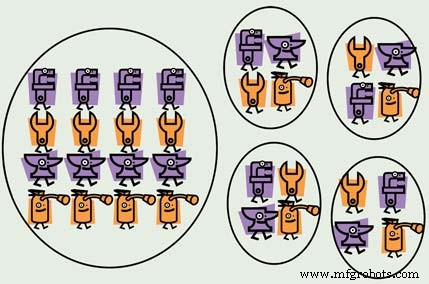
Figure 1. Centralized maintenance (large circle on the left) vs. decentralized (smaller circles on the right).
Doc Palmer, CMRP, author of Maintenance Planning and Scheduling Handbook, has nearly 25 years of hands‑on experience in the maintenance department of a major electric utility. From 1990 to 1994, he redesigned the utility’s planning organization, a change that ultimately expanded planning across all crafts and stations.
Equipment Maintenance and Repair
- Data‑Driven Prioritization of Maintenance Work Orders
- Operator‑Involved Maintenance: Do the Gains Outweigh the Hidden Costs?
- Effective Maintenance Leadership: Building Processes and Enabling Performance – Part 2
- When Is It Acceptable to Deviate From a Maintenance Schedule?
- Enhancing Plant Reliability Through Collaborative Operations and Maintenance
- Reevaluating Maintenance Supervisors: From Desk to Floor
- Standard Work Practices: Elevate Maintenance Reliability
- Proven Strategies to Cut Maintenance Costs Without Cutting Staff
- Mastering Maintenance Workflow: Proven Strategies for Enhanced Quality and Customer Satisfaction
- Strategic Maintenance Planning: Optimize Work Orders for Safety & Cost Savings