



Mastering Maintenance Workflow: Proven Strategies for Enhanced Quality and Customer Satisfaction
 Regardless of what your company manufactures, two pillars drive product quality and customer satisfaction: disciplined work management and proactive equipment performance.
The path to these pillars is rarely straight. Many firms try to control work processes and equipment without first establishing the mechanisms to govern work and measure outcomes over time.
Before exploring tactics to improve workflow and integrate equipment availability into planning, we must confront the primary obstacle most organizations face: building a robust, viable work‑management process.
“This goes against our standard operating procedures.”
“We don’t have time to change the system.”
“We’ve always done it this way.”
If these statements echo in your organization, it’s time to dig deeper. Organizational behavior can’t be altered without first understanding the company’s culture.
Culture is the pattern of shared assumptions that your leadership and staff have developed over time while solving internal and external challenges. It shapes how they perceive, think about, and react to problems, and it reflects their historical responses.
These cultural forces operate beneath conscious awareness. Consequently, employees tend to act in ways that align with entrenched assumptions—even when those assumptions do not correlate with performance.
Cultures settle into stable states and tend to revert to the comfort zone, exhibiting predictable behaviors such as sub‑optimization, change resistance, and risk aversion.
Achieving lasting improvement is difficult when culture remains unchanged. Improvement initiatives often underperform or fail because the organization’s culture does not support the new process. Aligning process and behavior is the single biggest challenge.
Leadership must reinforce the new direction and its value through training, coaching, and performance feedback. Changes in behavior occur gradually and at varying paces, but they do happen.
Sustainable improvements are confirmed when behavior is measured and trends are tracked, ensuring that change efforts remain on course.
Once you grasp your company’s current culture and its potential evolution, you’ll be well positioned to evaluate workflow, resources, and supporting equipment.
Workflow and Maintenance: Models for Improvement
For firms already progressing toward cultural evolution, the next step is to assess work products and the processes that enable or hinder them in light of overarching goals.
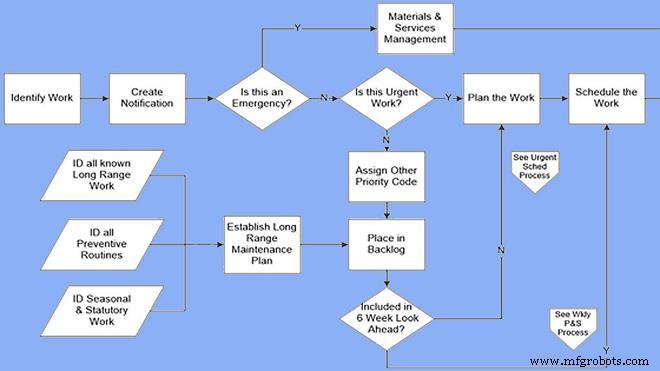
The model below illustrates the elements that must be fully implemented to gain control of your work process and the maintenance measures that support them.
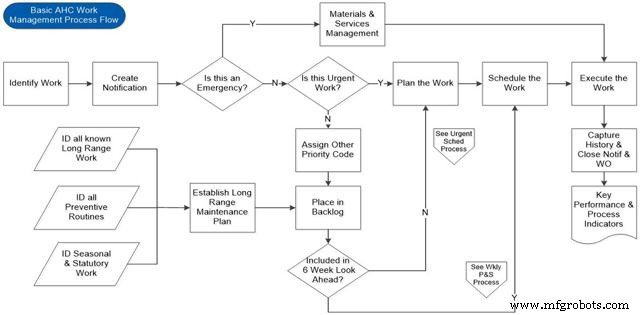
The process begins with defining each required step and culminates in optimizing the use of limited labor resources.
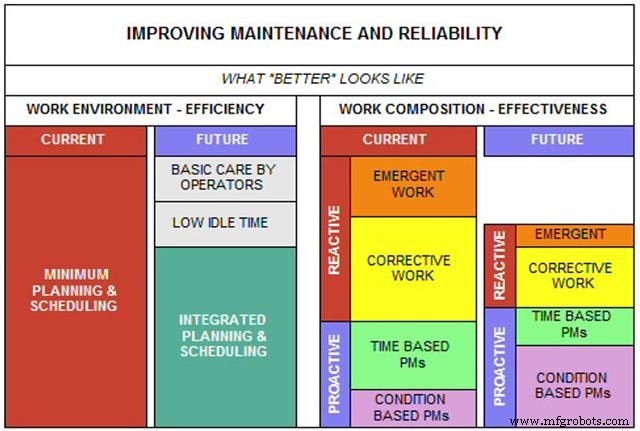
Once workflow mastery is achieved, the focus shifts to equipment control. By applying work‑control efficiencies and proactive maintenance, resources are redirected toward maximizing equipment availability and reliability.
As the model demonstrates, work control increases output with the same labor level, while equipment control enhances the effectiveness of that labor.
Application
Implementing the roadmap demands high discipline: clear responsibilities for every process step, comprehensive training, and rigorous practice.
Establish a management system that monitors and reports key performance indicators (KPIs), key results indicators (KRIs), and the behaviors that sustain improvement.
Successful organizations combine productive employees and reliable equipment. Mastery of workflow and maintenance enables proactive focus on sustaining and expanding the new process, reducing reactive work.
The bottom line is that culture and its associated behaviors must align with the organization’s plans and goals to reap the full benefits of these practices.
Equipment Maintenance and Repair
- Mastering Maintenance Inventory Management: Strategies to Cut Costs and Boost Reliability
- Data‑Driven Prioritization of Maintenance Work Orders
- Operator‑Involved Maintenance: Do the Gains Outweigh the Hidden Costs?
- Effective Maintenance Leadership: Building Processes and Enabling Performance – Part 2
- Elevating Maintenance: Aligning Strategy, Building Trust, and Driving Business Value
- Centralized vs. Decentralized Maintenance: Planning & Scheduling Insights
- Enhancing Plant Reliability Through Collaborative Operations and Maintenance
- The Critical Role of a Structured Equipment Maintenance Workflow
- Strategic Maintenance Planning: Optimize Work Orders for Safety & Cost Savings
- 10 Proven Strategies to Optimize Work Order Management for Business Success