



Balancing Asset Availability and Cost Reduction: A Strategic Guide for Maintenance Leaders
Balancing Asset Availability and Cost Reduction
Many maintenance leaders routinely grapple with the decision: should we prioritize asset availability or focus on cutting maintenance costs? The challenge lies in achieving optimal reliability while keeping budgets in check.
Asset availability and reliability are inherently linked—improved reliability naturally boosts availability. Historically, maintenance has been viewed as a cost center: hiring technicians and stocking spare parts to keep equipment running. When demand is high, budgets swell to ensure maximum uptime. When orders decline, maintenance spending is trimmed, and equipment sits idle longer, eroding productivity.
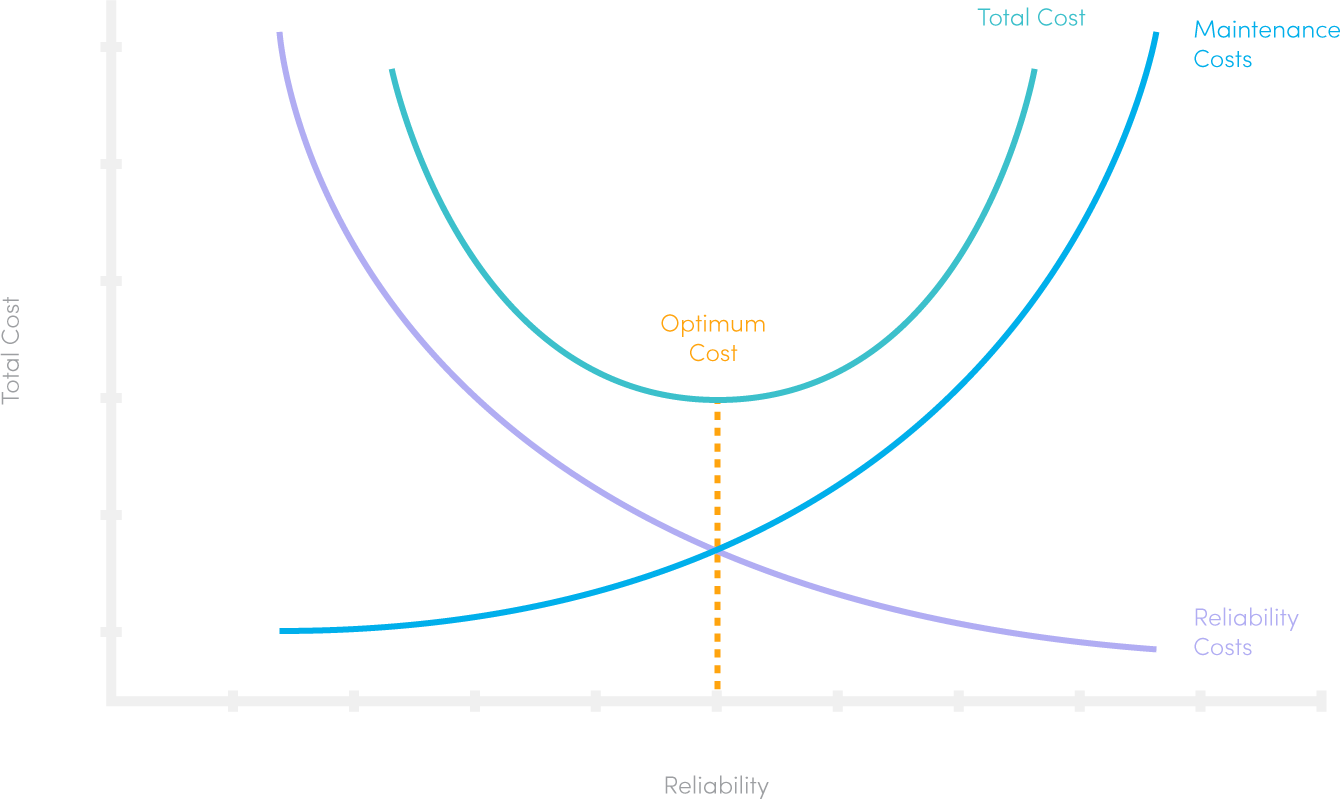
Reliability costs represent the business impact of unreliable systems. Neglecting maintenance can lead to defective production, missed orders, higher energy use, and even environmental or occupational health and safety penalties—ultimately eroding customer trust and revenue.
Maintenance costs cover all reactive and preventive activities. Increasing maintenance spend often yields diminishing returns: a 1% rise in availability may not translate to a 1% rise in cost. For instance, extending a vehicle’s service interval rarely improves reliability proportionally.
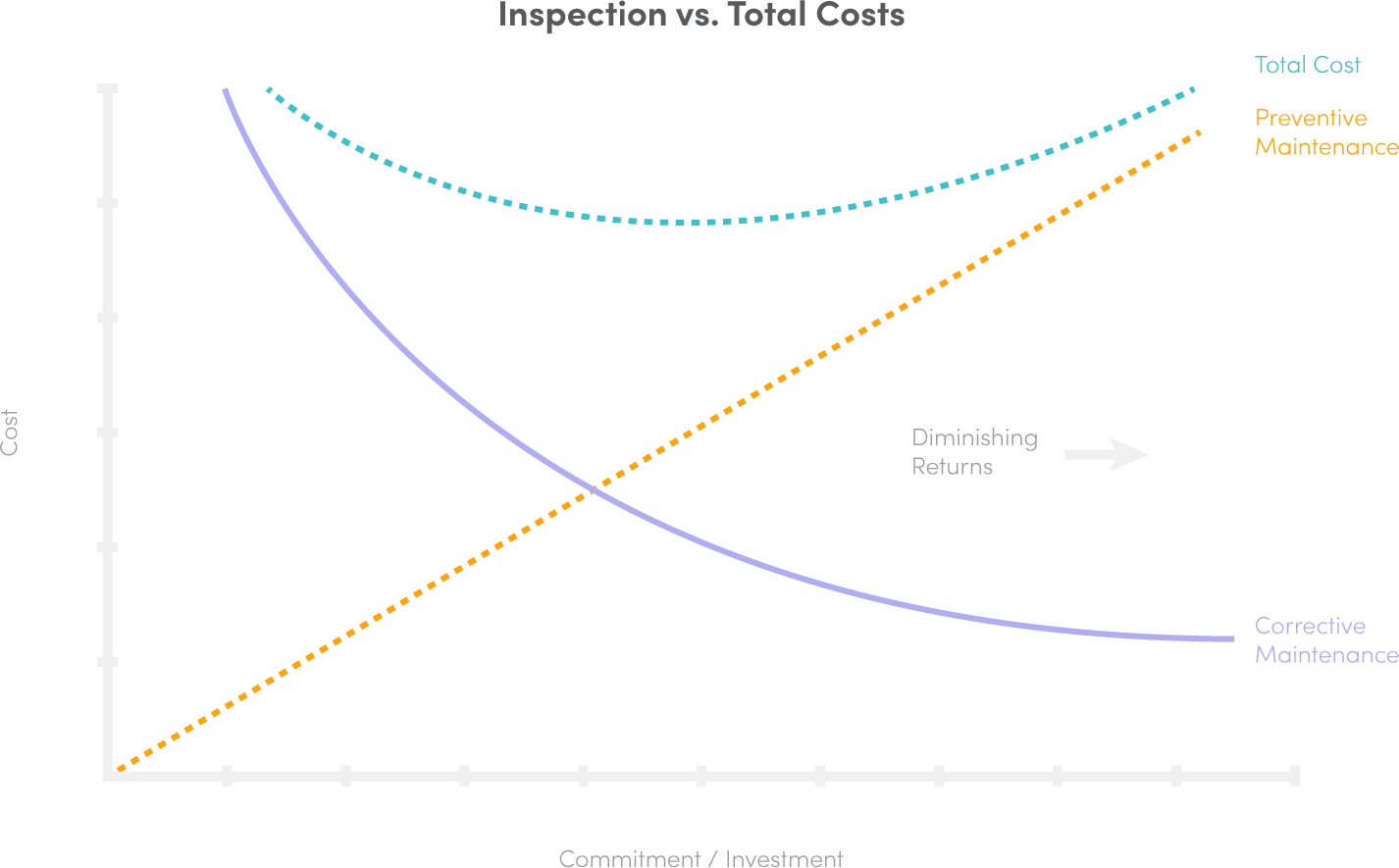
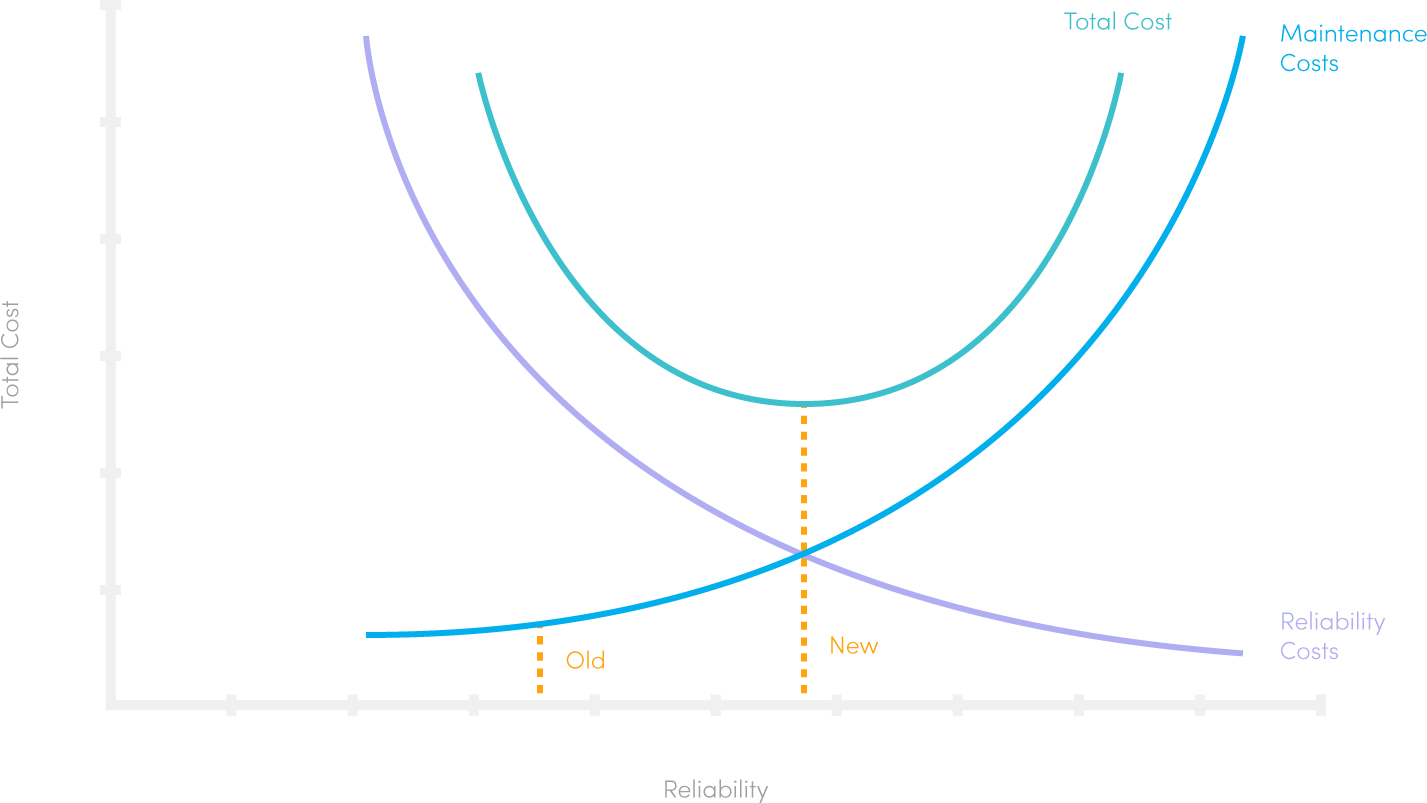
The real challenge is identifying where your organization sits on this curve and locating the most cost‑effective point. Imagine an optimal availability of 50%—the lowest point on the total cost curve. If you’re operating at 90% availability but maintenance costs have ballooned, you’re misallocating resources. Many firms lack this visibility, fueling the perception of maintenance as a mere cost center.
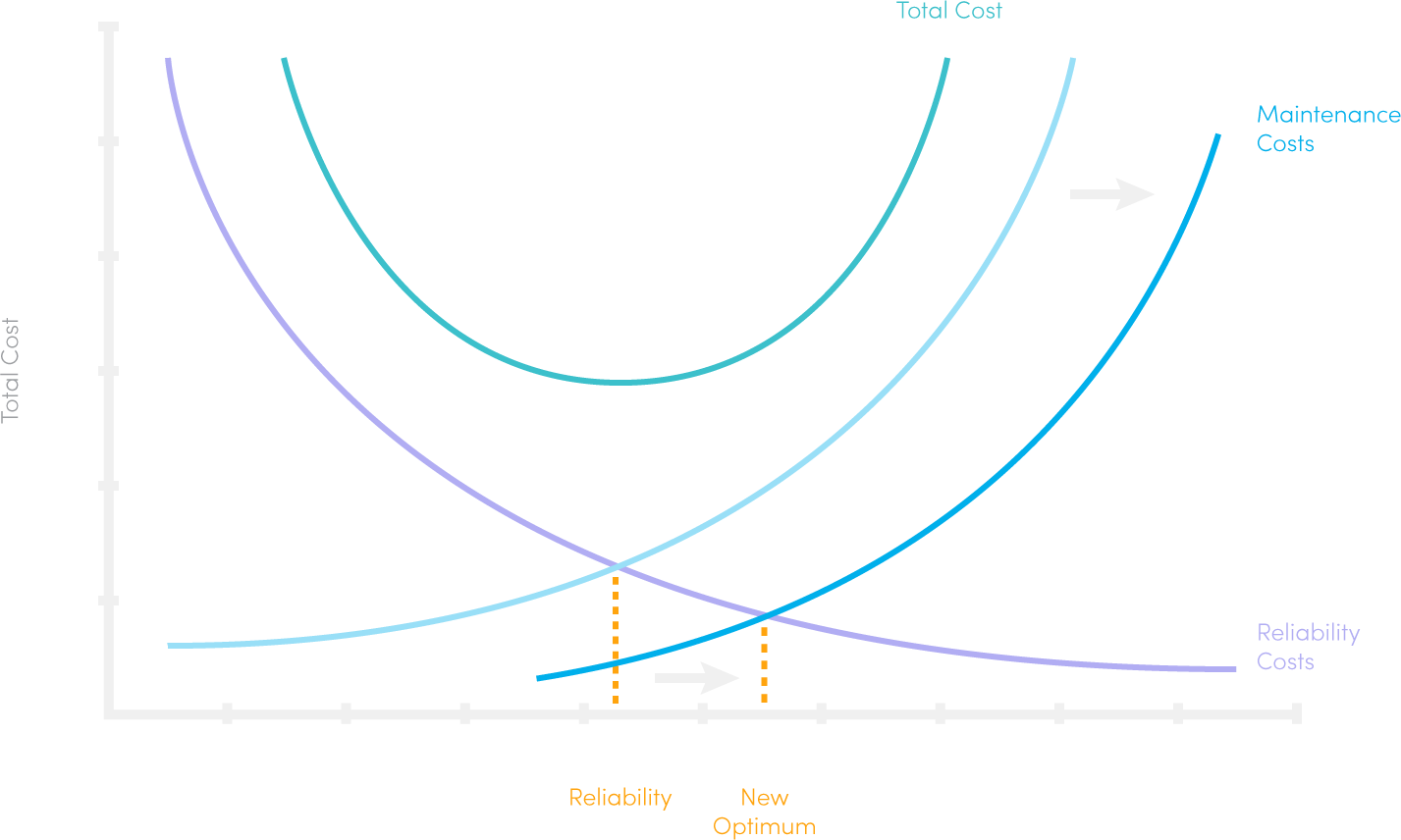
Shift the maintenance cost curve to the right by redefining your approach. The goal is to reduce costs while maintaining or enhancing reliability. Here are proven tactics:
- Move from reactive to proactive maintenance. Reactive work can cost 3–9× more than planned maintenance—APICS 2020 study. Implementing a proactive strategy dramatically lowers expenses and boosts reliability.
- Leverage a CMMS. A Computerized Maintenance Management System centralizes work orders, spare parts, and technician data, enabling data‑driven decisions.
- Optimize inventory. Smarter inventory management cuts carrying costs and mitigates part obsolescence, freeing capital for higher‑value initiatives.
- Adopt condition‑based maintenance. For critical assets, connect sensors to your CMMS with solutions like Fiix Monitoring. Real‑time alerts trigger work orders before failures occur.
- Invest in training. Certifications such as CMRP equip technicians with best practices, aligning their work with reliability and cost goals.
- Enhance safety and environmental protocols. Preventing incidents reduces litigation and regulatory penalties, indirectly protecting the bottom line.
By applying these practices, you can transform maintenance from a cost center into a value‑adding function, targeting world‑class availability of 90%+ while keeping costs in check.
See how Version 5’s integrated platform can accelerate this transformation on our homepage.
Equipment Maintenance and Repair
- Comparing Maintenance Employment Costs: Why Outsourcing May Be Cost‑Effective
- When Outsourcing Maintenance Makes Sense – A Practical Guide
- Strategic Asset Management: Driving Uptime, Cutting Costs, and Boosting Profits
- Should You Measure Maintenance Costs? A Practical Guide
- Why Prioritizing MRO Saves Time and Money in Manufacturing
- Key Maintenance Metrics for Peak Plant Performance
- Top 5 Manufacturing & Maintenance Blogs Every Professional Should Read
- Investing in Maintenance Management Software: Boost Efficiency, Cut Costs, and Extend Asset Life
- 6 Proven Strategies to Cut Equipment Maintenance Costs
- How Lasers and Industrial Robots Drive Cost Savings in Manufacturing