



Climb Milling vs. Conventional Milling: Choosing the Right Cutting Technique
There are two distinct ways to cut materials when milling: Conventional Milling (Up) and Climb Milling (Down). The difference between these two techniques is the relationship of the rotation of the cutter to the direction of feed. In Conventional Milling, the cutter rotates against the direction of the feed. During Climb Milling, the cutter rotates with the feed.
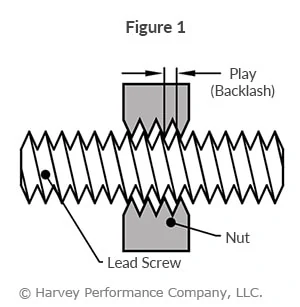
Conventional Milling is the traditional approach when cutting because the backlash, or the play between the lead screw and the nut in the machine table, is eliminated (Figure 1). Recently, however, Climb Milling has been recognized as the preferred way to approach a workpiece since most machines today compensate for backlash or have a backlash eliminator.
Key Conventional and Climb Milling Properties:
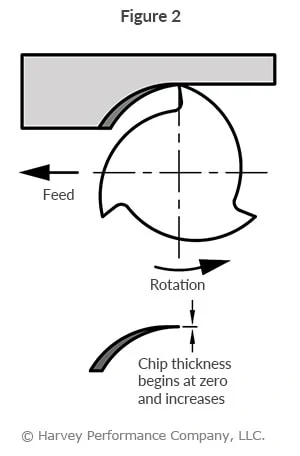
Conventional Milling (Figure 2)
- Chip width starts from zero and increases which causes more heat to diffuse into the workpiece and produces work hardening
- Tool rubs more at the beginning of the cut causing faster tool wear and decreases tool life
- Chips are carried upward by the tooth and fall in front of cutter creating a marred finish and re-cutting of chips
- Upwards forces created in horizontal milling* tend to lift the workpiece, more intricate and expansive work holdings are needed to lessen the lift created*
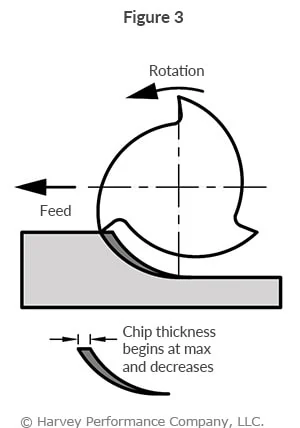
Climb Milling (Figure 3)
- Chip width starts from maximum and decreases so heat generated will more likely transfer to the chip
- Creates cleaner shear plane which causes the tool to rub less and increases tool life
- Chips are removed behind the cutter which reduces the chance of recutting
- Downwards forces in horizontal milling is created that helps hold the workpiece down, less complex work holdings are need when coupled with these forces
- Horizontal milling is when the center line of the tool is parallel to the work piece
When to Choose Conventional or Climb Milling
Climb Milling is generally the best way to machine parts today since it reduces the load from the cutting edge, leaves a better surface finish, and improves tool life. During Conventional Milling, the cutter tends to dig into the workpiece and may cause the part to be cut out of tolerance.
However, though Climb Milling is the preferred way to machine parts, there are times when Conventional Milling is the necessary milling style. One such example is if your machine does not counteract backlash. In this case, Conventional Milling should be implemented. In addition, this style should also be utilized on casting, forgings or when the part is case hardened (since the cut begins under the surface of the material).
CNC Machine
- Lathe vs. Milling Machine: Key Differences & Choosing the Right Tool
- Mastering CNC Milling: Precision Metal Fabrication Explained
- Understanding Milling Machines: Functions, Applications, and Basics
- Mastering Trochoidal Milling: A Comprehensive Guide
- Thread Milling vs. Tapping: Which Threading Method Is Right for Your Parts?
- Horizontal vs. Vertical Milling: Which is Right for Your Project?
- Climb vs Conventional Milling: Which CNC Method Delivers Better Results?
- Milling vs. Turning: Key Similarities Explained
- Understanding the Differences Between Milling and Turning in CNC Machining
- Advanced CNC Milling & Turning Automation for Precision Manufacturing