



Choosing the Right Tooling: Soft vs. Hard Injection Molding Solutions
There are two broad categories of injection molding tools: soft tooling and hard tooling. Selecting the appropriate material depends on a variety of factors, such as budget limitations, volume requirements, and material selection. Soft tooling is used for prototyping or small production runs while hard tooling is used for high-volume production.
What is Soft Tooling?
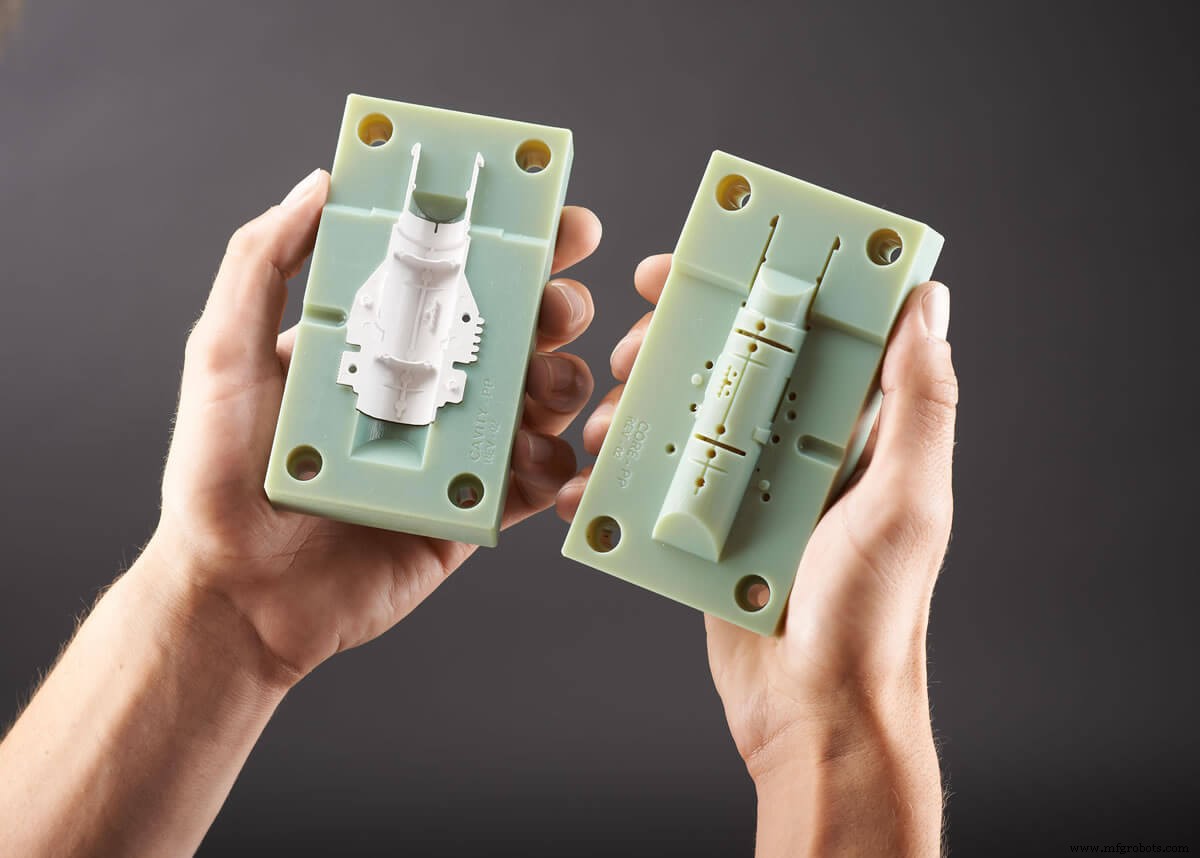
Soft tooling is most commonly used to produce low volumes of rubber moldings and urethane castings. Production runs using soft tooling typically produce less than 100 parts. Soft tooling molds are usually made with silicone, carbon fiber, or fiberglass, and each mold cavity is good for about 25–50 shots.
Soft tooling is the preferred molding process for some industrial applications. Some of the use cases for soft molding include:
- Prototyping to prove a design concept. Soft tooling is a fast and easy way to model a design concept for visualization, demonstrations, functionality testing, and approvals.
- Making test units for quick evaluation by customers. The quick turnaround time for soft tooling injection molding makes it ideal for generating small batches of prototypes used for market testing.
- Custom and small-volume orders. Soft tooling makes the most sense for very low-volume injection molding projects ranging from single prototypes to a few hundred pieces.
Some of the advantages of soft tooling injection molding include:
- Cost-effectiveness
- Short lead times and fast order turnarounds
- A variety of material options
- When using a 3D-printed master pattern, minute details and complex geometries are quicker to implement into soft tooling vs. hard tooling
What is Hard Tooling?
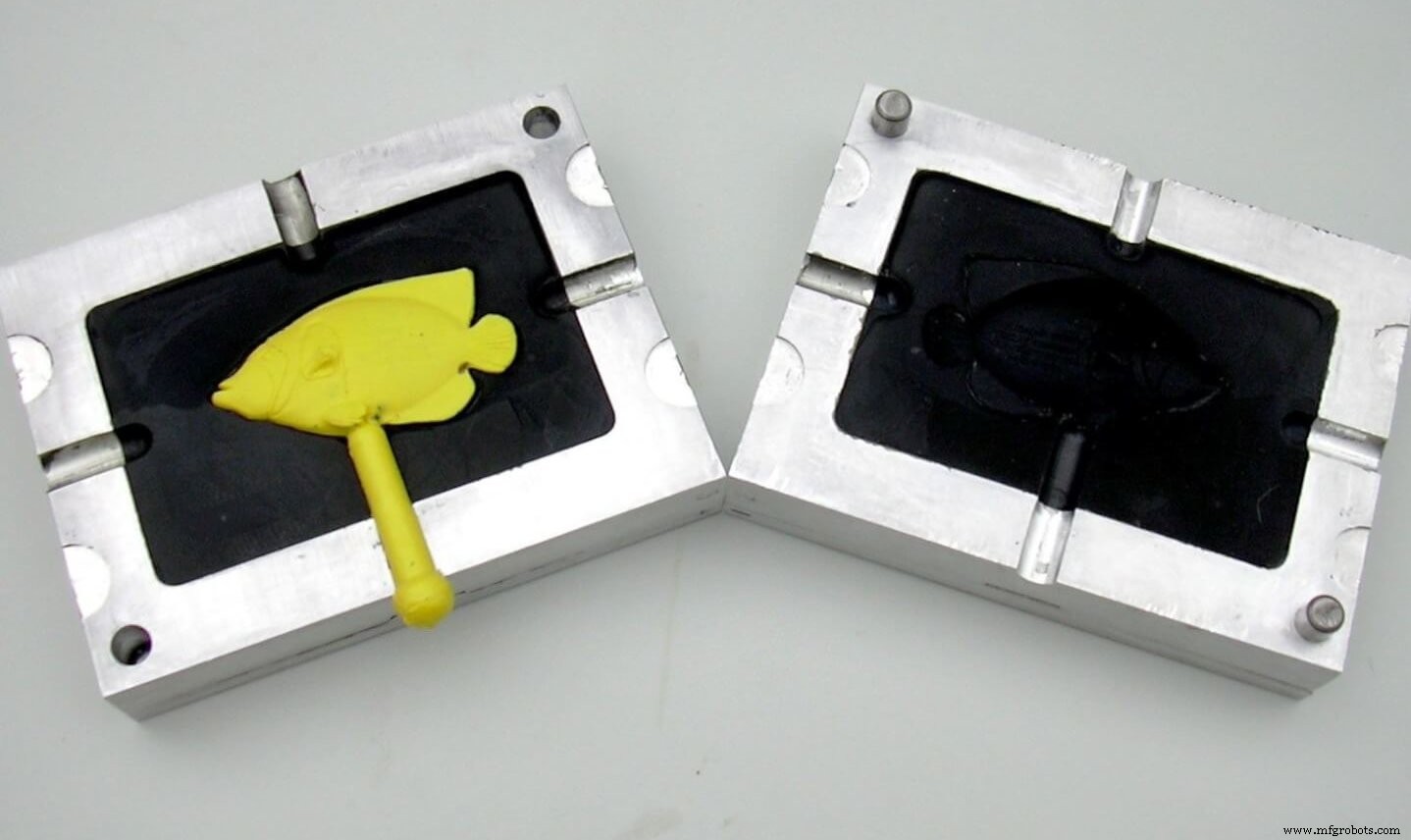
When the production volume is in the thousands or millions of parts, hard tooling is the preferred method. Hard tooling molds are made of sturdier materials such as aluminum, nickel, and steel alloys. Though they take longer to make and are more expensive than molds for soft tooling, hard tooling molds last for a long time.
Hard tooling is expensive to fabricate, so the molds must be crafted with care to avoid costly errors. The fabrication of hard tooling molds is often outsourced to a third party since they require specialized precision machining and finishing capabilities.
The major advantages of hard tooling include:
- The harder molds facilitate high-volume production into the millions.
- Parts with simple designs may be used right off of the production line.
- A single hard tooling mold can have multiple cavities, allowing several of the same part to be created simultaneously.
- Hard tooling molds can withstand higher temperatures than molds for soft tooling, so they are suitable for materials that soft tooling cannot handle.
Soft Tooling vs. Hard Tooling
To summarize, here are the main takeaways when comparing soft tooling and hard tooling:
- Soft tooling is appropriate for making prototypes or for fabricating a small number of parts, typically less than 100. Hard tooling is suitable for manufacturing a large number of parts, typically in the thousands or even millions.
- While metals are used for making hard tooling molds, soft tooling molds are typically made with softer materials like silicone or composites like fiberglass and carbon fiber.
- Soft tooling molds can be made quickly and cheaply but they wear out rapidly. However, since they are cheap, multiple soft tooling molds can be made at a lower cost than a single hard tooling mold. Hard tooling molds take longer to make and are significantly more expensive, but they last for a long time and offset their own cost over large production runs.
3ERP is an ISO 9001:2015-certified company that provides high-quality rapid prototyping and injection molding services. Our turnaround time for prototyping is sometimes as little as a few hours, which gives our customers plenty of time to evaluate designs, demo an engineering idea to upper management, or get customer approvals. We also offer a variety of value-added services, such as CNC machining, pressure die casting, and 3D printing.
For more information about our injection molding capabilities, please contact us or request a quote.
CNC Machine
- High‑Viscosity PEEK Compounds: Optimal for Injection Molding and Extrusion
- Advanced Robotic Injection Molding for Functionalized Composite Components
- Essential Tooling Requirements for Thermoset Polyurethane Manufacturing
- Injection Molding Explained: Process, Applications, and Industries Served
- Advanced Plastic Injection Molding: Cutting-Edge Solutions for Modern Production
- Choosing the Right Tooling Materials for Injection Molding Success
- Preventing Cosmetic Defects in Injection Molding: Expert Tips
- Mastering Living Hinges in Injection Molding: Design, Stress, and Durability
- Aluminum vs. Steel Tooling: Which Is Right for Your Injection Molding Needs
- Choosing the Right Thermoplastic Elastomer (TPE) for Injection Molding: A Practical Guide