



Aluminum vs. Steel Tooling: Which Is Right for Your Injection Molding Needs
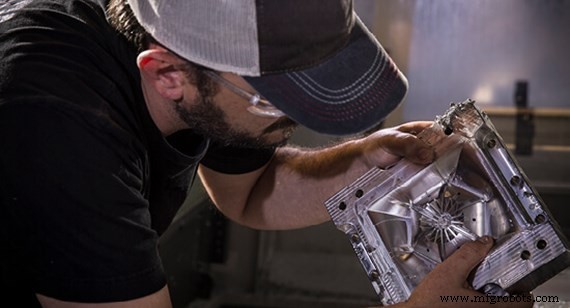 Aluminum molds are milled in rapid CNC machines.
Conventional injection molding typically uses steel tooling capable of producing millions of parts, however, it often takes months to manufacture a mold and a capital investment of $50,000 or more. But what if production demands call for smaller quantities? That’s where aluminum tooling is ideal. Here’s a quick look at the differences between steel and aluminum tooling.
Low-Volume Production with Aluminum Tooling
- Mold production AND parts within 15 days or less
- Low manufacturing costs with molds beginning around $1,500
- Production quantities of up to 10,000 parts or more; depending on material type and geometry, some molds are capable of producing hundreds of thousands of parts
- Simplified mold designs decrease manufacturing time and cost
- Single and multi-cavity tooling: 1-, 2-, 4- and 8-cavity molds are possible depending on part size and complexity
- Thermoplastic and thermoset materials identical to that of high-volume production materials; more than 100 different materials can be used including ABS, PC, PP, LCP, POM, and liquid silicone rubber
- No maintenance fees and lifetime replacement of mold if damaged
- Improved heat dissipation and without the need for messy cooling lines
- Inexpensive mold-safe tooling modifications
High-Volume Production with Steel Tooling
- Lower part cost when quantities increase
- Part production in the millions
- Multi-cavity tooling greater than 8 cavities
- Part complexity can be increased
- More finishing options
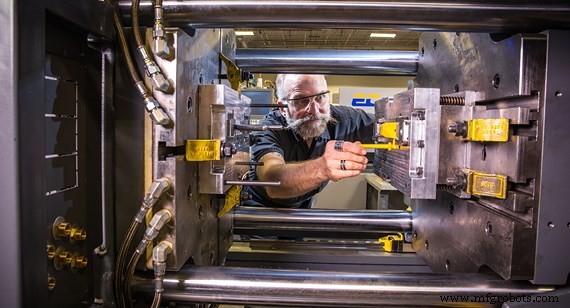 Once an aluminum mold is ready, part production begins almost immediately. This allows manufacturing to finish every order in three weeks or less.
If your part volumes don’t stretch into the millions, if you need on-demand production parts within days, and if you’re looking to avoid risky tooling investments before your part design is truly validated, low-volume injection molding with an aluminum tool might be good option.
At Protolabs, we include a free interactive design for manufacturability (DFM) review within a few hours in every injection molding quote. In the time it takes to get the initial quote from a high-volume production molder, you can have several design reviews and a mold already in production.
If you have any further questions about rapid manufacturing at Protolabs, check out protolabs.com or contact one of our application engineers at 877.479.3680 or ADMIN@MFGROBOTS.COM.
Industrial Technology
- Injection Molding vs Casting: Choosing the Right Process for Your Product
- Injection Molding vs RIM: Choosing the Right Process for Complex Designs
- Understanding Cast Molding vs Reaction Injection Molding: Key Differences in Thermoset PU Production
- Aluminum vs. Steel: Which Plastic Injection Mold Material Delivers Optimal Performance
- Choosing the Right Tooling: Soft vs. Hard Injection Molding Solutions
- Aluminum Injection Molding: Efficient, Cost‑Saving Production of Complex Parts
- Low‑Volume Injection Molding: Your Guide to Efficient Production Options
- Choosing Between 3D Printing and Injection Molding: Which Method Delivers Best Value?
- Aluminum vs. Steel Tooling: Choosing the Right Material for Your Production
- Choosing the Right Mold: Aluminum vs Steel vs 3D‑Printed for Injection Molding