



5 Edge‑Banding Materials for Modern Furniture: Durability, Design, and Sustainability
In contemporary furniture production, edge banding is essential for both protection and aesthetics. Selecting the right edge‑banding material determines a product’s longevity, visual appeal, and environmental footprint. Below, we examine the most common options and help you decide which best suits your manufacturing goals.
1. What Is Edge‑Banding Tape and Its Role in Furniture Production?
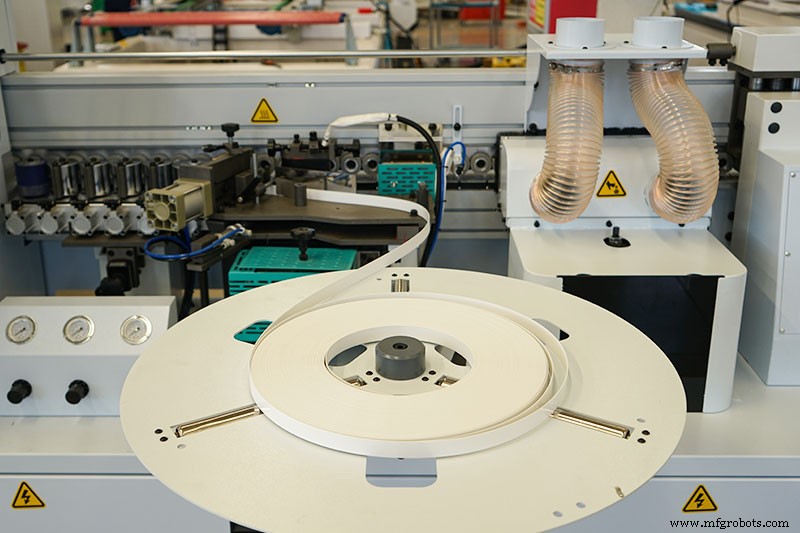
Edge‑banding tape is a narrow decorative strip that comes in a variety of colors and patterns. One side carries a heat‑activated adhesive, and a machine applies it to cover the exposed edges of plywood, particle board, and MDF. These boards have lower density and internal voids, making them vulnerable to moisture, dust, and grease. Proper edge banding seals the edges, preventing bending, cracking, and premature wear while enhancing the overall look of the piece.
Cabinet backs and drawer bottoms often do not need edge banding because they are inserted into grooves and protected from the environment. However, exposed cabinet edges and side panels—frequently touched—must be banded to guard against damage and maintain a high‑end appearance.
2. PVC Edge Banding: Economical and Widely Adopted
PVC edge banding combines durability with cost‑effectiveness. Made from polyvinyl chloride and a blend of additives, it offers flexibility and strength ideal for laminated and melamine furniture.
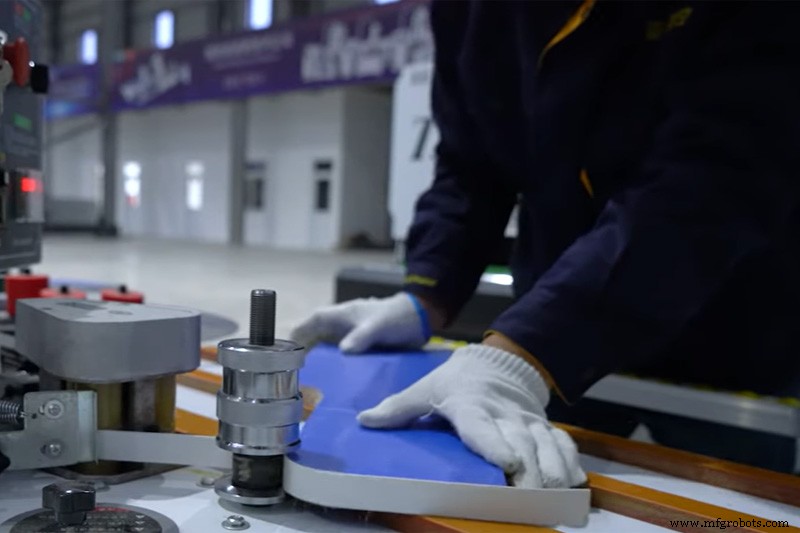
Key Advantages of PVC Edge Banding
- High Durability: Exceptional resistance to water, heat, and abrasion—perfect for office desks, cabinets, and wardrobes.
- Low Cost: More affordable than ABS and natural veneer, delivering significant savings in large‑scale production.
- Versatile Application: Works with hot‑melt adhesives and both manual and automated edge‑banding machines for efficient workflows.
- Color Variety: Available in solid colors, wood‑grain patterns, matte, and high‑gloss finishes that blend seamlessly with board surfaces.
- Strong Adhesion: Flexibility and robust bonding make PVC an excellent choice for particle board, a material prone to delamination.
Manufacturers seeking profitability often choose PVC for its ease of processing and consistent quality, making it the industry standard for high‑volume furniture production.
3. ABS Edge Banding: The Eco‑Friendly Choice
ABS edge banding, composed of acrylonitrile butadiene styrene, is chlorine‑free and 100% recyclable. Its eco‑credentials have made it popular among European brands and retailers like IKEA.
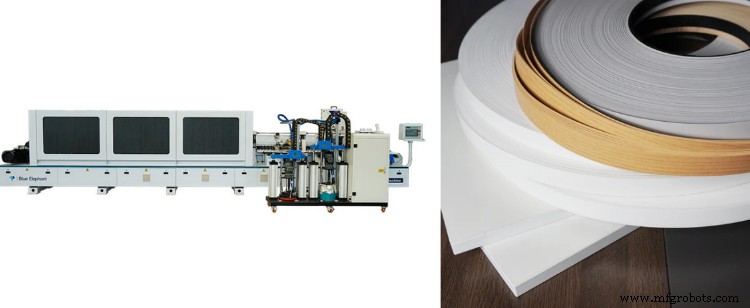
Key Advantages of ABS Edge Banding
- Environmentally Safe: Odorless, chlorine‑free, and non‑toxic when incinerated—ideal for children’s furniture, healthcare, and education.
- High Impact Resistance: Excellent toughness for high‑traffic furniture.
- UV Resistance: Withstands prolonged sun exposure, preventing deformation and discoloration.
ABS is more expensive than PVC, so it is typically reserved for eco‑conscious or premium projects where sustainability is paramount.
4. Wood Veneer Edge Banding: Natural, High‑End Decoration
Thin sheets (0.5 mm to 5 mm) of natural wood—such as Red Oak, Cherry, Birch, Maple, or Walnut—are used to create a realistic grain pattern. When matched to panel material, veneer edge banding delivers a seamless, luxurious finish at a mid‑range price.
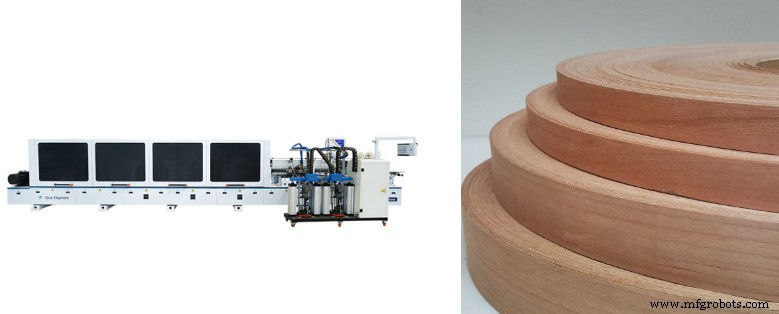
Key Advantages of Wood Veneer Edge Banding
- Authentic Appearance: Retains natural grain and texture.
- Cost‑Effective: Uses only a thin veneer layer, reducing material and processing costs versus solid wood.
- Eco‑Friendly: Free of chemical additives and fully recyclable.
Ideal for high‑end cabinetry, plywood furniture, and decorative pieces that demand a premium look without the cost of solid wood.
5. Acrylic Edge Banding: High‑Gloss Finish
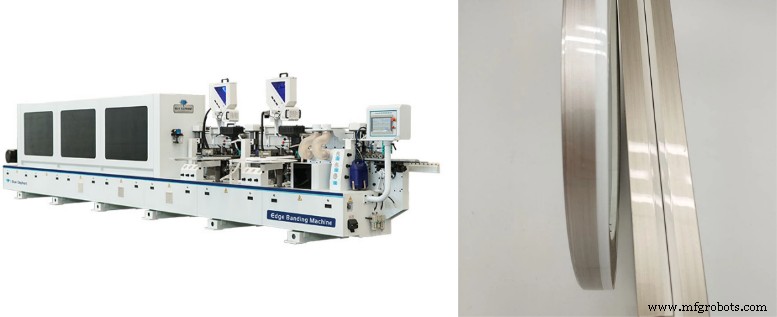
Acrylic edge banding meets the growing demand for personalized, high‑gloss furniture. Its transparency and durability make it indispensable for modern design.
Key Advantages of Acrylic Edge Banding
- High Transparency: Light transmittance up to 92%, showcasing natural wood textures.
- Scratch & Abrasion Resistance: Surface hardness exceeds standard PVC.
- • Excellent Edge Trimming: Works smoothly with automated machines, minimizing chipping.
- Superior Waterproofing: Ideal for kitchen cabinets and high‑humidity environments.
Its elegant appearance, durability, and easy cleaning make acrylic a popular choice for sanitary fixtures, high‑end residences, and hotels.
6. Melamine Edge Banding: The Lowest Cost Option
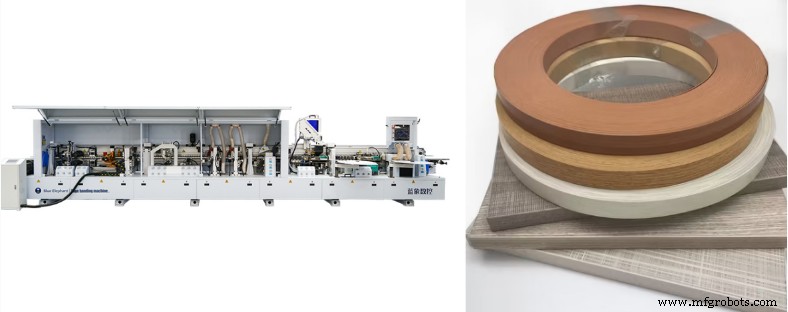
Melamine edge banding is a thin, resin‑impregnated paper that offers good impact resistance and scratch durability.
Key Advantages of Melamine Edge Banding
- Low Cost: More affordable than ABS, PVC, and acrylic—perfect for mass‑produced custom furniture.
- Color & Texture Variety: Simulates wood grain, solid colors, and stone textures.
- Easy Processing: Simple to cut, trim, and apply manually or automatically.
- Environmentally Friendly: Low odor and compliant with indoor air quality standards.
While it offers moderate impact resistance and weaker water resistance, melamine suits mid‑to‑low‑end furniture and dry indoor settings.
7. Comparison of Edge‑Banding Types
Edge Banding Type Materials Key Advantages Applications Cost Limitations
PVC Edge Banding Polyvinyl Chloride Durable, waterproof, heat‑resistant, wear‑resistant, rich in color Office furniture, cabinets, wardrobes, laminated boards, melamine furniture Low to Medium Less eco‑friendly than ABS
ABS Edge Banding Acrylonitrile Butadiene Styrene Eco‑friendly, chlorine‑free, recyclable, highly impact‑resistant, UV‑resistant Children’s furniture, healthcare furniture, educational furniture, eco‑conscious projects Medium to High Higher cost than PVC
Wood Veneer Edge Banding Natural wood veneer Natural wood grain, premium appearance, eco‑friendly, and more economical than solid wood High‑end cabinets, luxury furniture, decorative furniture Medium Lower moisture resistance than plastic edge banding
Acrylic Edge Banding Acrylic High‑gloss finish, high transparency, scratch and abrasion resistance Modern furniture, bathroom cabinets, luxury interior decoration High Higher material cost
Melamine Edge Banding Resin‑impregnated paper Lowest cost, rich in colors and textures, simple to process, and lightweight Budget furniture, mass‑produced panel furniture, indoor furniture Low Lower impact resistance and weaker water resistance
8. How to Choose the Right Edge Banding for Your Project
There is no single “best” edge banding tape. The right choice depends on your specific production needs. Consider the following criteria:
- Cost Budget: PVC and melamine are ideal for low‑to‑mid‑range furniture. Wood veneer and acrylic target high‑end markets.
- Aesthetic Requirements: Wood veneer delivers a natural look; otherwise, PVC or ABS offers versatility.
- Environmental Goals: ABS is the go‑to for projects with strict eco‑compliance.
- Usage Frequency: High‑strength PVC is best for frequently used items.
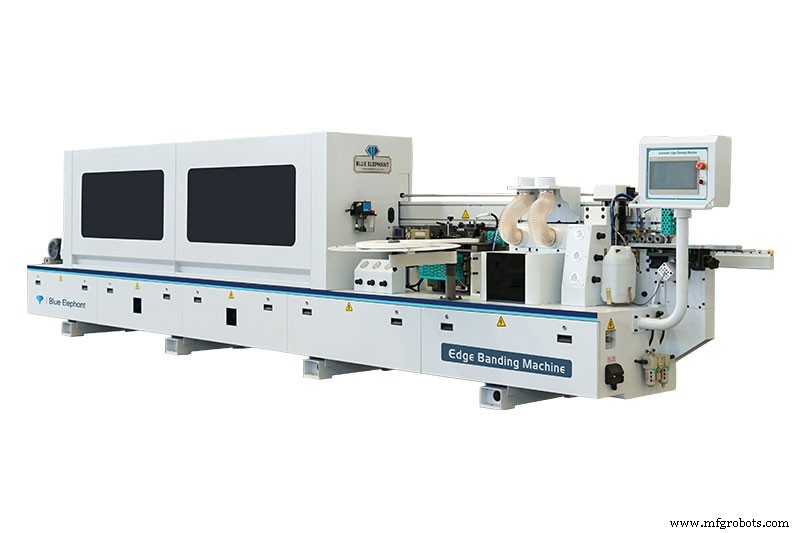
Optimal results also rely on using a high‑precision edge‑banding machine. Incompatibility between material and equipment can cause adhesive failure, chipping, or visible glue lines. Many manufacturers therefore upgrade their machinery alongside their material selection.
FAQ
Q1. Which Edge Banding Is Best for MDF?
MDF’s flatness and uniform density make it compatible with PVC, ABS, acrylic, and wood veneer banding.
Q2. Why Does Edge Banding Fail?
Failures stem from inadequate adhesive temperature, insufficient pressure, or panel moisture. Poor glue lines often result from uneven cutting or uneven adhesive application, while corner lift occurs when pressure is uneven or curing is too rapid. Chipping can be caused by excessive roller pressure or uneven board density.
Q3. PVC vs. ABS: Which Is Better?
PVC offers lower cost and mass‑production suitability, whereas ABS prioritizes environmental performance for eco‑friendly settings.
Q4. How Thick Is Edge Banding?
Typical thicknesses range from 0.4 mm to 3 mm. 0.4–0.8 mm suits internal dividers or cabinet backs; 1.0–1.5 mm is standard for everyday furniture; 2.0–3.0 mm is reserved for high‑wear or high‑end pieces.
Q5. Which Edge Banding Is Best for High‑Gloss Furniture?
Acrylic is preferred for its high transparency and light‑transmitting qualities.
Q6. Can a Single Edge Banding Material Be Used With Different Panels?
Yes, but performance varies with panel density, surface flatness, and machine configuration.
Final Thoughts
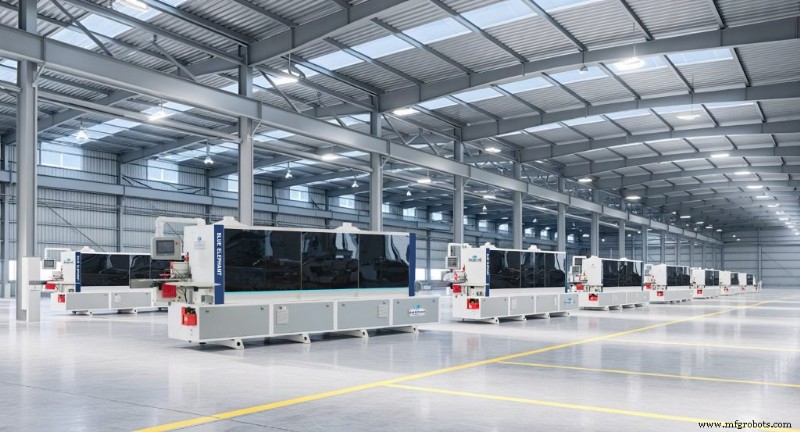
Even the finest edge‑banding materials can fall short if the equipment is unstable. With 16 years of expertise in edge‑banding machinery, Blue Elephant CNC knows that superior quality results from a fully integrated production system. Contact us to upgrade your edge‑banding equipment and elevate your product quality.
Read more in our related blogs:
- Edge Banding Solutions for MDF Furniture
- How Cabinet Edge Banding Improves Furniture Quality?
- How Thick Is Edge Banding?
CNC Machine
- CNC Precision Engineering: Delivering Tight Tolerances and Superior Surface Finish
- Start Your CNC Machinist Career: Skills, Opportunities, and Industry Insight
- Master Axis Control on the DSP B58 Handle System: Step-by-Step Guide
- 1325 CNC Wood Router with Oscillating Knife – Premium Quality for US Market
- 1650 ATC 4‑Axis CNC Woodworking Machine Now Shipping to the United States
- Boost Manufacturing Efficiency & Cut Costs with Strategic Batch Production
- Designing Clear Parts: Materials, Techniques, and Finishing for Transparent and Translucent Components
- Mastering Tool Sensor Operation in DSP A11 Handle Control Systems
- New Zealand Delivery: 1530 ATC CNC Router & 6132Y CNC Panel Saw
- ECS G81 Standard Drilling Cycle: Precision Data Entry & Parameter Settings