



Choosing the Right CNC Router Bit: A Practical Guide
As an after‑sales engineer at Blue Elephant CNC, I speak daily with woodworkers and engravers who ask the same question after buying a router: "Which bit do I use for this job?" The right bit turns a capable machine into a precise tool. Below is a concise, expert‑backed reference that matches each bit type to your specific task.
I. The Core Bit Families
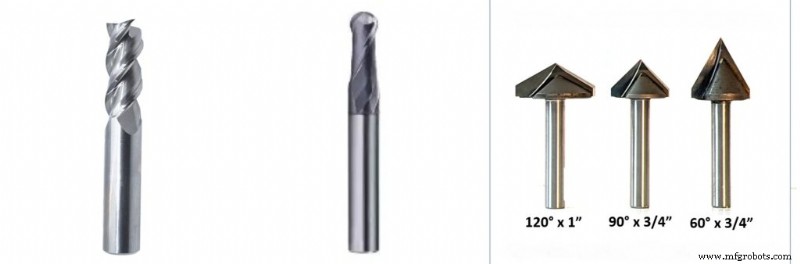
| Bit Type | Primary Use | Key Feature | Advanced Note |
|---|---|---|---|
| End Mill (Flat/Square) | Cutting, slotting, pocketing, 2‑D profiles | Flat tip creates sharp corners | Short flutes reduce deflection and chatter—essential for precision parts. |
| Ball Nose | 3‑D contouring, detailed carving, smooth surfaces | Rounded tip yields curved finish | Step‑over influences surface quality; reducing from 10% to 5% cuts finishing time in half. |
| V‑Bit (Engraving) | Lettering, signage, chamfering, V‑grooves | Pointed tip gives variable line width (V‑carving) | Use 90° for bold lettering; 30°–60° for fine engraving. |
II. Understanding Bit Characteristics
1. Flute Design
Flutes—the spiral cutting edges—determine chip removal, speed, and finish. Choose based on material and required finish:
- Single Flute: Excellent for fast chip evacuation in soft materials (plastics, aluminum); ideal for high feed rates.
- Double Flute: The workhorse for woodworking; balances strength, cut quality, and chip removal.
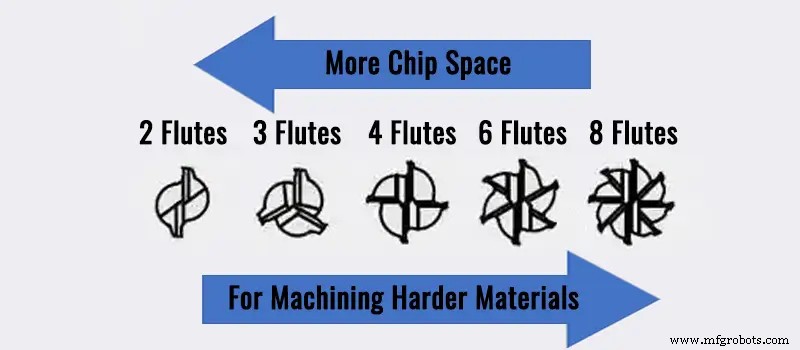
- Three/Four Flutes: Best for a smoother finish in harder materials; require slower feed rates and powerful spindles to clear chips.
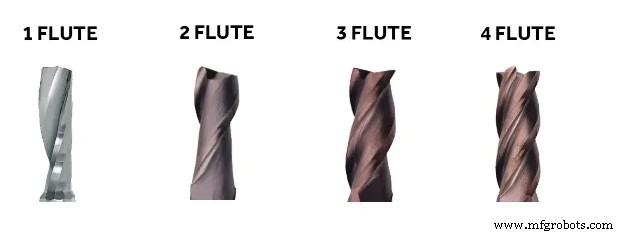
Tip: More flutes mean smaller valleys, reducing chip clearance. Four‑flute bits excel in carbon fiber and phenolic but can overheat wood.
2. Cut Direction
- Up‑Cut: Flutes pull chips upward; ideal for deep cuts and clean bottoms, but may splinter tops.
- Down‑Cut: Flutes push chips down; keeps thin materials flat and leaves a clean top, but bottom may fray.
- Compression: Combines up‑cut tip and down‑cut body; perfect for sheet goods, delivering clean edges on both sides.
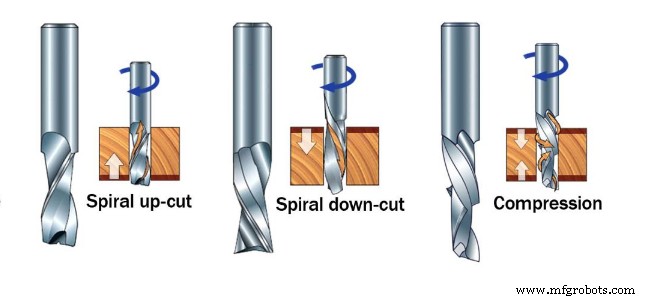
Advanced tip: Start cuts deeper than the up‑cut length (usually 3–4 mm) so the down‑cut section engages fully.
3. Helix Angle
The angle between the cutting edge and the tool axis affects chip flow and surface finish.
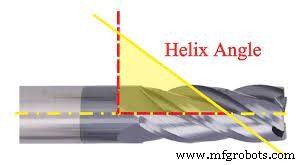
- Low (20°–30°): Best for metals and hard plastics—stronger edge, less vibration.
- Medium (30°–40°): Versatile for woodworking (plywood, MDF, solid wood); balances chip evacuation and edge strength.
- High (40°–55°): Designed for fast, clean chip evacuation in stringy woods or aluminum; reduces heat but can pull harder on the spindle.
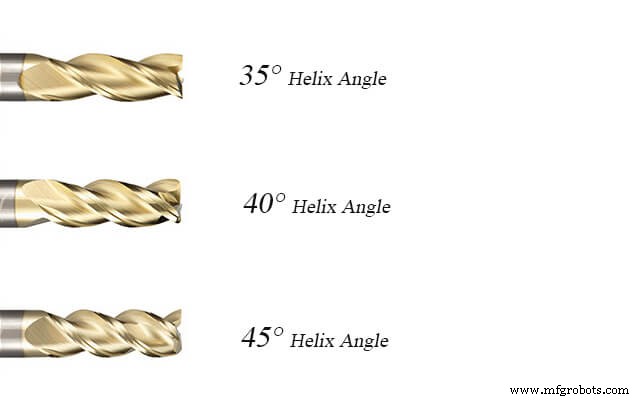
Advanced insight: High‑helix tools lower tool load at high feed rates, crucial for high‑speed furniture production.
III. Matching Bits to Your Project
| Project Goal | Recommended Bit(s) | Why It Works |
|---|---|---|
| General Cutting/Sizing (Plywood, MDF) | Compression Bit, Double‑Flute End Mill | Compression provides clean edges on both sides; double flute cuts fast and reliably. |
| Detailed 3D Carving (Reliefs, Sculptures) | Ball‑Nose Bit (small diameter) | Rounded tip gives smooth, contoured surfaces without stair‑stepping. |
| Engraving Letters/Signage | V‑Bit (90° or 60°) | V‑shape produces sharp lettering; angle controls depth and width. |
| Pocketing (Creating a Recess) | End Mill (Flat) → Ball‑Nose | Flat bottom yields level pocket floor; ball‑nose finishes rounded corners. |
| Edge Profiling/Chamfering | V‑Bit or Specialized Round‑Over Bit | V‑Bit gives straight bevel; round‑over creates smooth curved edge. |
IV. Advanced Bit Selection
1. Specialty Materials & Effects
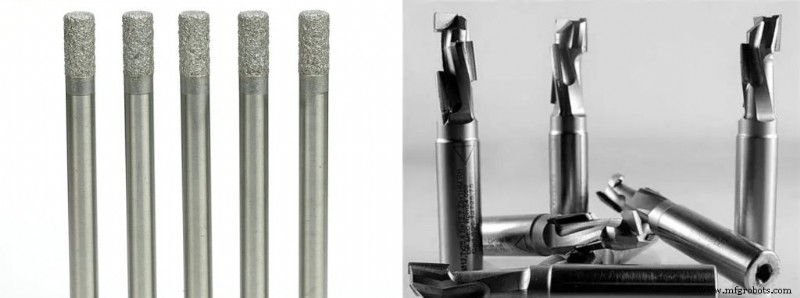
- Composite Materials (Carbon Fiber, Fiberglass, Laminated Panels): Use diamond‑coated or PCD (Polycrystalline Diamond) bits. Their extreme hardness resists abrasion and extends tool life.
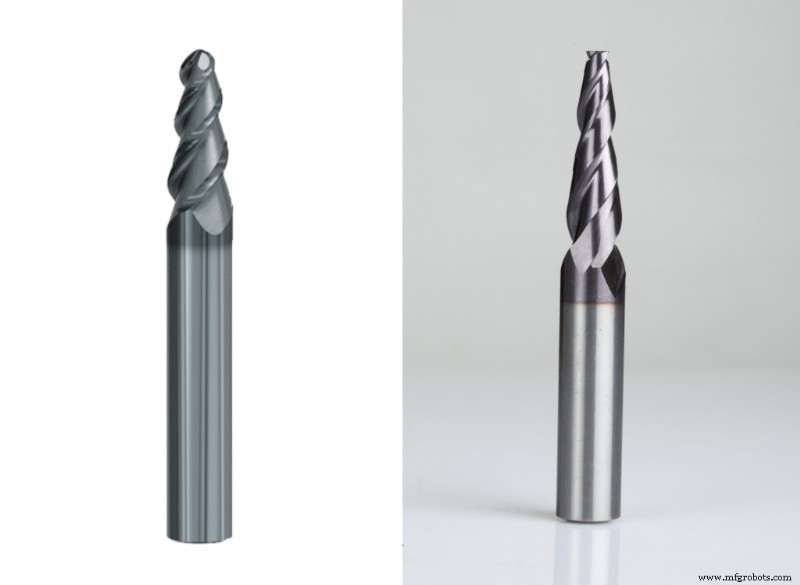
- High‑Precision & Fine Detail: Tapered Ball‑Nose and Tapered End Mill bits offer rigidity at the shank while achieving a fine point, enabling deeper cuts and sharper internal corners.
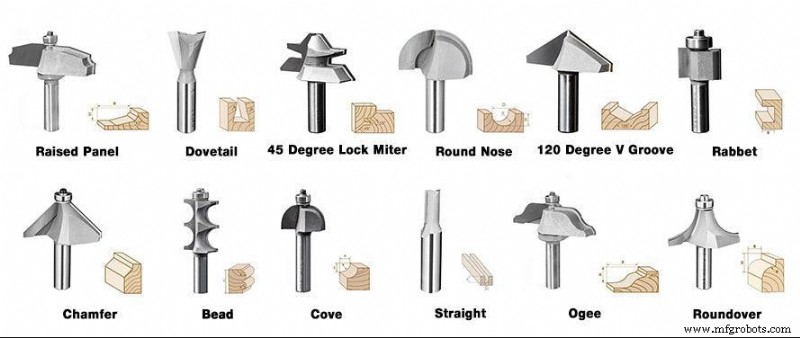
- Decorative Edges & Moldings: Profile bits (Roman Ogee, Cove, Dovetail) let you create classic joinery directly on a CNC router.
2. Tool Coatings
Coatings reduce wear, friction, and heat, allowing higher feeds and longer intervals between sharpening.
- Uncoated: Standard, cost‑effective for general woodworking but wears faster on abrasive materials.
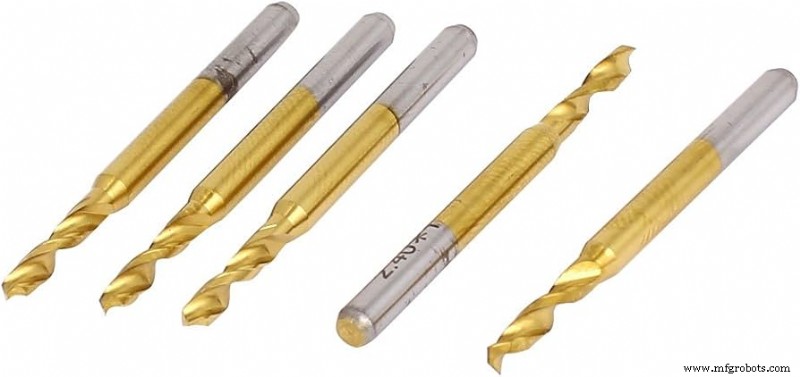
- TiN (Titanium Nitride): Gold‑colored; increases hardness and heat resistance for all‑purpose use.
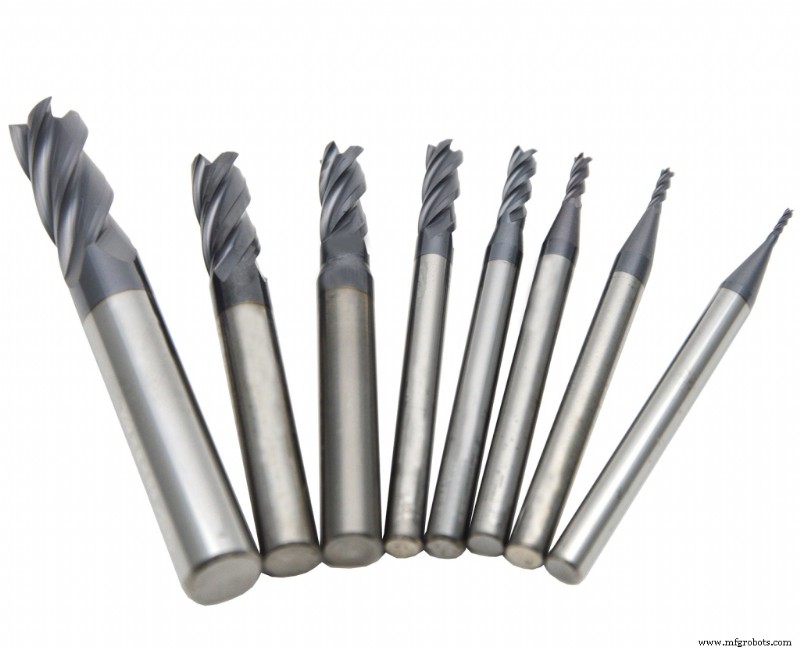
- TiAlN (Titanium Aluminum Nitride): Dark purple/bronze; superior for high‑heat tasks such as cutting metals or dense composites.
V. Optimizing Performance: Feeds, Speeds & Holding
1. Mastering Feeds and Speeds
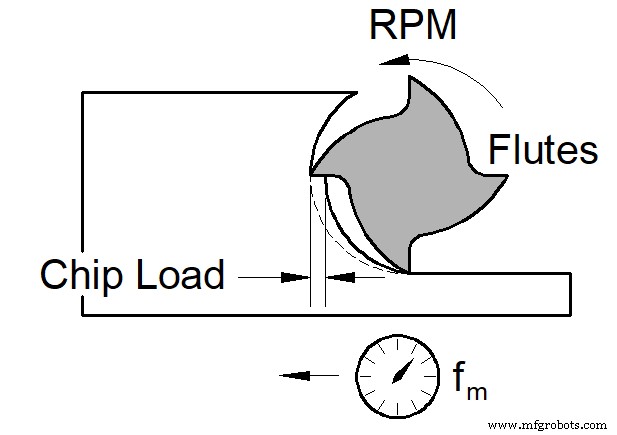
The relationship between spindle speed (RPM), feed rate (IPM), and chip load determines cut quality and tool life.
Chip Load (Critical Parameter)
Chip Load = Feed Rate (IPM) ÷ (RPM × Number of Flutes). It’s the thickness of material removed per flute per revolution.
- Too Low: The bit rubs, generating heat that dulls or melts material.
- Too High: Overloaded bit causes deflection, chatter, poor finish, and possible breakage.
- Optimal: Cleanly shears material into curled chips, removing heat efficiently and delivering a smooth surface.
Practical Adjustments for Test‑Cutting
- Seeking a smoother finish: Increase RPM or decrease feed rate to lower chip load.
- Removing more material: Decrease RPM and increase feed rate (within safe chip load limits).
- Chatter or squealing: Decrease RPM and increase feed rate, or switch to a more rigid, larger‑diameter bit.
2. Secure Tool Holding
- Precision Collets: Use ER series or equivalent; they grip the entire shank evenly, preventing runout.
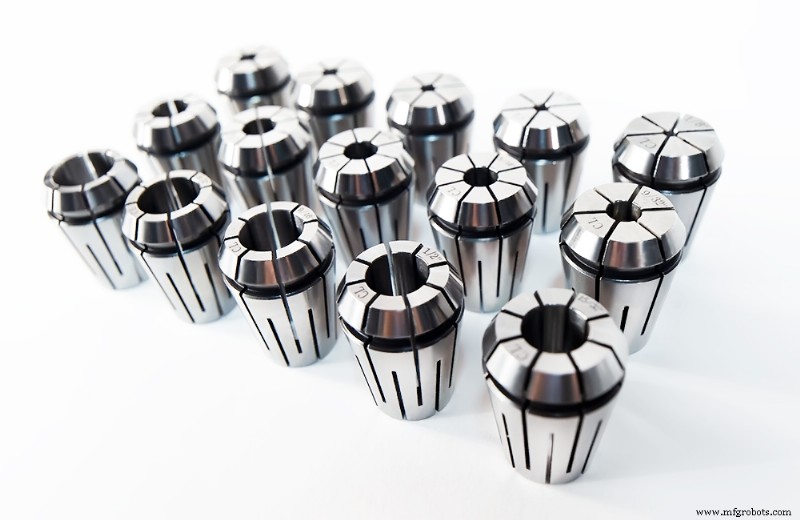
- Cleanliness: Keep collet and shank spotless; even a dust speck can cause imbalance.
- Grip Length: Insert the shank fully—never grip less than 3–4 times the tool diameter.
VI. Safety & Maintenance
1. Safety Practices
- Wear eye protection, hearing protection, and use dust collection or respirators.
- Secure the workpiece with clamps or vacuum; a shifting piece can break bits and create projectiles.
- Stop immediately if you hear squealing or feel excessive vibration.
2. Bit Care & Storage
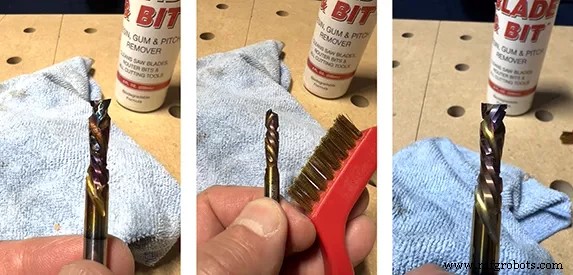
- Cleaning: Remove pitch and resin with a dedicated cleaner or suitable solvent.
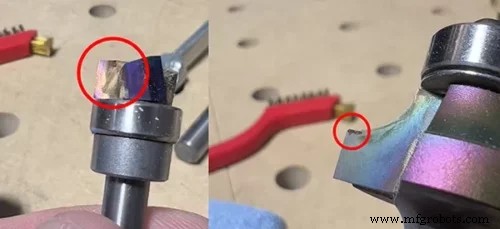
- Inspection: Check for chips, cracks, or dullness before each run; a dull bit forces higher feed and reduces safety.
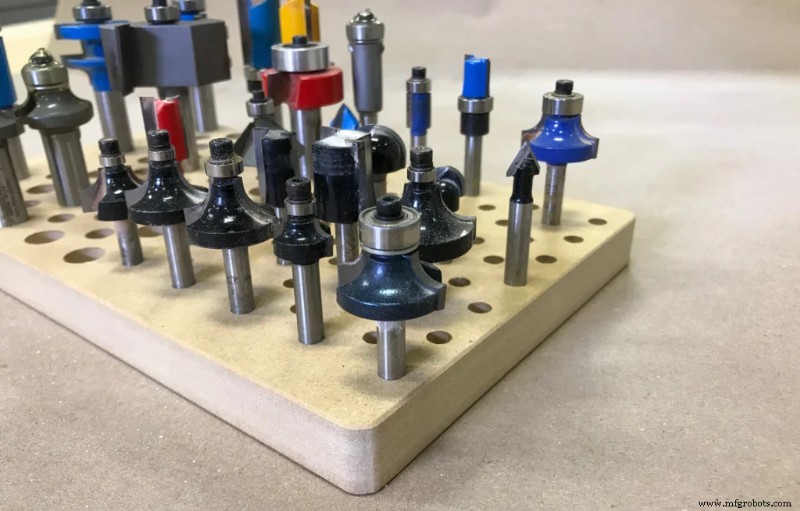
- Storage: Use an organized case or rack with individual slots to prevent edge damage.
VII. Need Expert Advice?
At Blue Elephant CNC, we run the machines daily and work with thousands of customers annually. If you’re unsure which bit, speed, or feed rate is right for your project, contact us. Our pre‑sales and after‑sales teams provide 24‑hour multilingual support to ensure your success.
Related Topics:
CNC Machine
- Discover the Advantages of 5‑Axis CNC Machining
- How to Install a Wood CNC Router: A Step‑by‑Step Guide
- Comprehensive M Code Reference for C.B.Ferrari E560 CNC Machining Center
- 2024 CNC Wood Drilling Machine Buyers’ Guide: Expert Tips & Top Models
- Mediterranean Client Trains on Advanced CNC Router at Our Facility
- Top 20 North American Woodworking Companies: Expertise in Cabinetry, Furniture, and Architectural Woodwork
- Mastering CNC Programming: G-Code & M-Code Essentials
- Laser Wood Cutter & Engraver: Optimal Power Settings, Speed, and Capacity for Precise Wood Engraving
- Wire EDM Explained: How It Works & Why It Matters
- Avoid These Four Common CNC Machine Tool Issues: A Practical Guide