



How to Choose the Perfect CNC Router Size for Your Workshop
Choosing the right CNC router size is the cornerstone decision that shapes your production capacity, workflow efficiency, and overall budget. The ideal size hinges on your unique manufacturing objectives, and a careful, data‑driven evaluation will guide you to the optimal machine.
1. Common CNC Router Sizes and Their Typical Users
Understanding the market’s standard classifications helps you narrow the field before you dive into specifics.
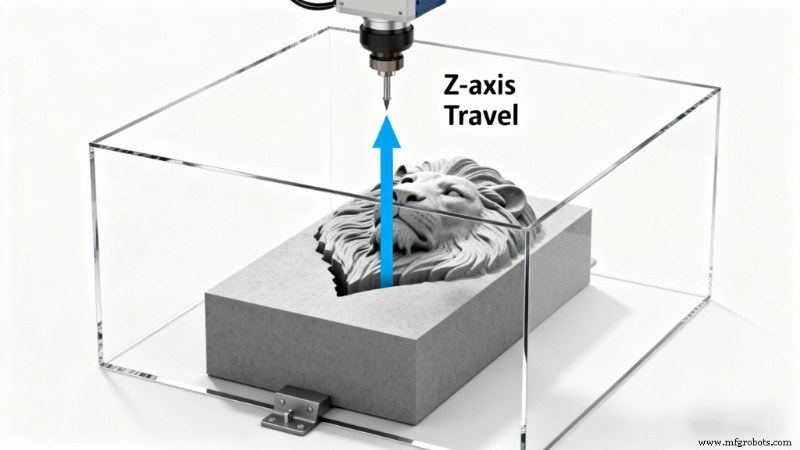
Routers are usually defined by their X, Y, and Z travel – the maximum distance the spindle can move. This travel envelope determines the cubic volume in which a part can be machined.
Desktop & Benchtop CNC Routers
These compact units are the first step for hobbyists, educators, and small‑scale designers.
- Typical Work Area: 1′ × 1′ to 2′ × 4′ (600×1200 mm), e.g., 3018, 6090 mm.
- Primary Users: Hobbyists, makers, teachers, and designers working on prototypes.
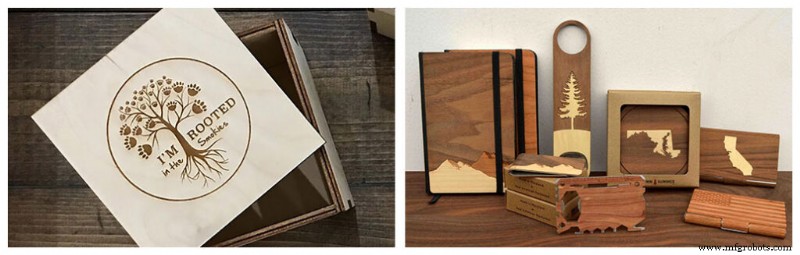
- Applications: Engraving phone cases, milling PCBs, creating wooden inlays, small signs, and soft‑material machining (wood, plastics, foams). Limited power and rigidity make them unsuitable for heavy‑metal or hardwood milling.
Mid‑Size & Small‑Business Routers
These machines offer a balance of rigidity, power, and speed, ideal for many woodworking and sign‑making businesses.
- Typical Work Area: 4′×8′ (1220×2440 mm) is the benchmark, with 4′×4′ and 5′×10′ variants also common.
- Primary Users: Small‑to‑medium shops, sign makers, cabinet and furniture makers, architectural modelers, and aluminum fabricators.
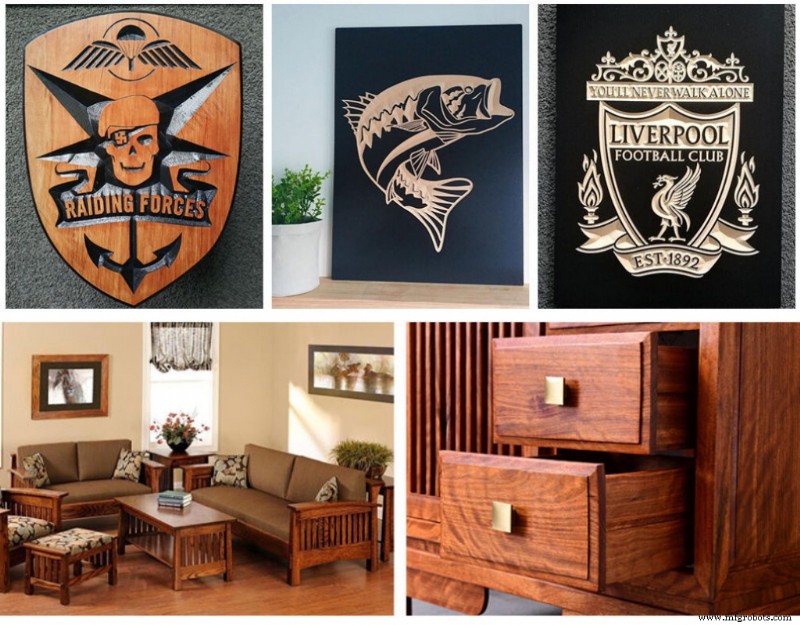
- Applications: Cutting full cabinet panels, large 3‑D signs, complex furniture components, and nesting multiple parts from a single sheet. Many models feature 3 kW or greater spindles and optional vacuum tables for reliable clamping.
Large‑Format & Industrial Routers
When your workflow demands exceed standard panel sizes or requires ultra‑fast precision, industrial routers become essential.
- Typical Work Area: 5′×10′ up to 8′×20′ or larger.
- Primary Users: Large‑scale manufacturers, aerospace and automotive composite suppliers, and high‑volume furniture producers.
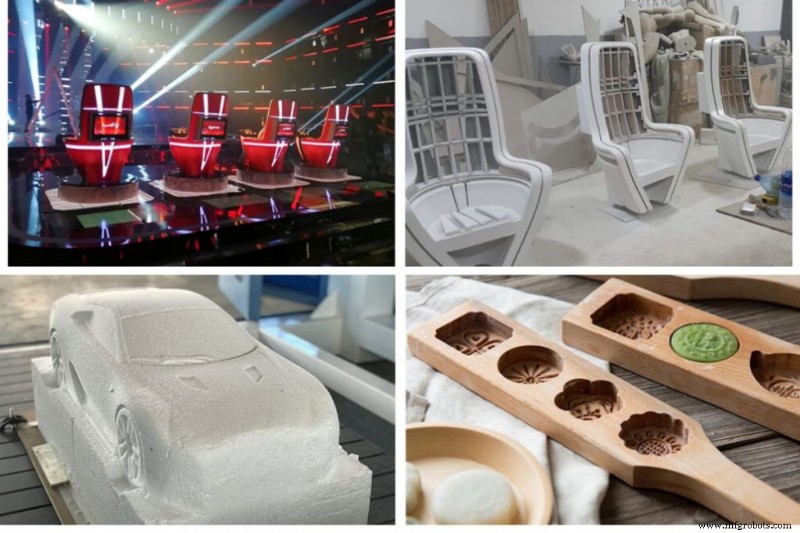
- Applications: Mass‑production nesting, large mold making, high‑volume furniture assembly, 5‑axis work, large‑panel processing, and automated tool‑changer (ATC) operation that runs for hours without manual intervention.
2. Analyze Your Core Manufacturing Requirements
Your product line defines the machine you need. Start with an honest assessment of what you’ll be producing.
Workpiece Dimensions Dictate Size
Ask yourself: What is the largest single piece I need to cut? That measurement sets your minimum machine size.
- Sheet Goods: If you regularly cut 4′×8′ sheets, a 4′×8′ machine is the baseline. A 5′×10′ router, however, offers additional advantages such as oversize material handling, edge trimming, better clamping margins, flexible fixturing, and more efficient nesting.
- 3‑D Carving: For sculptural work, Z‑axis travel is critical. Ensure the spindle can accommodate the material thickness and the longest tool required to reach deep features.
Material Type and Thickness Drive Spindle Power
The machine’s work envelope is only part of the story; spindle power determines what you can actually cut.
- Softwoods, plastics, foams – 2.2 kW (3 HP) spindle may suffice.
- Hardwoods, plywood, MDF – 3–5.5 kW (4–7.5 HP) for clean cuts and good finish.
- Aluminum & non‑ferrous metals – minimum 4.5 kW (6 HP); often higher for aggressive machining. The frame must be steel or heavy‑grade aluminum to dampen vibration.
3. Production Volume and Efficiency Considerations
Machine size directly influences throughput. An undersized router creates bottlenecks; the right size streamlines the entire workflow.
Matching Machine Size to Production Volume
- Low Volume & Prototyping: For one‑offs or small batches, a desktop or 4′×4′ router is usually adequate.
- Medium to High Volume: If you process full 4′×8′ sheets regularly, that size is the minimum. For true high volume, a 5′×10′ model is more efficient, enabling tighter nesting and eliminating the need to pre‑cut oversized material.
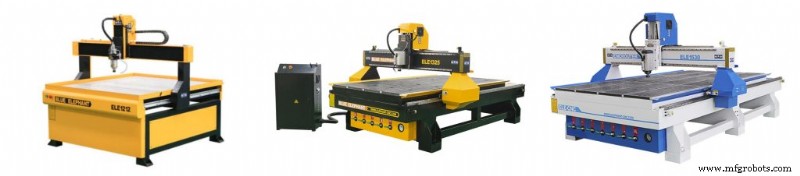
How Size Unlocks Key Efficiency Features
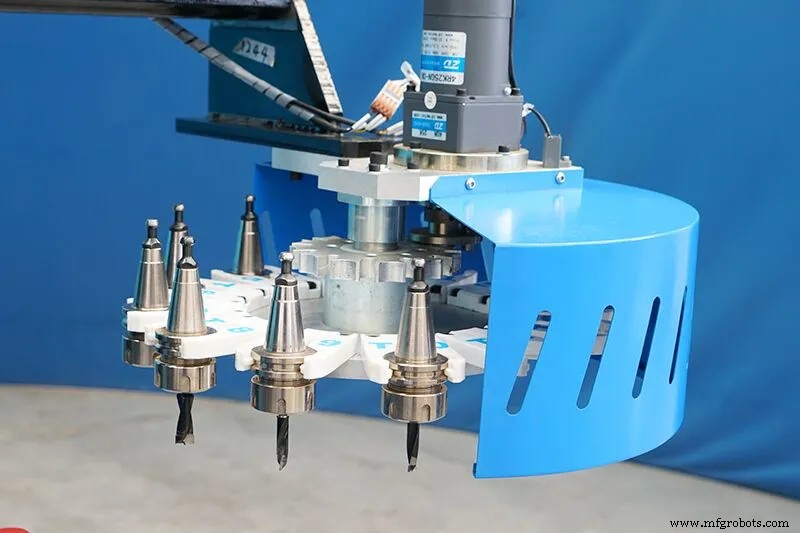
- Automation Space: Features like an Automatic Tool Changer (ATC) are typically available only on industrial‑size routers. The larger footprint allows a complex part to remain on the table while multiple tools cycle, dramatically reducing idle time.
- Optimized Workflow: A larger table accommodates vacuum systems, extended hold‑down, and the ability to load new sheets while machining continues.
4. Evaluate Your Shop Space and Infrastructure
Never rely solely on the machine’s footprint listed in a brochure. The real‑world space requirement is typically 1.5–2 × larger to include safety zones, ancillary equipment, and operator access.
Calculating the True Footprint
- Frame & Gantry Overhang: The machine’s structure extends beyond the cutting bed.
- Safety Perimeter: Mid‑size and industrial routers need dedicated fencing or light curtains, increasing the total occupied area.
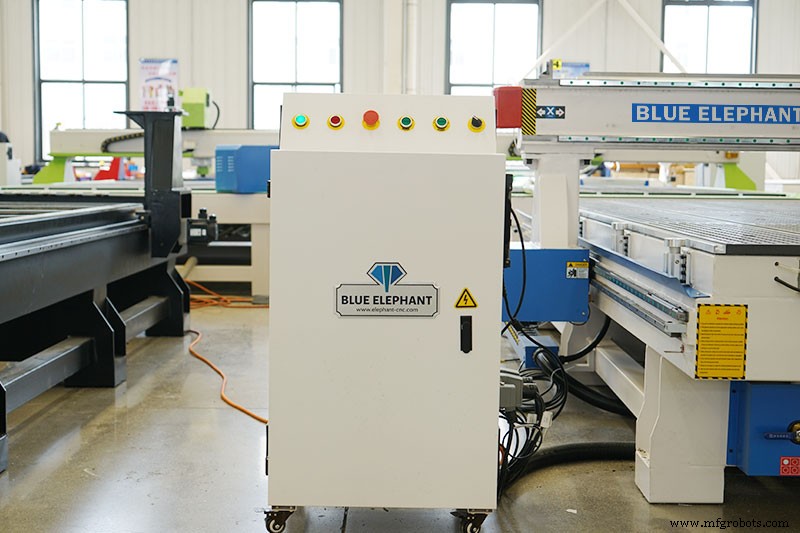
- Control Cabinet: Often a separate unit that must be positioned nearby.
- Operator Access: Clear walkways on at least three sides for loading, monitoring, and maintenance.
Ancillary Equipment and Workflow
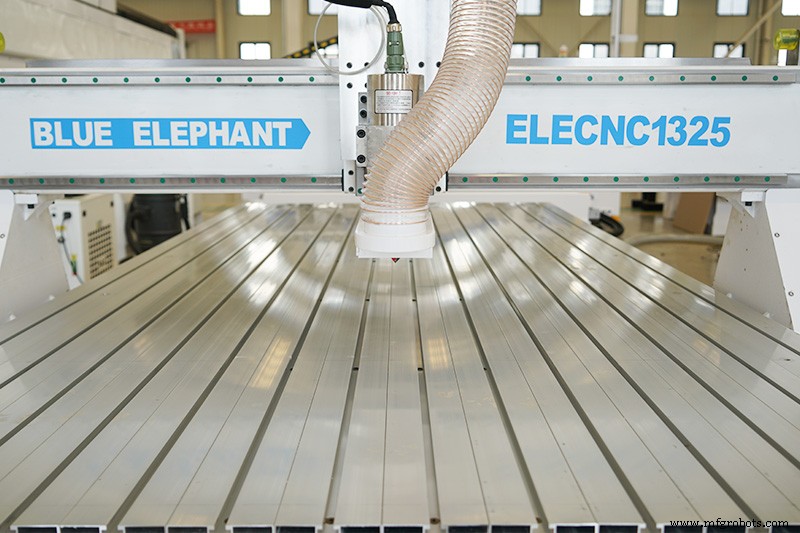
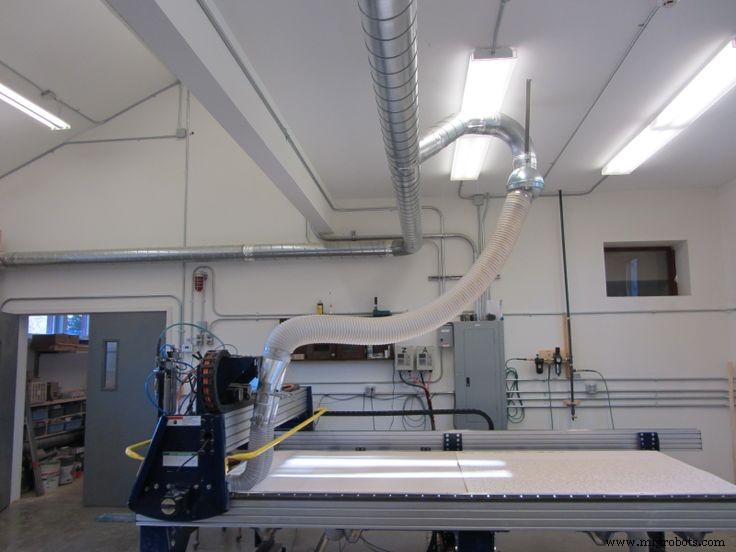
- Dust Collection: A high‑CFM collector is mandatory for safety and machine health. Desktop routers also need a dedicated shop vacuum.
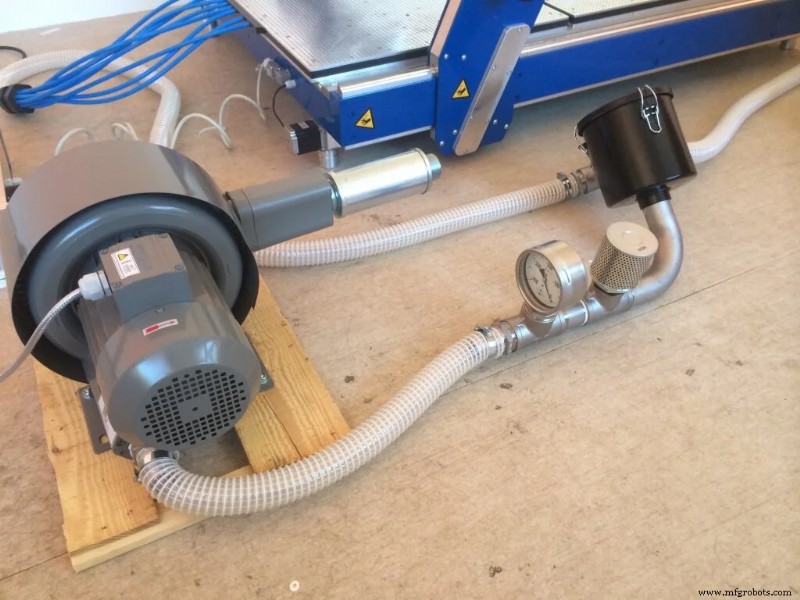
- Vacuum Pump: For hold‑down tables, the pump is often large and noisy; it requires a well‑ventilated spot.
- Material Handling: Allocate staging space for raw sheets and an area for finished parts.
5. Balance Budget with Return on Investment (ROI)
Initial cost is only the beginning. The true cost of ownership scales with machine size and its operational demands.
Upfront Cost vs. Capability
- A 4′×8′ router may cost more upfront than a 4′×4′, but it eliminates the need for multiple setups and saves labor hours.
- Larger machines consume more power and require heavier‑grade dust collectors and vacuum pumps, driving higher operating expenses.
- Industrial routers often need three‑phase power and a reinforced concrete floor—hidden costs directly tied to size.
Strategic Advantage of Sizing Up
- Labor & Material Efficiency: A 5′×10′ router nests parts from a 5′×10′ sheet with minimal waste, whereas a 4′×8′ machine forces a 2′ strip off the sheet, adding time and potential errors.
- Growth Capacity: Buying a machine that covers your projected needs for 3–5 years avoids costly upgrades. The modest premium for a larger size often pays for itself through increased throughput and versatility.
6. Conclusion: Making Your Final Decision
Selecting the right CNC router size is a strategic investment that balances current needs, space, budget, and future growth. A methodical approach leads to a confident, long‑term solution.
Your Action Plan:
- Document Your Largest Project: Measure the biggest material or part you will produce.
- Audit Your Space: Create a scaled floor plan, marking doors, columns, and electrical panels. Map the machine’s true footprint, including ancillary equipment and material flow.
- Define Your Budget Holistically: Allocate funds for the router, tooling, dust collection, hold‑down, software, and installation.
- Plan for Tomorrow: Consider where you want to be in five years and choose a machine that bridges the gap between now and that future.
By weighing these factors, you’ll move beyond guesswork and invest in a CNC router that becomes a reliable, profitable cornerstone of your workshop for years to come.
Ready to find that perfect match?
Blue Elephant CNC offers professional router selection services, guiding you to the ideal machine for your needs and budget.
Learn more about the latest blog news:
How To Use a CNC Router Machine?
CNC Machine
- Master Nesting Labels in Heidenhain Conversational Programming – Step-by-Step Exercise
- Blue Elephant: Exceptional Customer Service & Premium CNC Machines for Sale in America
- Electrical Discharge Machining (EDM): Process, Applications, and Advantages
- Mastering the G76 Threading Cycle: Full Control of Passes and Depth of Cut
- Sandvik Coromant: Advanced Tooling Solutions for Aerospace
- Boosting Injection Molded Parts with Fiber‑Reinforced & Filled Materials
- Laser Welders: Real Costs & ROI for US & EU Buyers
- Exclusive Invitation for Qatari Clients: Tour Blue Elephant’s Advanced CNC Factory
- Master Selca S3000/S4000 CNC Programming: Exercise Profile 1
- CNC Precision Machining Explained: Process, Equipment, and Key Benefits