



Modern CNC Production: Overcoming Aerospace Manufacturing Challenges
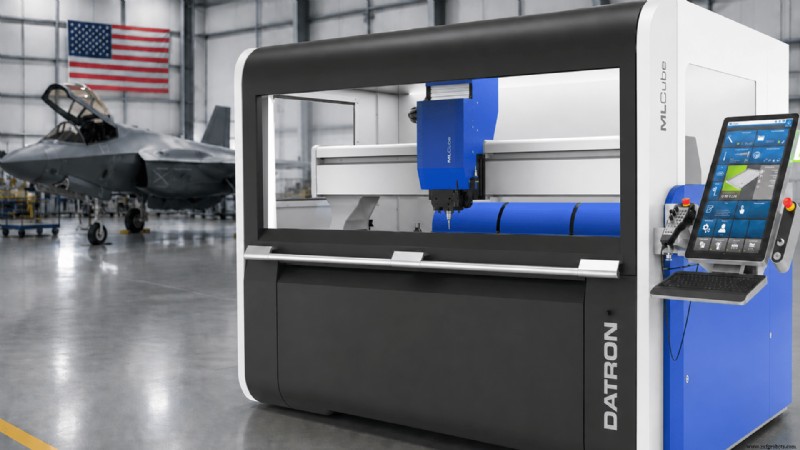
The aerospace and defense sector is experiencing an unprecedented surge in demand, pushing production limits to new heights. Tighter tolerances, higher throughput, and increasingly intricate geometries are now the norm. Meanwhile, tighter schedules, a shrinking skilled labor pool, and volatile supply chains add further pressure.
Manufacturers face a simple expectation: deliver superior parts faster, with fewer resources and zero margin for error.
For many shops, the bottleneck isn’t a shortage of talent but outdated processes that have lagged behind modern requirements.
Aerospace Manufacturing on the Shop Floor
Aerospace and defense environments demand precision, repeatability, and rigorous risk mitigation. Yet many workflows still stem from decades ago when part complexity was lower, labor was plentiful, and production volumes were smaller. The temptation to scale by adding more of the same—more machines, more operators—fails to address the root of the problem.
Legacy methods are now under strain. Facilities must:
- Machine thin‑walled aluminum and composite components with razor‑tight tolerances
- Maintain pristine surface finishes without costly secondary operations
- Reduce setup times in high‑mix, low‑volume environments
- Ensure consistent quality across shifts and operators
- Operate efficiently within limited floor space
However, these goals are often achieved through heavy reliance on operator experience, manual adjustments, and time‑consuming setup procedures. The clash between modern aerospace demands and antiquated manufacturing practices creates a fundamental friction that hampers progress.
Challenge 1: Complex Parts Demands
Aerospace components are becoming more intricate—thin walls, deep pockets, weight‑optimized geometries. These features are essential for performance but introduce significant machining challenges. Minor process instability can trigger deformation, chatter, surface defects, or scrap. Traditional conservative parameters slow production and cap throughput, forcing a trade‑off between speed and reliability that isn’t sustainable.
Challenge 2: Hidden Setup Costs
Setup time often eclipses actual machining cycles, especially in high‑mix contexts. Complex fixtures, manual alignment, and iterative adjustments can consume hours per part. New designs bring new workholding needs, toolpaths, and operator‑specific techniques, leading to unpredictable schedules and underutilized spindle capacity—an inefficiency that erodes margins.
Challenge 3: Workforce Shortages
Experienced machinists and tool‑and‑die makers are retiring, and recruiting fresh talent is harder and slower. Production demands keep climbing, tying throughput to a dwindling pool of skilled operators. Processes that depend on tribal knowledge, manual tweaks, and machine‑specific expertise become hard to scale, increasing risk and limiting expansion.
Challenge 4: Surface Finish Requirements
Surface finish is critical for performance and regulatory compliance. Poor finishes trigger costly secondary operations—deburring, polishing, hand finishing—adding time, cost, and handling risk. Achieving ready‑to‑ship finishes directly off the machine is not just a quality aspiration; it’s a competitive necessity. Conventional setups struggle to maintain such finishes without compromising speed or increasing operator exposure to coolant.
Challenge 5: Throughput Constraints
In aerospace, risk tolerance is minimal. Scrap is expensive, rework costly, and delays can ripple across programs. Shops often default to conservative speeds, feeds, and verification steps, trading throughput for safety. This results in stable but sub‑optimal production that can’t scale, perpetuating a reliance on tribal knowledge and limiting output.
The Root Cause: Process Friction
Across all challenges, a common theme emerges: friction. Whether in setup, programming, operation, or consistency, friction signals that manufacturing processes haven’t evolved to meet current demands. Aerospace manufacturing needs more than faster machines; it requires efficient, scalable systems that eliminate manual bottlenecks and embed stability into the workflow.
Rethinking Manufacturing Processes
The next wave of aerospace manufacturing will not be incremental; it will be transformational. The focus must shift to:
- Reducing setup complexity through modular fixtures and rapid‑alignment tools
- Standardizing workflows with reusable toolpath libraries and automated programming
- Eliminating tribal knowledge by embedding best practices in digital controls
- Enhancing process stability without sacrificing speed via closed‑loop machining and real‑time monitoring
Tools like the DATRON Next Control exemplify this shift, enabling true closed‑loop operations that automatically adapt to process variables.
Implications for Aerospace Manufacturers
Shops that embrace these changes gain a decisive advantage: they can tackle complex work with confidence, deliver consistent quality across teams, shorten lead times without increasing risk, and scale production beyond labor constraints.
A Turning Point
The aerospace industry stands at an inflection point: demand will not wane, part complexity will rise, labor shortages will persist, and timelines will tighten. Success hinges not on how well current pressures affect you, but on whether your processes are ready for them.
Looking Ahead
This article initiates a series exploring how aerospace and defense manufacturers can adapt. The next installment will delve into modern machining strategies that cut setup time, enhance surface finish, and unlock capacity from existing teams.
In manufacturing, the difference between staying level and leading the pack is how efficiently you eliminate complexity and friction.
Learn more about DATRON’s aerospace manufacturing solutions and industry involvement.
CNC Machine
- 5 Proven Strategies to Enhance Sheet Metal Parts Quality
- Australian Customer Praises Blue Elephant's EPS Foam Engraving Machine and Service
- 2020 CNC Machining Industry Outlook: Trends in Customers, Market, Technology, and Workforce
- MIG vs TIG Welding: Key Differences Explained for Better Choice
- Full Heidenhain Conversational CNC Program Example
- Mastering Metal Machining Accuracy: Essential Insights for Precision Parts
- Creating Injection-Molded Toys Made Simple: A Guide for Hobbyists
- How to Upload a File to the DSP B18 Handle Control System
- 8 Essential CNC Router Machine FAQs – Expert Answers & Insights
- Step‑by‑Step Guide: Calibrating Your Syntec 6MB Control System