



Electric vs. Diesel Construction Equipment: Power & Performance Showdown
 As the product manager for electromobility here in North America, I’ve spent a lot of time helping with the design and development of our new compact electric machines. When some people think about electric-powered construction equipment, they tend to jump to the conclusion that it will be inferior to a diesel machine in some way — mainly power. But I can assure you that’s not the case at all.
In fact, in addition to maintaining (or in some instances exceeding) the power of diesel models, electric construction equipment offers even more advantages compared to their diesel counterparts. Take a look at the advantages of electric construction equipment:
VOLVO ELECTRIC AND DIESEL MACHINE SPECS ARE NEARLY IDENTICAL
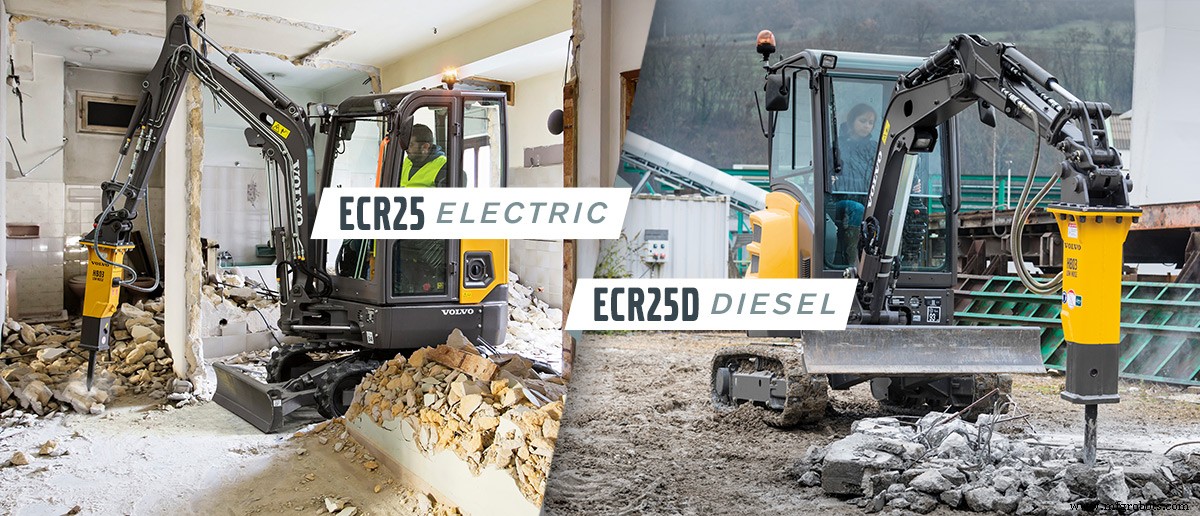
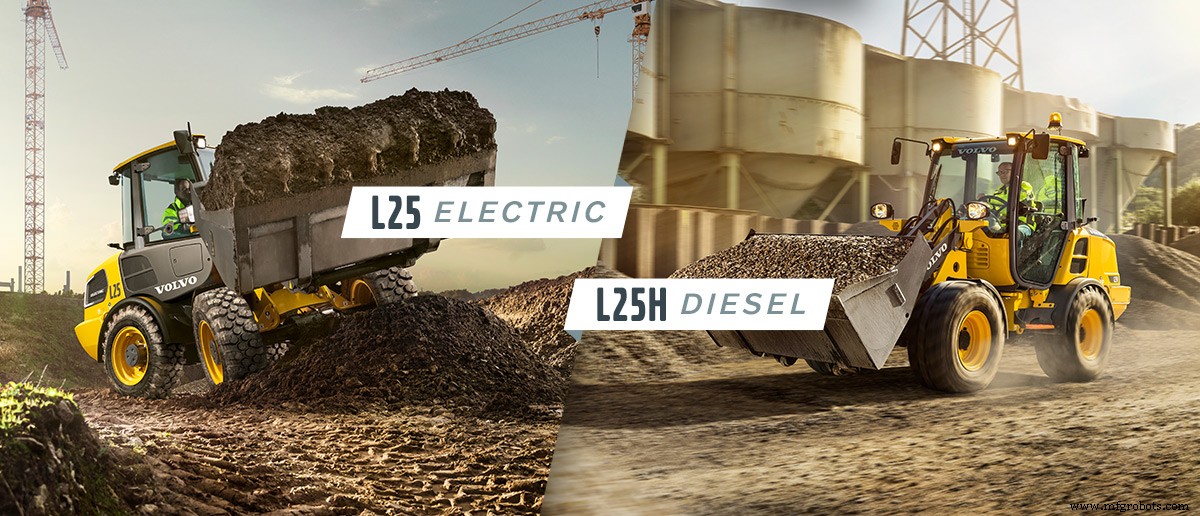
When it comes to power and performance, our ECR25 electric excavator and L25 electric wheel loader specifications are nearly identical to their diesel counterparts — almost line for line, every diesel model spec applies to the electric models. The few exceptions are a slight increase in continuous motor power and a marginally higher operating weight for the ECR25 electric excavator. And for the L25 electric wheel loader, it too has a marginally higher operating weight and a higher static tipping load compared to the diesel model.
A final difference between the L25 electric wheel loader models is that in North America, we’re not initially offering a high-speed version of the electric loader in order to better maintain the battery during a full workday. The maximum speed of the electric L25 wheel loader is set at 10 mph (16 kph). The good news is that for most applications, high speed isn’t required. It’s mainly necessary if you have an application where you need to drive from jobsite to jobsite without hauling the machine.
ELECTRIC CONSTRUCTION EQUIPMENT PRODUCES LESS NOISE AND VIBRATION
Reductions in noise and vibration are the result of removing the diesel engine and the cooling fan. In our pilot programs, we’re hearing over and over how less fatigued operators feel after several hours of work. Even in a top-of-the-line Volvo cab, operators are appreciating the difference of the smooth, quiet operation of electric construction equipment.
Just how much quieter are the electric machines compared to their diesel counterparts? On the ECR25 electric excavator, for example, exterior noise levels were reduced from 93 dB to 84 dB. If that doesn’t seem like a lot, then consider that a 10-decibel increase is perceived as twice as loud, and it represents a tenfold increase in sound intensity. By reducing the noise by 9 decibels, we’ve created an electric-powered construction machine that will sound two times quieter.
ELECTRIC CONSTRUCTION EQUIPMENT HAS LOWER OPERATING COSTS
With diesel construction equipment, operating time is defined by the engine runtime, and a lot of those hours are counted while the machine is idle. With electric, as soon as the operator stops working (e.g. a landscaper waiting for pipe to be placed in a trench he’s just dug), the motors turn off and no operating hours are accumulated. So when you think about it, jobs over time that can rack up 10,000 hours on a diesel machine might only add 6,000 or 7,000 hours to a comparable electric machine. These saved hours lower operating costs, and in turn lower total cost of ownership. They help improve resale value too.
ELECTRIC CONSTRUCTION EQUIPMENT DELIVERS INSTANT TORQUE
Probably one of the most popular aspects of an electric machine is that as soon as the operator starts running it, the electric motors provide instant torque. On the ECR25 electric excavator, for example, when the operator pushes a button on the joystick, the response is instant. There’s no feeling of a slight delay, as can happen with some diesel machines.
CUSTOMIZE SETTINGS WITH AN IMPROVED HUMAN MACHINE INTERFACE
With an improved Human Machine Interface (HMI) and software in electric Volvo machines, there are more opportunities to adjust settings and customize the behavior of the machine to an operator’s personal preferences. Adjustments can be made to customize how the machine performs — it can be more aggressive to more normal to a very sensitive, smooth ramp up of the hydraulics. HMI improvements are another reason operators love the performance and feel of electric machines.
For the Volvo L25 electric specifically, operators have the ability to select different attachments and work modes — for operating with loading forks, buckets, travel and hydraulic attachments like a sweeper — to customize the machine’s performance even further.
ELECTRIC CONSTRUCTION EQUIPMENT HAS REDUCED MAINTENANCE COSTS
With electric, there’s no engine-related maintenance. Essentially, the only services required for a tech working on Volvo electric machines is grease, the hydraulic oil, and in the case of the L25, coolant for the water-cooled inverters and drivetrain.
The state-of-the-art lithium-ion batteries and electric motors are totally maintenance-free. The lifetime of the battery-electric components should be equal to or better than the diesel engine on a conventional machine.
A CHARGING INFRASTRUCTURE IS KEY
A couple of final points about electric construction equipment I want to make relates to charging and logistics. To have an optimal charging time for the machines, it’s strongly recommended to have a 240-volt, Level 2 A/C setup — the same as for electric cars. This is because on the L25, for example, charging time would take approximately 24 hours on a common household 120-volt network. We highly recommended customers be prepared with a 240-volt, 32 amp charging infrastructure to accommodate electric Volvo construction equipment.
As for when to charge, this takes a bit of a change in mindset. These machines can perform on one charge all day during a typical application, like utility work — but if they’re used in harsher environments, it may require a quick charge over lunch to ensure it’s ready to go for the afternoon. It’s important to have the right charging infrastructure available in these types of instances.
MAKE ELECTRIC A PART OF YOUR COMPANY’S FUTURE
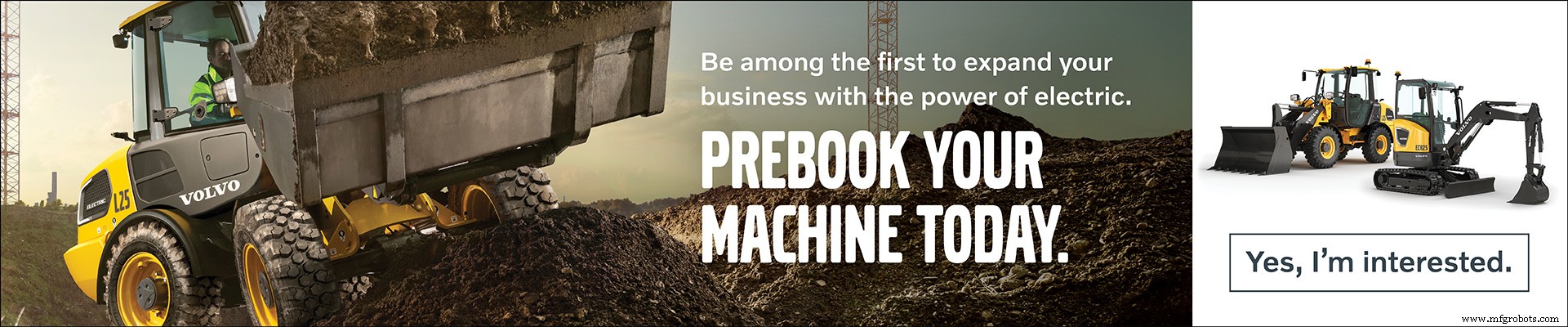
Be sure to check out our new ECR25 electric excavator and L25 wheel loader to get a better understanding of their incredible capabilities. You can also read about new applications for electric machines — and if electric machines seem right for the type of work you do, reserve your electric machine today and get out front with this exciting technology.
Volvo Electric Equipment: New Opportunities for Heavy Equipment Jobs
One of the things I find myself saying quite often about our new Volvo electric excavator and wheel loader and ...Read More

Volvo’s Drive to Electric – Your Questions Answered
Volvo Construction Equipment is the first to commit to going fully electric on two full ranges of compact equipment, with ...Read More
by Lars Arnold, Product Manager for Volvo Electric Machines
Industrial equipment
- Rent vs. Buy Construction Equipment: A Practical Decision Guide
- Electric Construction Equipment Glossary: Essential Terms & Definitions
- Essential Winter Care for Construction Diesel Engines: Do's & Don'ts
- Volvo ECR25 Electric Excavator & L25 Loader Tested by Industry Experts at Utility Expo 2021
- Early Adopter Reviews: Electric Construction Equipment Insights
- Revolutionizing Construction & Mining: Electric & Autonomous Heavy Equipment
- The Future of Construction: Embracing Electric & Hybrid Equipment
- 3 Proven Tips for Securing Quality Construction Equipment at Auction
- Why Regular Maintenance Is Critical for Construction Equipment Reliability
- Expert Construction Equipment Maintenance: Prevent Costs & Boost Longevity