



Clean & Green Industrial Parts Cleaning Series – Part 1: Mastering Eco‑Friendly Solvent Use
Environmental Considerations for Green Parts Cleaning Solvents
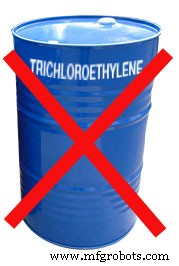 If you are using legacy parts cleaning solvents, pending changes in state and federal law governing the use of hazardous parts cleaning solvents such as TCE, Perc, nPB, HFC’s, and others, WILL require you to rethink how your company can effectively meet your green parts cleaning requirements. A lot of solvents are being phased out or becoming more regulated in terms of personnel exposure limits and air emissions. In fact, Minnesota is poised to become the first state to ban trichloroethylene (TCE), a toxic chemical that can increase risk for certain types of cancer or serious health issues. The Governor signed the bill into law on May 16, 2020. This chemical is typical used as a vapor degreasing solvent for metal parts cleaning. The recently passed legislation prohibits the use of TCE after June 1, 2022. Facilities with air permits will need to replace the chemical with a safer, less toxic, environmentally preferred alternative by that date.
Solvent Chemistries on the Hit List
Other traditional solvents such as 1-bromopropane (nPB), perchloroethylene (Perc), methylene chloride (MC), etc. used in similar applications are being reviewed by the EPA under the Toxic Substances Control Act (TSCA). Most of these parts cleaning solvents are regulated as a Hazardous Air Pollutant (HAP) and as such may require a permit from the MPCA to use. Most are also considered toxic to personnel.
 The EPA published a list of 10 chemical substances that are the subject to the Agency’s initial risk evaluations as required by TSCA -6(b)(2)(A). Five of those chemicals are solvents used for typical metal parts cleaning applications. If you are using these solvents, consider future use now!
- Methylene Chloride (MC)
- Trichloroethylene (TCE)
- Perchloroethylene (Perc)
- Bromopropane (nPB)
- N-Methyl pyrrolidone (NMP)
Environmental Compliance Alert – if you are using these type solvents and do not have a proper air permit, your facility may be subject to enforcement fines and/or penalties. Some can be severe based on scope of non-compliance.
Address Environmental and Ecological Concerns
 The move is to environmentally green parts cleaning processes for complex/challenging parts. This can be accomplished by eliminating and reducing hazardous products, as well as using closed solvent systems. By doing so, you can expect the following key benefits:
- Ultra-low emissions
- Very low chemical consumption
- Concentration of soil – low waste stream
- Not throwing away cleaning chemistry
- Very low odor
- Low worker exposure
- Low corrosion potential
- Ability to pull a vacuum to enhance drying / reduce carry-out
- Compact footprint – wash/rinse/dry in one system
Why Solvents Remain the Top Choice in High Performance Green Parts Cleaning
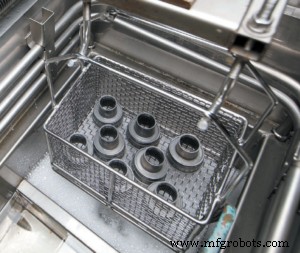 The old adage that solvent cleans better, faster, and in more restrictive places than water can ever reach—is still true! Today’s solvents are ideal for a wide range of cleaning application. As for ecological considerations, they rate high in worker safety ratings, provide lower GWP, a smaller carbon footprint, lower energy consumptions and comply with all federal, state, and local regulations. In addition:
- Cleanliness specifications for precision and critical cleaning requires no contaminant or rinse water residue on the end product.
- Solvent usage is continually growing due to inability of water to perform in certain criteria, component spacing, and restrictive drying process.
- Materials compatibility is a major area for concern where solvent is superior! (Example: Multiple metals and lubes).
- The fact that today’s cleanliness specifications for precision and critical cleaning cannot have any contaminant residue or rinse water residue on the end product….. drives some users toward solvent!
What Are Your Options for Green Parts Solvent Cleaning
- Replacing your traditional solvent with a more environmentally preferred one. There are several solvents on the market that meet all current environmental compliance regulations while providing the highest safety limits for personnel.
- Replacing your older generation degreaser with a new totally enclosed vacuum system with ultra-low emissions. These units isolate the operator from the cleaning process that is performed in a vacuum sealed chamber. Numerous advantages for these systems include:
- Very little solvent consumption
- Low energy consumption
- No water required
- Wash / Rinse / Dry in a common tank = less floor space
- Process flexibility for cleaning such as ultrasonics, rotation, spraying, etc.
- These units use a new solvent that cleans both polar and non-polar soils in a common tank
- Continuous solvent distillation to remove soils using on-board still. This feature provides clean solvent and consolidates waste stream.
- Most solvents used in these systems are not HAPs. KYZEN modified alcohol is not a HAP, is biodegradable, has 600 ppm PEL
- Change your cleaning process from a solvent based to an aqueous based chemistry. There are many aqueous cleaning chemistries on the market that may suit your requirements.
- Exit cleaning and rely upon your parts supplier to provide clean parts directly to you if possible.
How Productivity and Kyzen Can Help
There is an abundance of information available in today’s world to consider the best green parts solvent cleaning method to suit your needs. From government resources, environmental organizations, equipment suppliers, chemical suppliers, to technical papers and consultants. If you need to change your parts cleaning process, technical assistance is available.
Productivity and partners, KYZEN / Gosiger can perform a free process evaluation and cleaning analysis on your parts to verify results before you make a commitment. Contact us today to begin your green parts cleaning journey!
Stay tuned for Part 2 of our Clean & Green Industrial Parts Cleaning Series: How to Keep Your Production Process Green Without Sacrificing Clean
Written by Joe McChesney, Global Products Line Manager – Solvents for Kyzen.
Joe McChesney is the Global Products Line Manager – Solvents for KYZEN Corporation. Over 40 years’ experience regarding solvent and aqueous cleaning processes from conceptual design through field operation. KYZEN is a global leader in providing environmentally responsible, RoHS compliant precision cleaning chemistries for industries ranging from electronics and advanced packaging to metal finishing and aerospace applications.
Reference Sources

Industrial equipment
- Five Key Considerations for Safely Cleaning SLS 3D Prints
- iFP Parts Cleaning & Washing Systems: Streamline Production & Reduce Waste
- Clean & Green Industrial Parts Cleaning Series: Part 2 – Sustainably Clean, High-Performance Parts
- Hyper Quadrex 200MSY: Twin 30hp Spindles & Full C‑Axis CNC for High‑Volume Precision Part Production
- Should You Replace Industrial Brake Hardware? Key Signs & Expert Guidance
- Expert Guide to Industrial Parts Procurement: Informed Decisions for Manufacturing Success
- Comprehensive Guide to Industrial Brake Components
- 5 Key Signs Your Crane Needs a New Part – Stay Ahead of Downtime
- Professional Cleaning Guide for Precision CNC Machined Parts
- Protect Your Operations: Identifying and Preventing Counterfeit Hydraulic Parts