



Boost CNC Utilization Safely: 3 Proven Strategies
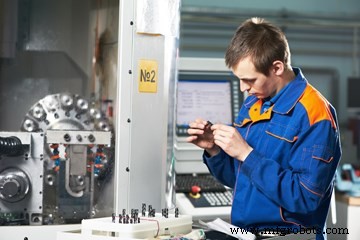
I once heard a colleague say, “Safety, ease of use, efficiency: pick two.” It can be difficult to strike a balance among these three productivity-affecting qualities. Anything done to improve one can potentially degrade the others. Efforts to improve efficiency, for example, might involve dangerous shortcuts or overly complicated tasks.
Companies seeking to improve their CNC machine utilization usually do so for several reasons.
Why do companies seek to improve their CNC machine utilization?
- To increase production from every CNC machine – Higher output means greater profit.
- To reduce manufacturing costs – Lower costs mean a company can offer lower prices, enhancing its ability to compete.
- To free people to do other tasks – When machines finish production runs faster, personnel can move on to new assignments.
For these reasons, always be on the lookout for ways to increase machine and personnel utilization. But of course, this must be done in a safe manner. Efficiency-related improvements must not violate safety priorities:
- Personnel safety – never put people in jeopardy.
- Machine safety – eliminate sources of machine crashes and practices that cause undue stress on the machine.
- Workpiece safety – make good parts.
1. Eliminate Mistakes
Mistakes are commonly the single-largest cause of unsafe conditions and are a symptom of undertrained operators. These mistakes come in many forms, from a misloaded workpiece or cutting tool to running the wrong program to making an incorrect sizing adjustment. The product of these mistakes is often a machine crash.
Machine crashes result in scrap workpieces, broken cutting tools, damaged machines and even injured operators. So, eliminating crash-causing mistakes will make for a safer working environment. And considering the amount of time required to get a machine up and running again after a crash, eliminating crash-causing mistakes might be the best way to improve CNC machine utilization.
There are two ways to reduce operator mistakes:
- Provide targeted training – increase operator skill level so they can perform more complicated tasks. For example, help operators understand which cutting tool is machining each critical workpiece attribute, as well as how to determine which offset is related to the tool, so they can determine what has to be changed when making sizing adjustments.
- Simplify the tasks they perform – lower the skill level required to perform the task. For example, color-code machined surfaces on process drawings to show which offset is related to each machined surface.
In either case, you will improve shop safety as operators grow in their competence and begin to eliminate mistakes.
2. Get Organized
Ideally, CNC machines should be attended 100% of the time, including during setups and production runs. However, machines often sit idle while waiting for someone to return and do something. While CNC operators may have appropriate reasons for leaving their machines from time to time, often the cause of non-attendance is related to preparation and organization. Here are a few suggestions:
- Be sure work areas are stocked with every hand tool required to run the machine. There is no excuse for someone leaving the machine to find a wrench.
- Be sure each job arrives with all components needed to complete the setup and production run, including fixtures, toolholders and perishables (enough to complete the production run). People should not have to gather components during the setup or production run.
- Be sure each job arrives with all necessary gaging tools. Again, a lot of time can be wasted while people search the shop to find gages needed for measuring workpieces.
From a safety standpoint, well-organized operators are safe operators. An organized work area will keep operators focused on the task at hand.
3. Support the Operator
Operators should not have to overly exert themselves mentally or physically in order to accomplish their tasks. If someone is struggling or if they are taking a long time to complete a task, find a way to help them.
For example, say machine tool operators are taking excessive time during sizing adjustments and sometimes making mistakes when determining the deviation amount and polarity. In this case, provide them with the high limit, low limit and target values for every surface being sized. Also, find a way to let them specify the surface type (external or internal), measured value and target value using a tablet or programmable calculator. Have the device respond with the deviation amount and polarity.
People who have the help and resources needed to complete their assigned tasks will be safer than people who must figure things out on their own. Additionally, they will do so in the manner and timeframe you intend.
Industrial equipment
- CNC Milling Machine Safety: Comprehensive Guide for Operators
- Maximize CNC Machine Accuracy: A Practical Guide to Precision and Reliability
- Enhancing Factory Safety: The Critical Role of Machine Guards
- Teach‑In CNC Lathes: Accelerate Production & Enhance Precision in Your Workshop
- 5 Proven Strategies to Boost Factory Safety Instantly
- Effective Machine Inspection Practices for Safety & Compliance
- 6 Proven Strategies to Optimize CNC Milling Efficiency
- Boost CNC Machining Efficiency: Proven Strategies for Superior Performance
- Precision CNC Machining: Safety First – Expert-Driven, Risk-Minimized Production
- Essential Safety Protocols for Precision CNC Machining