



Flat Chisel Explained: Design, Uses, and Applications
A flat chisel is a tool that typically has a handle, or shank, leading to a straight, sharp cutting edge with a bevel on the upper side. Generally, the back of this edge is smooth. These tools are usually made from forged steel and can be tipped with tungsten carbide. Different kinds of these chisels can be used in sculpting, masonry work, carpentry and woodcarving, and metal cutting.
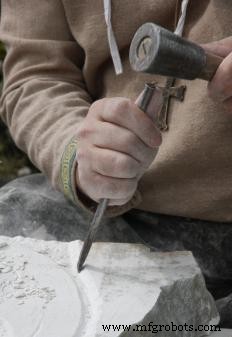
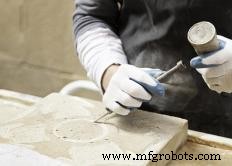
In sculpting, a flat chisel is often used to smooth over rough carvings that have been made with either a point or tooth chisel. It can remove marks left by the tools used for roughing out a sculpture, and prepare it for finishing. On softer stones, such as soapstone, a forged steel chisel is usually hit gently with a mallet.
If a sculptor works with harder stone, such as sandstone or granite, he or she would typically use a carbide-tipped flat chisel for finishing work because it is harder than the stone. Sometimes, stone carvers use flat chisels designed with shanks that attach to power tools. When these are used for carving, care must be taken that the power tool does not remove too much of the material being carved.
When a metal rod needs to be cut, a flat chisel — also known as a cold chisel — is often used to shear the rod. This is often done by clamping the metal rod in a vise. The chisel is then held at a certain angle at the edge of the vise and against the metal rod. It is struck with a hammer. This action cuts the rod.
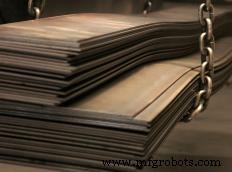
Other ways that a flat chisel can be used in metalworking are for either straight cutting, or cutting shapes out of a piece of sheet metal. To cut sheet metal, the chisel can be held at a slight angle to the material's surface. It is then struck with a hammer to actually make the cut. Usually, a block of soft iron is placed under the sheet metal to support it. Sometimes, if a slot or shape is being chiseled out, holes may be drilled, to outline the shape first and make it easier to cut.
In carpentry and woodcarving, a flat chisel can be used to shape wood. When used in this way, it can help to fashion a wood joint, in which two pieces of wood come together. Oftentimes, when used in woodcarving, it can be used without a mallet. Gentle pressure can be applied by hand to remove excess wood. This is known as paring.
Industrial equipment
- Understanding Metal Fatigue: Causes, Consequences, and Prevention
- What Is Machining? A Comprehensive Guide to Precision Metal Fabrication
- Understanding Foundries: The Backbone of Modern Manufacturing
- Annealing Explained: Reducing Hardness & Enhancing Metal Durability
- Understanding the Firmer Chisel: Features & Applications in Woodworking
- Metal Cladding Explained: Benefits, Types, and Design Tips
- Understanding Metal Processing: Turning Scrap into New Products
- Cold Chisel: Definition, Uses, and Advantages
- Understanding Pot Metal: Composition, Uses, and Quality Concerns
- Palladium Explained: Properties, Uses, and Value