



What Is Machining? A Comprehensive Guide to Precision Metal Fabrication
Precision shaping of metal products
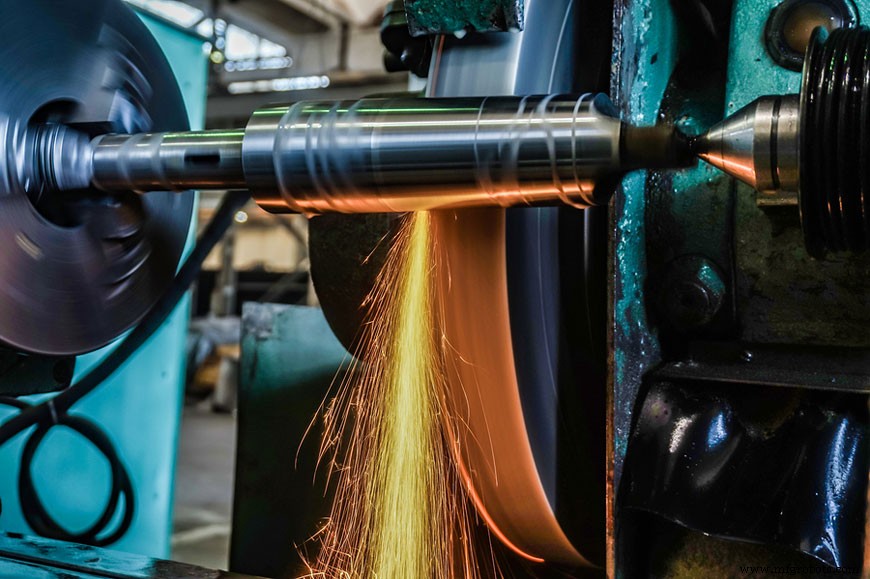
Making objects out of metal involves many manufacturing processes. One of these is machining, a necessary requirement of mass manufacture in the modern age. Machine tools cut, bore, grind, or otherwise shape metal by removing some of it with a cutting or grinding surface. Usually, a machine tool has two parts: one part holds and guides the metal to be shaped, and the other does the work of shaping. Machining, especially in the age of computers, allows for precise, fine metal work.
Casting, forging, and machining
There are several major forms of creating metal shapes.
- Casting is the process of filling a mold with a molten alloy and letting it cool.
- Forging works metal, changing the material’s properties by applying compressive forces that alter the metal lattice. Operations like bending, twisting, pounding, and folding are common in forging.
- Machining carves, grinds, cuts, bores, or otherwise shapes metal. The machinist works on metal in ways similar to the way a woodworker works with wood; the bulk of the material is unchanged, although the shape and finish are worked.
In the modern era, machining is often a finishing step for products created by forging or casting, to bring forged or cast objects to within precision tolerances. Milled sheets, billets and bars may also be machined into shape from their most raw geometric form.
Casting and forging usually happen before machining. A machined object may go through further processing before the metal object is finished. The work may be joined with fasteners or welds, be put through heat treatment, or be given other surface finishes.
What is CNC machining?
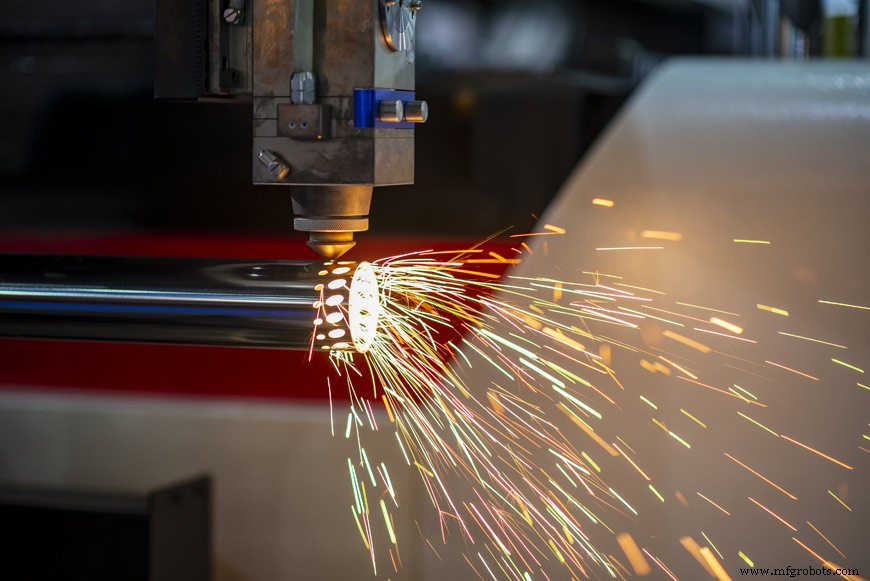
CNC stands for computer numerical control. In CNC machines, a computer precisely controls the movement of the machine. A design produced in CAD software is converted to movement over X, Y, and Z axis. This way, the computerized machine shop is able to carve metal in three dimensions to exact tolerances.
History of machining
The first machine tools were handmade. The bow lathe and the bow drill were used to turn or bore into wood, ivory, or soft metals like lead.
In 1774, an inventor called John Wilkinson designed a lathe that was powered with the continuous rotation of a water wheel to drive it. He called this invention the “boring mill.” This was the first true machine tool in the modern sense, providing accuracy to the thickness of a “thin-worn shilling.” However, this boring mill was not able to create spiral cuts like screw threads, because each cut needed manual repositioning. In 1800, Henry Maudslay improved the design to allow for repositioning, and the development of modern machine tools followed quickly, powered by the advance of the steam engine – which had needed Wilkinson’s boring mill to work efficiently. The history of machining, therefore, is one of iterative design, where machines are used to build and perfect themselves.
Common metal machine tools
Common machine tools are:
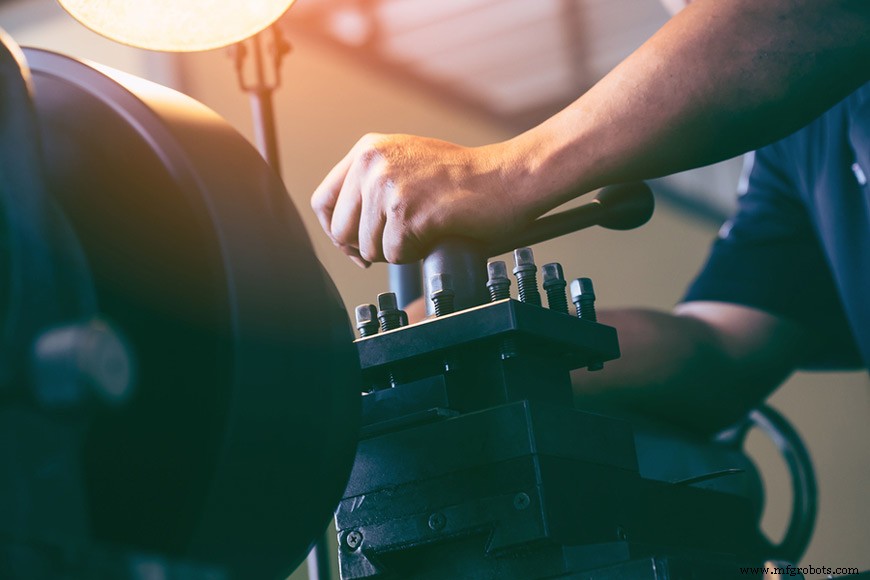
- Lathes – Turn the metalwork against a cutting tool
- Drill presses – Push a drill through metal surface
- Grinding machines – Rotate an abrasive or grinder against the metalwork
- Band machines – Use a continuous saw blade to cut metalwork
- Milling machines – Use a rotating cutting tool over the surface to shape metalwork
- Broaching machines – File an object, removing only a small amount of material
- Laser-cutting and etching – Light beams are used to cut, drill, or etch an object
- Ultrasonic machining – Ultrasonic waves and an abrasive slurry remove metal
- Electron beam machining – A beam of electrons create high heat that vaporize metal
- Chemical and electrochemical methods – Use chemicals to remove and shape metal
The lathe is the ancestor to many machine tools today. A lathe rotates an object against the edge of a cutting tool. Therefore, the lathe can be used for boring, drilling, thread-cutting, milling, and grinding: whenever the metalwork can be turned, the lathe can be used in place of other tools.
Reliance Foundry and machining
Machining is an important step for many of our products. For example, we refine the bore in our industrial wheels, smooth bollard surfaces, and define bolt holes through machining steps. We are able to do custom machining for large orders.
With the use of laser-cutting CNC machines, some of our stainless steel bollards can be transformed into customized hardwired lighting bollards. Contact our sales team to determine if your project is a possibility.
Metal
- Ultrasonic Machining Explained: Process, Benefits, and Limitations
- Understanding Metal Fatigue: Causes, Consequences, and Prevention
- Understanding Foundries: The Backbone of Modern Manufacturing
- CNC Machining Explained: Precision Metal Fabrication
- Annealing Explained: Reducing Hardness & Enhancing Metal Durability
- Metal Cladding Explained: Benefits, Types, and Design Tips
- Understanding Metal Processing: Turning Scrap into New Products
- Understanding Pot Metal: Composition, Uses, and Quality Concerns
- Palladium Explained: Properties, Uses, and Value
- Metal Spinning Explained: CNC Lathe Process for Precise, Seamless Metal Parts