



Understanding the Firmer Chisel: Features & Applications in Woodworking
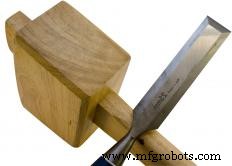
A firmer chisel is one of four main chisels used in woodworking projects. It has a thick, strong blade that allows removal of large pieces of wood in a single strike. In fact, this chisel's 4-inch (10.16-cm) blade is strong enough to form deep, large joints when the end is hit with a mallet. This type of chisel has a beveled edge, and is a good choice for general woodworking projects. One variation of a firmer chisel is called a beveled edge chisel, or butt chisel, with bevels on two sides of the cutting surface for more precise trimming.
This type of chisel is among the oldest types of chisels used. They may have evolved from the use of sharpened rocks in the Stone Age for cutting away unwanted material and trimming hides. Over time, wooden handles were added to provide comfort during use, and to allow the exertion of force by hitting the handle with the palm of the hand, a hammer, or a mallet. Different chisels are designed for specialized jobs, but the firmer chisel remains a good addition to a basic woodworking tool kit, especially for cutting grooves with sharp angles.
Although the chisel's blade is designed to withstand substantial raps with a mallet, its handle must be durable enough to prevent damage. A rugged, impact-resistant handle constructed of hardwood with a metal striking area is a suitable handle for a firmer chisel. Some chisels are made with plastic handles, but this option is not recommended for firmer chisels by expert woodworkers.
A firmer chisel, or any chisel, will not do the job it is designed for unless it is kept in good condition. If a chisel is not sharpened regularly, it produces ragged edges on the wood and more force must be applied to make cuts. Chisels should be stored so the cutting edge does not come in contact with other tools to avoid chipping. If a chisel is not used frequently, a light coat of oil will prevent rust.
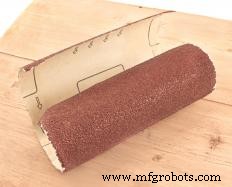
Even though a chisel is not a power tool, that doesn't mean it cannot be dangerous. The cutting edge of the tool should not be pointed toward the body, and safety goggles should be worn when using it. Hands should be kept behind the cutting edge, using a clamp to hold the work surface firmly in place. Sandpaper can be used to smooth rough machine edges on a new firmer chisel to avoid accidental cuts and scrapes.
Industrial equipment
- Diamond Turning: Precision Machining for Advanced Optics and Beyond
- Understanding the Oxygen (O2) Sensor: Role, Placement, and Failure Signs
- Understanding AS9100: The Aerospace Quality Management Standard
- What Is A2 Steel? A Versatile, Cost‑Effective Tool‑Steel Grade for Industrial and Woodworking Applications
- Understanding Metal Casting: Process, Benefits, and Applications
- Demystifying 3D Printing: A Clear Guide for Innovators
- Understanding the Firmer Chisel: Features & Applications in Woodworking
- Cold Chisel: Definition, Uses, and Advantages
- Flat Chisel Explained: Design, Uses, and Applications
- Decoding 'N' in Pump Calculations: Its Role and Significance