



Your Road to ASE Certification: How to Become a Master Automotive Technician
When choosing a medical professional, patients often look for a 'board‑certified' clinician. The American Board of Medical Specialties grants this credential, assuring patients that the doctor has met rigorous education and skill standards for that specialty. Though not required to practice medicine, board certification is a powerful signal of expertise and a mark of prestige.
The automotive sector doesn’t have a medical board, but it does have a trusted authority: the National Institute for Automotive Service Excellence (ASE). As a nonprofit, independent organization, ASE tests and certifies mechanics and technicians, mirroring the medical board’s mission of safeguarding quality.
While you can work as a mechanic without ASE certification, having it distinguishes you from others and improves your employability. Continue reading to discover ASE’s history, the breadth of certifications, the benefits of earning a credential, and the path to becoming an ASE master technician.

ASE History: Where It All Began
ASE stands for the National Institute for Automotive Service Excellence. Founded in 1972, the organization has issued certifications to more than 250,000 automotive technicians and service professionals. Its goal is simple: elevate the quality of vehicle repair and service by testing and certifying industry experts.
The ASE certification program benefits:
- Car owners can trust that ASE‑certified technicians possess the knowledge to handle even the most complex repairs.
- Repair shops qualify for the Blue Seal of Excellence Recognition Program, boosting market visibility.
- Auto professionals earn industry recognition and respect based on proven skills.
ASE test questions are crafted by panels of seasoned professionals, including manufacturers, educators, and technicians, ensuring relevance to real‑world scenarios.
What Is ASE Certification?
ASE certification sets an industry benchmark for vehicle repair and service quality. It does not regulate the industry but serves as an independent endorsement of a technician’s specialty and performance. The certification applies to individual technicians—not to service facilities—so every employee can earn a credential that validates their expertise.
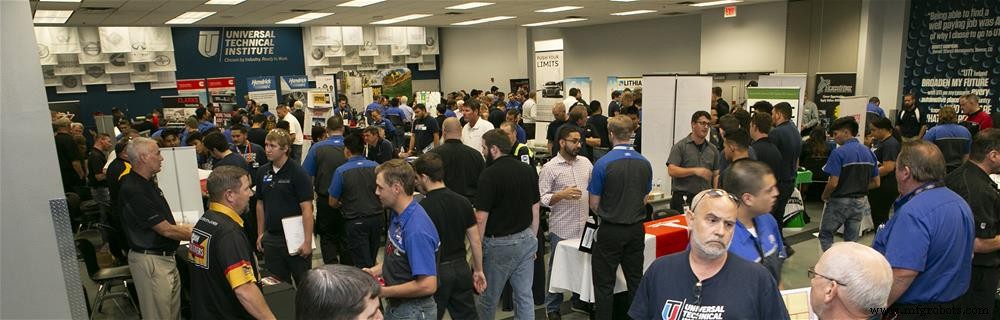
ASE also accredits automotive training programs. One of the most respected accreditors is Universal Technical Institute (UTI), whose instructors are all ASE‑certified.
How to Become ASE Certified
Graduates of UTI’s automotive programs are positioned to tackle ASE exams right out of school. The organization accepts formal training as part of the two‑year work‑experience requirement, granting UTI graduates one year of credit automatically. For details on the experience rules, consult the ASE website, where you can also submit your work‑experience record.
To earn certification you must:
- Gain hands‑on work experience. Two full‑time years of on‑the‑job training are required; UTI graduates receive one year of credit by default.
- Pass a written test. ASE offers over 50 specialty exams, from electronic diesel engine diagnosis to school bus safety. Tests consist of 40–75 multiple‑choice questions designed to mirror day‑to‑day challenges. The pass rate for first‑time takers is roughly 66%, so thorough preparation is essential.
Types of ASE Certifications
ASE’s exam portfolio covers nearly every facet of automotive service. Key points to keep in mind:
- Format: Each test contains 40–75 scored multiple‑choice questions.
- Test Development: Questions are vetted by industry experts and focus on real‑world scenarios.
- Recognition: Successful completion earns the coveted Blue Seal of Excellence.
- Fees: Registration costs $36; individual tests cost $43, with advanced (L1, L2, L3) tests at $86. Recertification fees are identical.
- Work Experience: Full‑time, hands‑on experience or a combination of training and experience is required.
Sample test categories include:
- Automobile & Light Truck Certification Tests
- Collision Repair & Refinish Certification Tests
- Damage Analysis & Estimating Certification Test
- Automobile Service Consultant Certification Test
- Truck Equipment Certification Tests
- Alternate Fuels Certification Test
- Auto Maintenance and Light Repair Certification Test
- Transit Bus Certification Tests
- Advanced Engine Performance Specialist Certification Test
- Electronic Diesel Engine Diagnosis Specialist Certification Test
- Light Duty Hybrid/Electric Vehicle Specialist Test
- Engine Machinist Certification Tests
- Parts Specialist Certification Tests
- School Bus Certification Tests
- Medium‑Heavy Truck Certification Tests
- Undercar Specialist Exhaust Systems Test
- Non‑Certification Assessments
If you’re new to the industry, consider the Automobile and Light Truck series (A1–A9). Each exam contains 40–50 multiple‑choice questions covering:
- A1 – Engine Repair
- A2 – Automatic Transmission/Transaxle
- A3 – Manual Drivetrain & Axles
- A4 – Suspension & Steering
- A5 – Brakes
- A6 – Electrical/Electronic Systems
- A7 – Heating & Air Conditioning
- A8 – Engine Performance
- A9 – Light Vehicle Diesel Engines
Passing one exam certifies you in that specialty; passing eight (A1–A8) earns Master Automobile Technician status.
What to Expect & How to Prepare
ASE exam questions are crafted by committees of practicing professionals—manufacturers, educators, and technicians—ensuring relevance to real‑world work. The questions emphasize process, troubleshooting, and safety.
ASE provides comprehensive study guides, official practice tests, and sample questions that mimic the testing platform. Whether you sit for the exam at an ASE test center or take it on campus through UTI, the experience is consistent. Create a myASE account to register.
How to Become an ASE Master Technician
Master Technician status requires two years of documented, relevant hands‑on experience plus a full slate of exams in a single series. The required tests by series are:
- Automobile: A1–A8
- Collision Repair: B2–B5
- Medium‑Heavy Truck: T2–T8
- School Bus: S1–S6
- Transit Bus: H1 or H2 and H3–H8
- Truck Equipment: E1–E3
Technicians who pass a combination of tests 2–7 in the Medium‑Heavy Truck, Transit Bus, or School Bus series can also earn Master Medium‑Heavy Vehicle Technician status. Requirements include:
- Diesel Engines: Pass H2, S2, or T2
- Drive Train: Pass H3, S3, or T3
- Brakes: Pass H4, S4, or T4
- Suspension & Steering: Pass H5, S5, or T5
- Electrical/Electronic Systems: Pass H6, S6, or T6
- Heating, Ventilation & A/C: Pass H7, S7, or T7
For more details, visit the ASE website.
ASE Recertification: How the Process Works
All ASE certifications must be renewed every five years. If a Master Technician’s required certification expires, the individual loses master status but can regain it by completing the appropriate recertification exams. Once the original exam is passed, only the recertification test is required, regardless of how long the certification has been inactive.
ASE offers a myASE Renewal app that simplifies the process. Using a desktop, tablet, or mobile device, you can manage your certifications, receive one practice question per month for each certification area, review answers, and understand the rationale behind each correct choice. Start a free trial at www.myaserenewal.com.
Benefits of Becoming ASE‑Certified
Across the United States, ASE certification offers a compelling array of advantages:
- Credibility with customers: Modern vehicles demand expertise. A certification signals that you can provide clear, confident answers without sounding boastful.
- Employer confidence: Earning ASE certification demonstrates commitment to continuous improvement and industry best practices.
- Broader knowledge: Preparing for exams deepens your understanding of vehicle systems and troubleshooting techniques.
- Higher earning potential: Salaries and promotions often reward demonstrated skill and education. 1
- High demand: As an independent, universally recognized credential, ASE certification gives you a competitive edge when shops prioritize qualified technicians.
For anyone considering a career in automotive repair, pursuing ASE certification is a smart investment in your future.
Ready to Start Your Training?
From automotive and diesel to collision repair, UTI offers a wide range of programs designed to launch careers in the skilled trades. Visit our programs page and request information today.
Industrial equipment
- Azure DevOps Certification Cost Breakdown – What You Need to Know
- AWS DevOps Certification: Cost, Benefits, and Career Impact
- Introducing the Certified Machinery Lubrication Engineer (MLE) – A New Industry Benchmark
- Luke Franta: 23‑Year‑Old ASE‑Certified Automotive Expert & Founder of Two Successful Repair Shops
- Building Resiliency Through Autonomous Operations
- Mastering IoT Security: Clear Strategies for Trust and Resilience
- Certified Reliability Engineer (CRE): The Essential Credential for Plant Reliability Professionals
- Automation: The Only Path Forward for U.S. Manufacturing
- E‑Commerce’s Blueprint for Zero‑Emissions Delivery
- Empower Scalable Data Analytics Anywhere with Cloud‑Native Architecture