



Understanding Overlap Wave Washers: Design, Applications, and Advantages
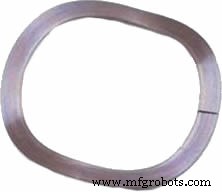
Not all washers are perfectly round. Wave washers with overlap feature a distinctive wavy profile and an intentional overlap, offering unique performance benefits. This article explains their construction, typical use cases, and why they’re preferred in high‑precision machinery.
The Basics of Wave Washers With Overlap
Overlap wave washers are thin metal rings cut into a series of waves, with one end overlapping the other. This geometry allows the washer to act as a miniature spring when compressed, providing consistent radial or axial force.
When to Use Wave Washers With Overlap
Engineers select overlap wave washers in applications where space is limited and a controlled spring action is required. Typical scenarios include:
- Minimizing binding in bores: the overlapping ends compress to reduce friction and prevent seizing.
- Pre‑loading bearings: the washer’s spring force eliminates internal play, resulting in smoother, quieter operation.
- Replacing bulky coil springs: the wave washer’s slim profile delivers comparable resistance without the axial height of a traditional spring.
These features make overlap wave washers ideal for tight‑space assemblies such as rotating shafts, electric motors, gearboxes, alternators, starters, avionics, valve stems, pump shafts, medical instruments, and diagnostic devices.
How Wave Washers With Overlap Differ From Regular Washers
Unlike conventional round washers, which are closed loops designed mainly to distribute load, overlap wave washers have open, wavy ends that overlap. This shape gives them a built‑in spring effect, allowing them to compress under load and return force to the assembly.
While a standard washer simply spreads the load of a fastener across a larger area, an overlap wave washer adds a dynamic component—spring action—that maintains tension or counteracts motion. This makes them suitable for applications where vibration damping or binding reduction is critical.
Industrial equipment
- Maintenance Planning & Scheduling Handbook (4th Edition) – Proven Strategies for Reliability & Efficiency
- High‑Speed, Reliable Six‑Spindle Cam‑Driven Lathe for Precision Production
- The Job Shop: Laying the Foundation for Business Success
- Advanced Driver Assistance Systems (ADAS): How Modern Cars Enhance Safety
- Truss Plates Explained: Strengthening Structural Connections
- Essential Machinery Maintenance: Definition & Proven Tips for Operators and Engineers
- How Short‑Run Manufacturing Drives Innovation and Efficiency
- Optimizing CO2 Recovery in Food & Beverage Processing
- Carbon Steel vs Stainless Steel: An Engineer’s Practical Comparison Guide
- Troubleshooting a Non-Operating CNC Turn-Mill: Why It Stalled & How to Fix It