



Cut Data Centre Cooling Energy by 80% with Kick & Drop Solenoid Valves
Greg Wainhouse, Regional Business Development Manager – Industrial Water, North Europe
In today’s high‑density data centres, direct‑to‑chip liquid cooling is essential for managing the heat from high‑performance processors, AI workloads and cloud infrastructure. At the core of these systems are fast‑acting solenoid valves that deliver precise flow control, preventing server overheating and maintaining uninterrupted uptime.
While vital, the continuous energisation of solenoid valves adds significant energy demand and operating costs. Across thousands of servers that run 24/7, even small gains in valve efficiency can yield substantial savings and improve sustainability.
Kick & Drop coil technology addresses this challenge. By using a high‑power “kick” to actuate the valve and a low‑energy “drop” phase to hold it in position, the system can reduce valve power consumption by up to 80%, helping operators meet efficiency targets and lower carbon footprints.
Subscribe to PII and receive:
Our long‑established bi‑monthly digital magazine Process Industry Informer, featuring exclusive articles, news and updates across the Process Industries, plus commentary from our three industry experts:

Sean Moran

Gavin Smith
Dave Green
PLUS:
- Process Industry Update – our weekly e‑newsletter
- PII Podcast
- Special messages from our advertising partners
Greg Wainhouse explains:
The Growing Importance of Efficient Data Centre Cooling
Effective thermal management is the backbone of reliable data centre operations. Without precise cooling, servers can overheat, degrading performance, shortening equipment lifespan and increasing downtime risk.
Direct‑to‑chip cooling has become the preferred method for many modern facilities. In this approach, heat generated by server microchips is transferred directly into cold plates mounted on each processor. A water‑glycol mixture circulates through these plates, removing heat via forced convection.
The heated coolant then flows through a manifold to a chiller or heat exchanger where it is cooled before returning to the cold plates for the next cycle.
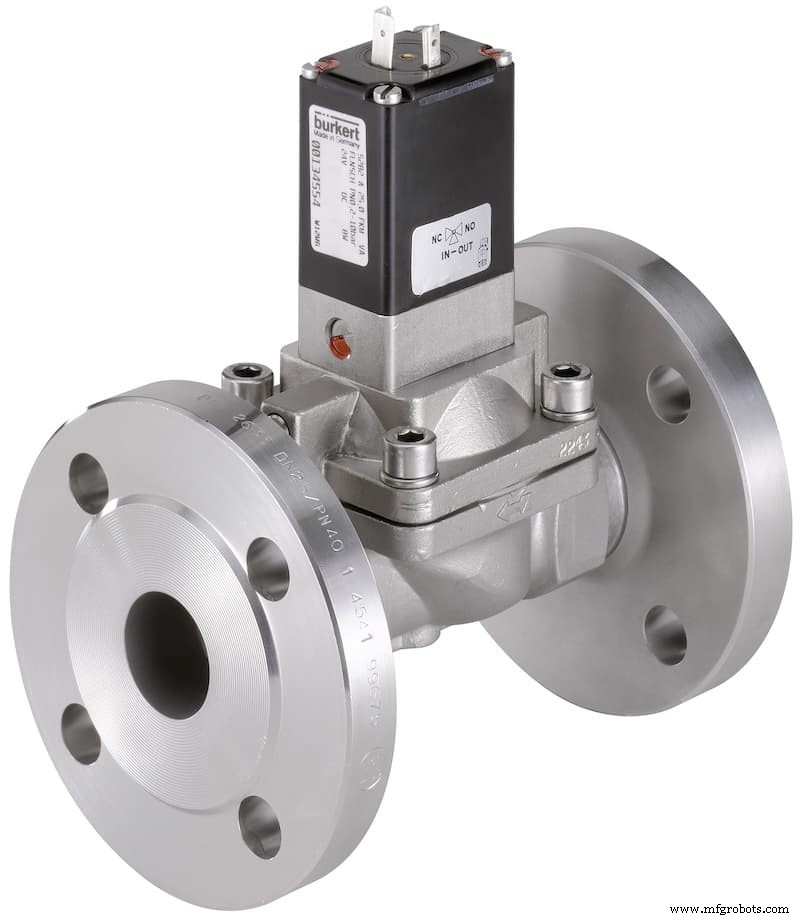
Maintaining adequate coolant flow is critical. Solenoid valves are favored because they provide the rapid response needed to match the constantly changing demands of CPUs, which can ramp from idle to full load within milliseconds. Their electrical control allows automatic responses to temperature sensor signals, and their compact design fits into the confined space of cold‑plate manifolds.
Understanding the Energy Challenge
In a typical enterprise server, there may be one or two CPUs per motherboard and up to eight GPUs, each requiring dedicated cooling. More advanced systems can contain dozens of processors, each with its own cold plate and valve arrangement.
When multiplied across hundreds of servers in a rack and thousands across a facility, the number of valves becomes substantial, making their energy consumption a key factor in operational expenditure and sustainability performance.
Traditional solenoid valves use a single coil that generates a continuous magnetic field, moving the valve into position and holding it there. To maintain position, the valve must continuously counteract the return spring and fluid pressure, keeping it energized around the clock.
How Kick & Drop Technology Works
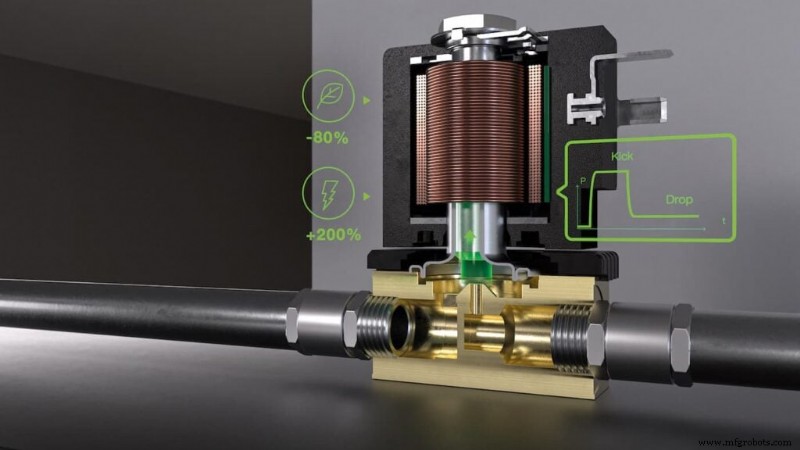
Bürkert’s Kick & Drop technology eliminates this inefficiency with a smarter coil design that can cut energy demand by as much as 80% per valve.
The system uses two coil windings encapsulated within a single epoxy coil, powered in series. Instead of constant power, it delivers a high‑voltage “kick” to rapidly move the valve into position – the actuation phase. This occurs in approximately 500 ms, fast enough to keep pace with rapid temperature changes.
Once positioned, the second winding initiates the “drop” phase, maintaining the plunger with a significantly lower voltage and far less energy. The over‑excited inrush winding generates a very high starting power, using about 85% of the energy to move the plunger quickly, and only around 15% to hold the valve open.
This over‑excitation also delivers up to 200% more activation power than conventional designs, allowing higher operating pressures.
For data centres that run continuously, the cumulative savings are substantial. Across large installations with hundreds or thousands of valves, reducing energy consumption by up to 80% can noticeably cut operating costs and carbon emissions.
Bürkert offers a Kick & Drop Energy and CO₂ Calculator to estimate both energy savings and carbon reduction potential.
Improved Durability and Thermal Performance
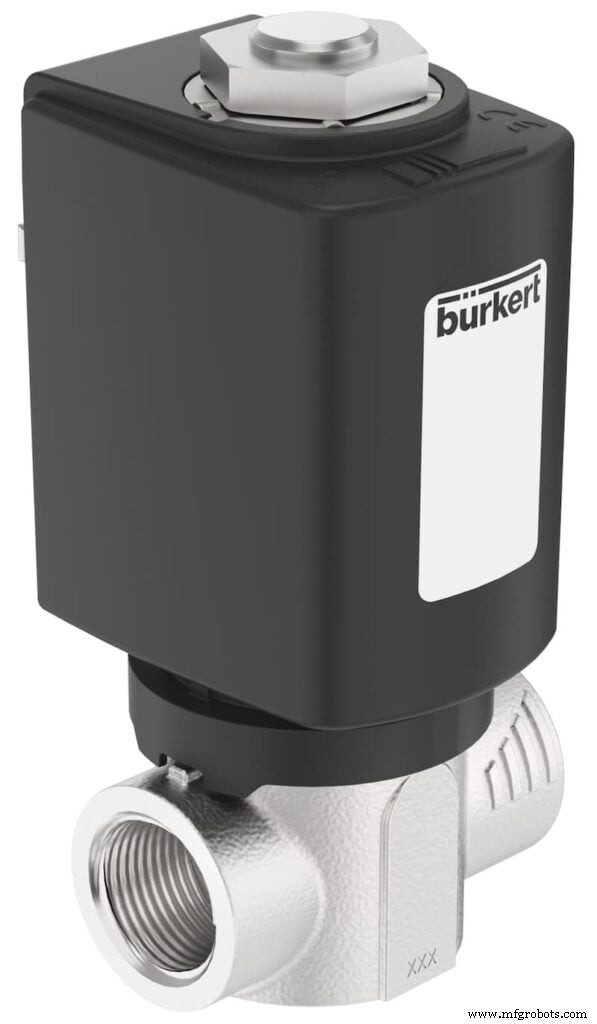
Beyond energy savings, Kick & Drop technology enhances durability – a critical factor in mission‑critical cooling.
Lower energy demand reduces heat generation, improving thermal management throughout the valve assembly. Media heating is limited, and the maximum attainable temperature is capped at 55 °C, mitigating calcification risks in systems that use purified water.
Reduced operating temperatures also lessen thermal stress on key components, extending service life, reducing maintenance, and minimizing overheating‑related failures.
Comparing Kick & Drop with Proportional Control
Pulse‑width modulation (PWM) is an alternative method that switches solenoid valves on and off to control average current. While PWM can lower energy consumption relative to continuously energized valves, it introduces additional hardware, complexity, vibration and audible noise – factors that can compromise long‑term reliability and workplace comfort.
In contrast, Kick & Drop maintains simplicity and robustness, delivering rapid response without the downsides of rapid switching.
Integrated Manifold Solutions for Direct‑to‑Chip Cooling
Valves are only part of the cooling picture. Manifold integration significantly impacts performance.
Bürkert’s engineering team designs bespoke manifolds that integrate directly with cold plates and cooling infrastructure, offering a compact footprint and precise fit. Integrated solutions streamline product development, reduce project complexity and accelerate deployment when working with a single supplier for valves and manifolds.
Supporting the Future of High‑Performance Data Centres
The global data‑centre market is expanding rapidly, driven by AI, cloud computing, HPC and growing digital demand. As processor densities rise and workloads become more demanding, efficient thermal management becomes increasingly critical.
Direct‑to‑chip cooling will play a central role in meeting these needs, providing the precise heat removal required for next‑generation infrastructure. Solenoid valve technology remains essential, delivering fast, automated flow control that protects high‑value processors from rapid load fluctuations.
Operators face mounting pressure to reduce energy use and meet sustainability targets. Enhancing the efficiency of every component in the cooling loop is therefore paramount. Kick & Drop technology offers the speed, low power consumption and durability needed for reliable, environmentally responsible data‑centre operations.
Contact Details
About Us
Latest News
Latest Videos

Bürkert Fluid Control Systems
Bürkert operates in thirty‑five countries worldwide and works with a large network of distributors and partners, ensuring close proximity to customers. Our global presence guarantees full service and support in every market. Research drives our company.
We are never satisfied with the status quo and continually seek new technologies and solutions for our customers. Every year, our people develop advanced products ranging from integrated process measurement and control units to sophisticated systems used in pharmaceutical research. To stay ahead, we invest heavily in R&D.
In our research centres in Germany and France, 150 people are dedicated to building a better future for our company and our customers. Our commitment to expertise extends worldwide, ensuring our fluid‑control innovations benefit the global market.
What we do in a nutshell
We manufacture process equipment and provide end‑to‑end solutions for the complete control loop.
Where we supply to
UK, Ireland, Europe
Industries we supply to
Food & Beverage, Pharmaceutical, Cosmetics & Toiletries, Water & Wastewater
FLOWave | Oil dosing (English)
Feldbus Gateway Modul ME43: How to operate FLOWave (DE)
Industrial equipment
- Showcasing Advanced Swiss Lathes & Turning Centers: L20X Y2 Axis & A20VII Bone Screw Machining
- How to Qualify as a Certified Forklift Driver: Your Complete Step‑by‑Step Guide
- Ashlar Masonry: The Timeless Art of Precision Stonework
- Lathe vs. Milling Machine: Key Differences & When to Use Each
- Efficient Automation for Oil‑Drill Coupling Production
- 5 Key Indicators Your Stromag Industrial Brakes Require Immediate Repair
- Fagor 8065 CNC Delivers Aerospace‑Grade Precision and Performance
- Understanding Coping Machines: Precision in Metal Fabrication
- Class 0 Compressors: Ensuring Truly Oil-Free Air for Sensitive Industries
- How Expert Machinery Movers Cut Downtime and Keep Your Operations Running Smoothly