



Robotic Inspection Installations: Mastering Measurement Sensor Technologies
In today’s Industry 4.0 landscape, automation is not optional—it’s a prerequisite for competitiveness. Among the most critical automated processes is the inspection of components and assemblies. This third‑in‑a‑series article dives into measurement sensor technologies, detailing how each type enhances quality control, speeds up production, and reduces costly rework.
Measurement Sensors Overview
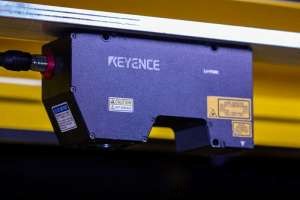
A measurement sensor translates physical characteristics—distance, thickness, or shape—into precise electronic signals. Depending on the underlying principle, these devices fall into several categories, including ultrasonic, contact, laser & optical, and inductive displacement sensors.
Ultrasonic Sensors
Ultrasonic sensors emit high‑frequency sound waves that reflect off a target and return to a receiver. By timing the round‑trip, the device calculates distance using the known speed of sound. They excel in measuring liquids, transparent or non‑reflective surfaces, and objects that are inaccessible to optical sensors. While their range and resolution are lower than laser counterparts, ultrasonic sensors consume minimal power and are cost‑effective for many inspection scenarios.
Contact Sensors
True to their name, contact sensors physically touch the part to gauge dimensions such as height, thickness, or profile. These devices are rugged, maintain micrometer‑level precision, and are immune to surface contaminants like oil or water—thanks to their magnetic sensing mechanism. They are ideal for harsh environments where non‑contact methods might falter.
Laser & Optical Sensors
Laser and optical sensors represent the most versatile group of measurement devices. Three primary technologies dominate this space:
- Laser Profiler – Projects a laser line across a part, capturing 2D or 3D geometry via triangulation. It delivers rapid, high‑volume measurements, making it a staple on fast‑moving assembly lines.
- Laser Displacement Sensor – Focuses on a single point, achieving exceptional accuracy. While slower for 2D sweeps, it’s the go‑to for critical dimension checks.
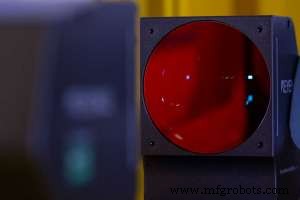
- Optical Micrometer – Illuminates the entire cross‑section, recording shadow silhouettes to derive area, shape, and defect detection (e.g., cracks or dents). It combines speed with micron‑level precision, widely adopted in quality control labs.
Inductive Displacement Sensors
These non‑contact proximity sensors detect metallic parts through electromagnetic induction. When a ferrous object approaches, the induced magnetic field alters the galvanometer’s position, translating into a displacement reading. While they perform best with magnetic metals, inductive sensors remain indispensable for parts where contact or optical methods are impractical.
To explore vision systems and their integration into robotic inspection, see Part 1 of this series. The final installment will cover optical comparators—another cornerstone of automated quality assurance.
Have questions about selecting the right sensor for your line? Contact our experts for a tailored solution.
Industrial equipment
- Oil‑Sealed vs. Dry Vacuum Pumps: Performance, Cost, and Reliability
- Why We Chose the Linde HPV Hydraulic Pump: 7 Key Benefits
- Understanding Ferrous vs. Non‑Ferrous Metals: Key Differences & Uses
- Nitrogen: The Key to Fresh BBQ Food This Summer
- Master Date Code Printing on Flexible Packaging: 5 Essential Expert Tips
- 5 Essential Factors to Evaluate Before Purchasing Used Manufacturing Equipment
- The Burton Process Explained: Thermal Cracking for Fuel Production
- Understanding Air Separation Plants: How They Divide Atmospheric Air Into Valuable Gases
- FEMCO CNC Lathes Eliminate Workflow Bottlenecks
- Understanding Auxiliary Relays: Their Role and Function in Electronics