



Robotic Solutions Driving Efficiency in the Metal Industry
The metal industry remains a cornerstone of global commerce, powering sectors from automotive to aerospace and electronics. To keep pace with rising demand and stringent quality standards, manufacturers are turning to robotics for speed, precision, and safety.
Part Handling
Robots excel at moving heavy, bulky, or hazardous components between machines—be it presses, CNCs, or laser cutters. Their ability to select, reorient, and sort parts dramatically reduces labor costs and improves throughput.
- Part selection
- Reorientation
- Sorting
- Integration with conventional equipment (presses, laser cutters, plasma cutters)
By automating these tasks, plants achieve high repeatability, minimal changeover time, and safer working environments.
Robotic Deburring
Deburring removes sharp edges and burrs, ensuring finished parts meet client specifications. Human operators often introduce variability, while robots apply consistent pressure and tool geometry tailored to each part’s design.
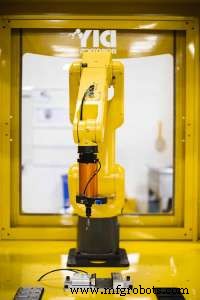
Our DIY-Robotics Deburring Cell Bundle, developed in partnership with ATI Automation and RoboDK, delivers customizable tooling and real‑time monitoring for optimal results.
Robotic Painting
Traditional painting exposes workers to toxic solvents and volatile organic compounds. Robots mitigate health risks and produce uniform coats with superior finish quality.
Leading automakers such as GM and Volkswagen already use robots for primer, electrostatic, and final paint layers, cutting material waste and reducing cycle times.
Robotic Welding
Precision and repeatability are paramount in welding. Robotic welders—whether laser, plasma, arc, TIG, or MIG—deliver consistent, defect‑free joints at high speeds.
Although the initial investment is significant, the return manifests in time savings, lower scrap rates, and a stable workforce amid labor shortages.
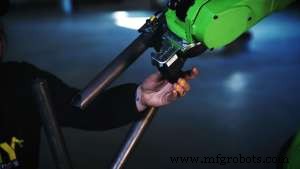
For smaller facilities, the Robotic Welding Assistant offers a collaborative solution with an attractive ROI and plug‑and‑play deployment.
Robotic Cutting
Robotic cutting technologies—laser, plasma, and waterjet—provide precise, clean cuts even on complex geometries, improving dimensional accuracy and reducing operator exposure to high temperatures.
Industries such as automotive, electronics, and sheet metal fabrication rely on these solutions to accelerate production and maintain quality.
Beyond the applications highlighted above, robotics also support assembly, machine tending, and automated quality inspections. As artificial intelligence advances, robots will unlock even greater productivity gains across the metal sector.
Related Posts
Industrial equipment
- Thermal Binding: A Professional, Durable Solution for High-Quality Booklets
- 5 Essential Tips to Choose the Best Custom Fabrication Partner
- Steam Rollers Explained: From Steam Power to Modern Diesel Engines
- Understanding Overlap Wave Washers: Design, Applications, and Advantages
- Capacitive Coupling Explained: Energy Transfer in Electronic Circuits
- Precision Tooling & Workholding Optimize Whipple Supercharger Rotors for Superior Performance
- 7 Key Advantages of Purchasing Used Machinery for Your Manufacturing Plant
- Understanding Polyvinyl Acetate (PVA): Properties, Uses, and Benefits
- Top 6 Crane Man‑Basket Safety Rules You Must Follow
- Ensuring Peak Performance: The Critical Role of Precise Alignment in Rotating Equipment