



Tony Fanning’s Five‑Axis Automation Blueprint: Excellence at Flex‑Cell
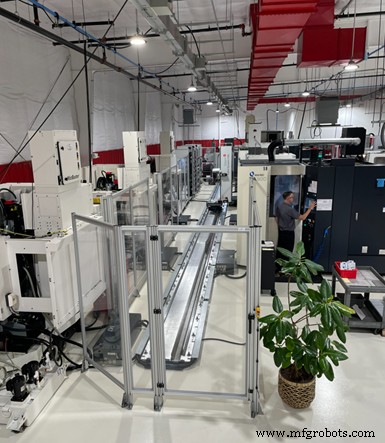
The Erowa Linear ERD‑150L is a pivotal investment in Flex‑Cell’s Lancaster, Pennsylvania facility, enabling automated pallet loading for up to 12 five‑axis machines with a 150 kg capacity. Currently, it serves nine five‑axis machines and two three‑axis machines.
Automation, advanced tooling, custom workholding, inspection, skilled personnel, standardized processes, and continual reinvestment in technology are the pillars of Flex‑Cell’s success.
A recent tour of Flex‑Cell Precision Inc. highlighted these foundational elements that drive Tony Fanning’s advanced five‑axis machining operations.
Founded in 1991 in Long Island, New York, Fanning built the company on unconventional process improvements and the adoption of cutting‑edge automated machine tools.
Featured Content
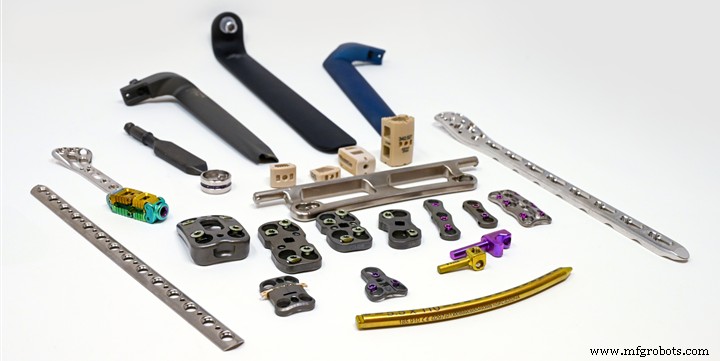
Initially, Flex‑Cell’s portfolio was dominated by aerospace and defense, but today 70 % of its production serves the medical sector. Source: Flex‑Cell
The shop now houses roughly 50 CNC machines—three‑axis and five‑axis VMCs, Swiss‑type lathes, turn‑mills, wire EDM, and a waterjet—alongside laser marking and light assembly capabilities. With 60 employees, the newly expanded 41,500‑square‑foot facility offers a bright, clean, and inviting environment.
“Flex‑Cell started out primarily serving the aerospace and defense industries,” explains Steve Fanning, Tony’s son and the shop’s operations manager. “However, we started taking on medical work in the late 2000’s and it has been a perfect fit for us.”
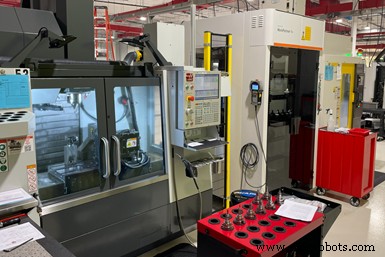
The WorkPartner 1+ system from System 3R seamlessly interfaces between Haas Automation and FANUC machines to automate pallet loading and unloading.
Medical components such as spinal implants now account for more than half of the output. The shop holds ITAR, FDA, ISO 9001:2015, ISO 13485:2016, and AS9100D certifications, and is progressing toward CMMC Level 2 with an SPRS score of 110.
“There’s a definite confidence that customers feel when they place an order with us,” Fanning says. “A big part of that is because our staff can identify manufacturability issues that perhaps our customers’ design team might have overlooked and correct it in the contract review and programming stages before it gets to the shop floor.”
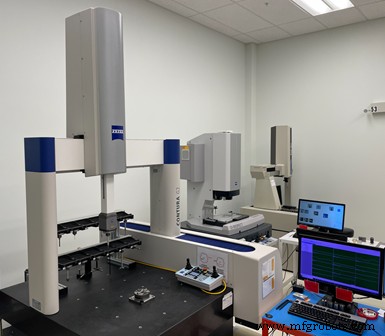
Erowa zero‑point pallet systems, paired with Flex‑Cell’s proprietary part clamping devices, enable fast, repeatable setup on machine tools and the Zeiss Contura G2 CMM. Operators can launch inspection programs with a single click, even if they lack CMM expertise.
While standardization remains a core principle, Flex‑Cell strategically selects machine brands—DMG MORI, FANUC, Haas, Hermle, Kitamura, Makino—to match material, size, complexity, and precision requirements.
Workholding is central to five‑axis automation. The shop’s Erowa zero‑point systems, augmented by custom clamps, integrate with the Zeiss CMM for rapid, repeatable positioning. Inspection programs allow operators to verify parts immediately after installation.
With 25 automated milling machines, all five‑axis units feature machine‑tending robots. Pallet loading solutions from Erowa, System 3R, and Universal Robots cobots power the operation. The ERD‑150L’s 150 kg capacity currently supports seven five‑axis and two three‑axis machines, with room to scale to 12.
The shop runs two 10‑hour shifts Monday through Thursday. Employees receive automation bonuses for overtime, weekend pallet loading, tool changes, inspections, and related tasks.
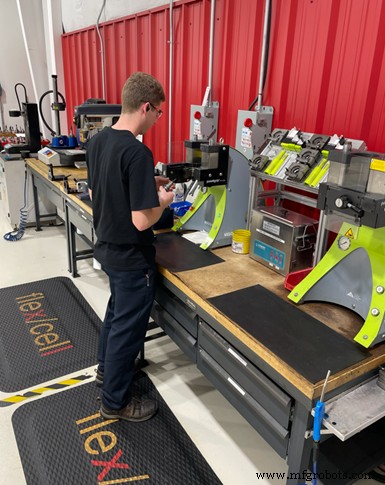
For approximately 90 % of milling jobs, Flex‑Cell employs Rego‑Fix powRgrip, offering tool holders, collets, and automatic clamping that enable seconds‑long cutter changes and a total system runout ≤ 3 µm at 3 × D.
Additional investments include Zoller Venturion 450 presetters for offline tool measurement, in‑house titanium Type II or Type III anodizing, and ultrasonic cleaning via a Crest robot console with heated vacuum drying.
While technology drives efficiency, skilled staff remain vital. CAM programmers design parts with automation in mind, balancing cycle time reduction against tool longevity to prevent downtime. Operators receive training to adjust offsets and make real‑time decisions, allowing them to run multiple machines and maximizing productivity.
Industrial equipment
- Barrel Plating Explained: Process, Benefits, and Applications
- Quick‑Release Pin Handles: Types, Features, and Choosing the Right One
- Centrifuge Repair: Detecting Early Signs of Failure
- Choosing the Right Sheet Metal Folding Machine: A Comprehensive Guide
- Volvo's Top 5 Excavator Attachments & Modifications
- Understanding Grommets: Types, Uses, and How They Protect Your Gear
- Expert Machinery Shipping from Canada to the USA – Reliable Export Services
- How Barcodes Drive Quality, Traceability, and Trust in the Food Industry
- Stamping Presses: Precision Metalforming Tools for Modern Manufacturing
- Accelerate Production with Okuma’s Next‑Generation Robot Loaders