



Accelerate Production with Okuma’s Next‑Generation Robot Loaders
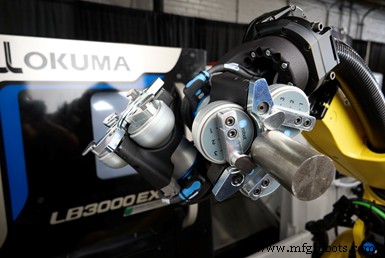
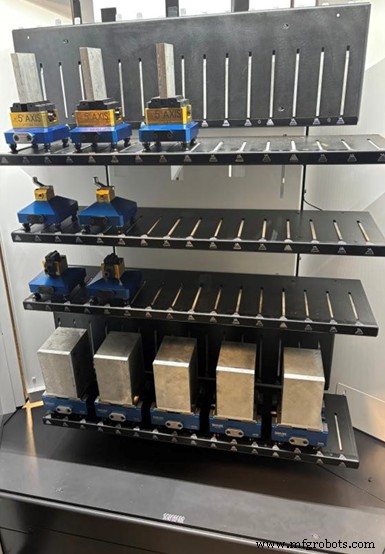
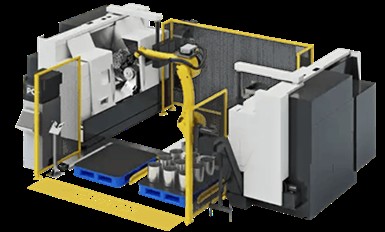
What does it take to make automation simpler and faster for a wider range of parts? As Okuma launches its second‑generation single‑machine robotic loaders, the ORL Mark‑II Series, and prepares for the IMTS 2026 launch of its two‑machine automation systems (the ORL‑PLUS Series), Simon Schneider, director of Okuma Factory Automation, explains the technologies that make its automation solutions more accessible. Okuma’s ORL‑D II for turning‑center automation features a redesigned robotic end effector that uses electric actuation and programmable force control. This change eliminates the need to stop the machine and adjust fingers for each part size, expanding the system’s effective variance from 0.25 in to 2–3 in. The robot can now handle outer diameters (OD) from 0.5 in to 5.625 in (8 in with a large template kit), inner diameters (ID) from 2.125 in to 6.75 in (8 in with a large template kit) and weights up to 32 lb. The integrated laser sensor removes manual entry of part dimensions, effectively halving changeover time. Electric grippers with programmable force control—adjustable between 50 N and 450 N—ensure delicate, thin‑walled parts are gripped safely without crushing. Additional features include a blow‑off module that removes chips before pickup and a laser sensor that measures part height, prompting the robot to adapt its gripping strategy. A dual‑spring plate on the load and unload gripper keeps the part stationary while the machine clamps, mitigating misalignment caused by dirt, chips or imperfect blanks. While the first‑generation ORL‑MC only interfaced with individual parts, the ORL‑MC II now supports palletized workholding systems and unique part geometries, delivering high‑accuracy workflow efficiencies. With the upgraded end effector, the robot can handle both palletized parts and individual components without additional changeover time. Operators can assign up to 18 SKUs—six shelves per side—in the three‑sided rotating station, and store up to 90 pallets. Pallets up to 8.5 in wide, 8.0 in deep, 9.0 in high, and 40 lb combined weight are supported. Both the ORL‑D II and ORL‑MC II benefit from Okuma’s QuickTouch HMI control and software. Schneider likens its usability to a smartphone app: “less than ten clicks set up a new part.” The interface stores part‑specific data, offers dropdown menus, and provides a step‑by‑step review button. Real‑time production monitoring displays diagnostics, and a safety module lets the robot return to a safe restart point if an issue arises. The upcoming ORL‑PLUS line features the ORL‑PC+ equipped with two 48‑in × 48‑in single‑layer pallets and a FANUC M‑710iC six‑axis industrial robot. This configuration enables fully automated workflows that span multiple machines. Okuma’s next‑generation robotic loaders will include pallet, drawer, and conveyor options, allowing pre‑, during, and post‑machining processes such as air blow‑off, part flip‑over, and marking. The engineering team will work with customers to integrate additional technologies beyond the pre‑engineered set. Schneider recommends the ORL‑PLUS for shops that need to combine operations or already run two‑machine workflows. — with next‑gen robotics from Okuma. Learn more at okuma.comTurning’s Push and Pull
Milling With Pallets and Parts
Short Setups with QuickTouch
Multi‑Machine Automation
Add Flexibility and Speed to Your Operation
Industrial equipment
- Discover the Main Types of Waterproof Sealants for Your Projects
- Essential Guide to Laser Cutting Plastic: Tips for Sharp, Accurate Results
- Knockout Plugs Explained: Purpose, Uses, and Practical Applications
- Selecting the Ideal Pneumatic Actuator: A Practical Guide for Reliable Automation
- Inspection Mirrors Explained: Uses, Features, and Benefits
- Robotic Cells: Enhancing Safety and Efficiency in Industry 4.0 Manufacturing
- Top 3 Lathe‑Mill Combos That Deliver the Best Value
- Optimizing Low‑Pressure Compressed Air in Mining: 3 Essential Factors
- Key Drawbacks of Single-Acting Cylinders in Engine Design
- 3 Hidden Factors That Compromise Your Air Quality