



Robotic Cells: Enhancing Safety and Efficiency in Industry 4.0 Manufacturing
As manufacturers embrace Industry 4.0, robotics is becoming a cornerstone of higher productivity. Yet many plants already own robots that can benefit from additional integration to unlock even greater efficiency.
Robotic Cells Explained
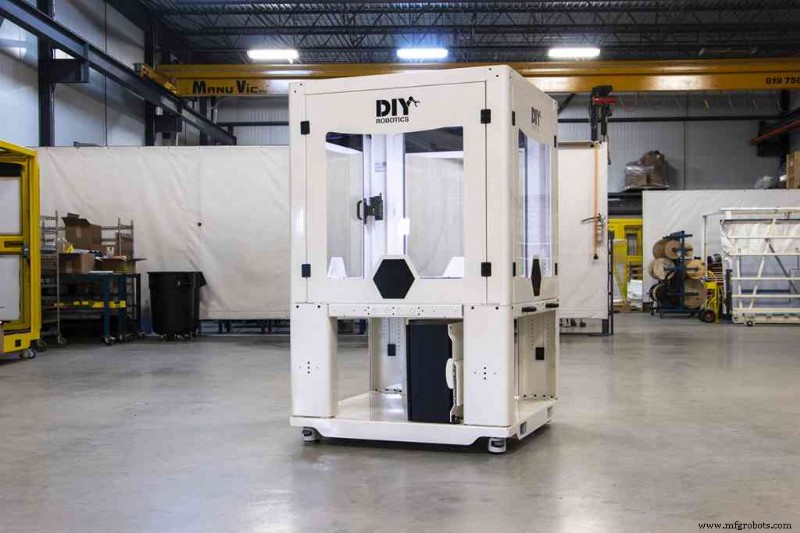
A robotic cell—also called a work cell—is a defined, closed workspace that houses one or more robots. The design purpose is twofold: to maximise the robot’s operational efficiency while preserving a safe environment for nearby personnel. By physically segregating the robot from human operators, the cell prevents accidental contact unless the system is intentionally shut down, at which point the cell doors unlock. When the robot’s motion is verified as safe, speed limits can be lifted, allowing the machine to work at full speed without compromising worker safety.
Manufacturers offer a spectrum of cell configurations. Depending on the size, weight, and application of the robots, a plant may choose simple physical barriers or fully integrated cells that include advanced controls and programming interfaces. Selecting a cell that matches the specific requirements of your robots is critical for both safety and performance.
DIY Robotics: Your Partner for Custom Robotic Cells
At DIY Robotics, we specialize in designing and delivering robotic cells that fit the unique demands of modern production lines. Our portfolio is divided into two core categories:
- Collaborative Cells – Built to operate in close proximity to human workers. These cells impose speed and force limits to protect employees while enabling flexible, multi‑task operations. Ideal for small‑to‑medium enterprises that need an adaptable robotic solution.
- Modular Cells – Provide a sealed workspace that can be integrated with other machines or robots. They are perfect for larger production environments where robots must coexist with other equipment.
Key Advantages of Our Cells
- Fully Customisable – Panels, dimensions, and mounting options can be tailored to match your factory layout. Whether you want to incorporate a FANUC arm or your own robotic system, we can adapt the cell accordingly.
- Mobile – Equipped with industrial‑grade locking wheels, our cells can be repositioned across the shop floor. This flexibility eliminates the downtime associated with bolting robots to the floor.
- Durable Construction – Welded and folded sheet metal frames provide robust support that does not compromise the robot’s acceleration or speed. The materials are also scratch‑ and rust‑resistant, ensuring long‑term reliability.
By integrating a robotic cell, plants can reduce human‑robot collisions, increase throughput, and maintain a compliant safety environment that meets ISO 10218 and IEC 61508 standards.
Conclusion
Robotic cells represent a strategic investment for any industry looking to harness the full potential of automation while safeguarding its workforce. Contact DIY Robotics to explore how a custom‑designed cell can elevate your production line.
Industrial equipment
- Choosing Between Horizontal and Vertical CNC Milling Machines: Applications & Benefits
- Choosing the Right Compactor: A Comprehensive Guide to Efficient Waste Management
- Stock Removal Explained: Techniques & Applications in Manufacturing
- Linatex® Premium Natural Rubber Sheet – Unmatched Wear Resistance for Industrial Applications
- Boost Warehouse Efficiency with Top Forklift Attachments and Accessories
- Identify the Air System Risks That Could Compromise Your Facility
- Acu‑Rite DRO300 Now Enables Control of Sinker EDMs, Expanding Its Versatility
- Step-by-Step Guide to Safely Replacing Twiflex Brakes
- Ganesh ASL Slant-Bed CNC Lathes: Superior Vibration Control & Heavy Cutting Performance
- Custom Control Boosts Accuracy & Flexibility of New Machine Tool