



Vertical vs. Horizontal Milling: Which Machine Is Right for Your Projects?
Every machine shop’s backbone is the milling machine, and virtually every assembly design relies on milling in some form. Most engineers picture a bustling workshop full of CNC mills, but the reality is that the choice between vertical and horizontal mills can profoundly impact design, cost, and build time.
At Rapid Axis, we pride ourselves on delivering parts that meet the highest standards of precision and efficiency. By understanding the differences between vertical and horizontal milling, you can make smarter design decisions and reduce time‑to‑market.
Vertical Milling Explained
In a vertical mill, the cutting tool is mounted on a spindle that moves up and down while the workpiece stays stationary or slides along the X‑ and Y‑axes. This configuration gives machinists a direct view of the cutting action, making it ideal for detailed work and tight tolerances.
Vertical mills are the workhorse of many shops, ranging from manual models to fully‑automated CNC systems capable of producing complex components with sub‑0.01‑mm accuracy. Common applications include mold making, prototype development, and general machining tasks.
Key advantages include:
- Excellent visibility and real‑time monitoring of the cut.
- Fast, straightforward setup and tool changes.
- Compact footprint, which saves valuable shop space.
- Ideal for smaller workpieces and intricate geometries.
Horizontal Milling Explained
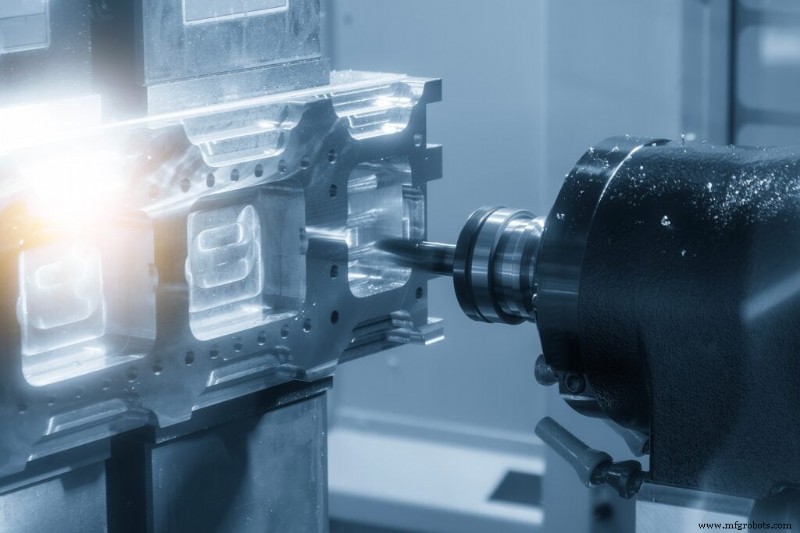
A horizontal mill flips the spindle orientation, placing the cutting tool horizontally and allowing the tool to move laterally across the workpiece. These machines are typically larger and built for high‑volume or heavy‑weight operations.
Horizontal mills excel at removing large amounts of material quickly, thanks to side‑cutting tools that can be thicker and more durable. They often feature rotary tables or pallet systems, enabling simultaneous machining of multiple faces and dramatically increasing throughput.
Industries that rely on horizontal milling include automotive, aerospace, and heavy‑equipment manufacturing, where large, robust parts must be produced efficiently.
Comparing Vertical and Horizontal Mills
While the spindle orientation is the most obvious difference, it also shapes each machine’s capabilities:
- Cutting Approach: Vertical mills are tailored for precision, fine cuts, and softer materials. Horizontal mills handle heavy‑weight removal and harder metals.
- Setup Speed: Vertical mills boast quick, simple setups suitable for small or varied runs. Horizontal mills require more initial preparation but shine in repetitive, high‑volume jobs.
- Tool Life: Horizontal mills offer superior chip evacuation and heat dissipation, extending tool life and reducing maintenance.
Choosing the Right Mill for Your Project
Decide based on these key factors:
- Design Complexity: Intricate shapes and tight tolerances favor vertical milling. Straightforward geometries with high material removal need horizontal mills.
- Material: Aluminum and other soft metals are best milled vertically; hardened steel and alloy steels benefit from horizontal cutting.
- Production Volume: Low to medium runs and frequent changeovers call for vertical mills. High‑volume, repetitive production is more efficient on horizontal machines.
- Space & Budget: Vertical mills are typically more affordable and compact, making them ideal for smaller shops. Horizontal mills require larger footprints and higher investment but deliver greater throughput.
Industry‑Specific Applications
Vertical milling thrives in sectors like medical devices, electronics, and rapid prototyping, where fine detail and rapid iteration are critical.
Horizontal milling dominates aerospace, automotive, and energy industries, where large structural components—such as turbine blades, engine blocks, and chassis parts—must be machined efficiently.
Partner with Rapid Axis for Expert Milling Services
Whether you need a precision prototype or a high‑volume production run, Rapid Axis offers both vertical and horizontal milling solutions. Our team of experienced machinists will guide you through selecting the optimal approach, ensuring your parts are manufactured with unmatched quality and reliability.
Get a Free Quote Today
Ready to make the right milling choice for your next project? Contact Rapid Axis for a complimentary assessment and discover how our expertise can streamline your manufacturing process.
Industrial equipment
- Cold Forging Explained: The Power of Precise Metal Shaping
- Is Your Coffee Production Facility EPA‑Compliant? Key Standards & Compliance Tips
- Emco Maxxturn 25: Y‑axis & Subspindle Lathe for Precision Small Parts
- Protect Your Outdoor Equipment: Is It Time to Replace Your Storm Brakes?
- Accurate Deep Hole Drilling with Zero Drift
- How Expert Machinery Movers Cut Downtime and Keep Your Operations Running Smoothly
- 5 Key Factors for Selecting the Right O‑Ring Seal
- August 2021 Employee of the Month: Vicki Donnelly
- Connecting Lean Principles to Real-World Results
- Unified Hazard Monitoring for a 60‑Plus‑Facility Grain & Feed Cooperative