



The Aerospace Product Design Lifecycle: Precision, Collaboration, and Manufacturing Excellence
Designing aerospace products demands unrivaled precision, deep technical knowledge, and a relentless focus on quality. The phrase "isn't rocket science" underscores the complexity and high stakes involved in every phase of the aerospace product design lifecycle.
From the initial concept to final production, each step requires meticulous attention to detail, rigorous testing, and seamless collaboration among engineers, designers, and manufacturers. For mechanical engineers and aerospace designers, partnering with a high‑quality manufacturer can be the decisive factor that turns a concept into a reliable, production‑ready component.
Below we outline the core stages of the aerospace product design lifecycle and illustrate how a skilled manufacturing partner—offering CNC machining and sheet metal fabrication—supports each phase.
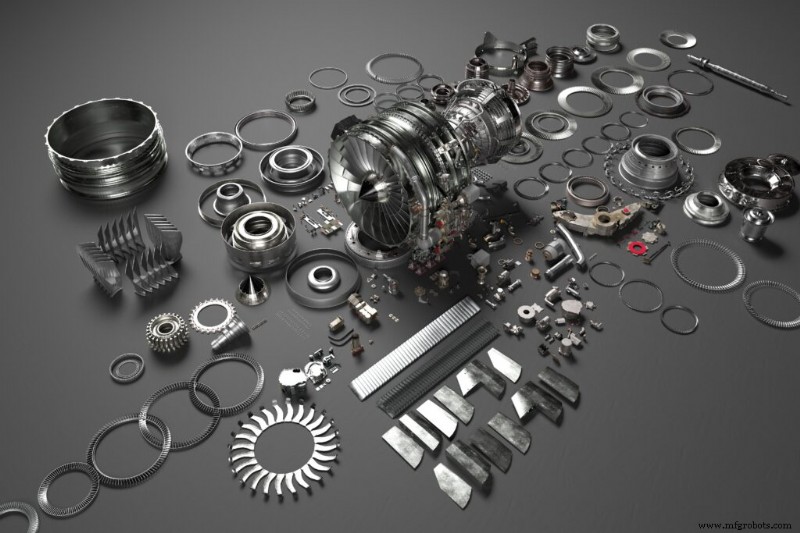
1. Concept Development and Requirements Gathering
Every aerospace project starts with a clear concept—whether a simple sketch or a complex CAD model. Engineers and designers establish the product’s purpose, performance criteria, and the challenges it must overcome. This phase also involves gathering critical technical requirements such as weight limits, structural strength, and material specifications, which are essential for aerospace applications.
A trusted manufacturer can provide invaluable guidance early on, advising on optimal alloy selection for lightweight structures and recommending machining techniques that achieve the required precision.
2. Design and Engineering
Once the concept is defined, detailed CAD models and technical drawings are produced. Engineers use advanced simulation tools to evaluate aerodynamic performance, thermal resistance, and structural integrity before any physical prototype is built.
During this phase, a high‑quality manufacturer reviews designs for manufacturability, ensuring that tolerances, geometries, and material choices align with the capabilities of CNC milling and sheet metal fabrication equipment. Early feedback can prevent costly redesigns later in the process.
3. Prototyping and Testing
Physical prototypes are essential for validating designs, spotting flaws, and refining concepts based on real‑world performance data. Aerospace prototypes demand extreme precision to replicate final functionality accurately.
CNC machining delivers prototypes that meet exact specifications, enabling precise fit‑and‑function testing. Sheet metal fabrication produces lightweight, high‑strength mock‑ups that emulate final component properties. A manufacturer skilled in both techniques can deliver rapid turnaround without compromising quality, ensuring a smooth prototyping phase.
4. Pre‑Production and Design Validation
After successful prototype testing, engineers refine the design for full‑scale production, focusing on consistent, economical manufacturing while meeting aerospace standards and certifications. This stage often includes detailed production planning and final performance testing.
Manufacturers equipped with advanced CNC and sheet metal capabilities can produce pre‑production units that mirror the final manufacturing process. These units identify any last‑minute adjustments needed to streamline production and uphold quality, a reason many choose Rapid Axis for their aerospace projects.
5. Production and Assembly
During production, the aerospace product is manufactured in larger volumes, demanding precision and consistency. This step encompasses fabricating individual components, assembling subassemblies or final products, and conducting rigorous quality inspections.
High‑quality manufacturers specializing in CNC machining and sheet metal fabrication handle intricate parts and complex assemblies with ease. Our expertise ensures tight tolerances and exacting standards, meeting the stringent requirements of the aerospace industry. Consolidating machining, fabrication, and assembly within a single partner simplifies logistics and reduces the risk of errors.
6. Testing and Certification
Before deployment, aerospace products undergo extensive testing and certification, including structural testing, environmental simulations, and compliance checks against standards such as AS9100 and FAA regulations. Every component must perform flawlessly under extreme conditions.
Manufacturers contribute by delivering components that meet all specifications and offering traceability and quality assurance throughout production. High‑precision CNC machining ensures parts perform as expected, while reliable sheet metal fabrication yields durable structures capable of withstanding rigorous testing.
7. Maintenance and Iteration
Even after deployment, the design lifecycle continues. Maintenance, repair, and upgrades keep aerospace systems operational and competitive. Engineers may revisit designs to improve performance, reduce costs, or adapt to new technologies.
Partnering with a manufacturer experienced in CNC machining and sheet metal fabrication provides ongoing support for producing replacement parts, upgrading components, and fabricating custom solutions for unique challenges. Rapid delivery of high‑quality parts minimizes downtime and sustains operational excellence.
Partnering with Rapid Axis for Aerospace Success
At every stage of the aerospace product design lifecycle, the right manufacturing partner streamlines processes, enhances quality, and boosts efficiency. Rapid Axis brings proven expertise in CNC machining, sheet metal fabrication, and advanced manufacturing techniques to support engineers and designers in the aerospace sector.
From prototyping and pre‑production to large‑scale manufacturing and maintenance, our team delivers precision and reliability for your projects.
Conclusion
Contact Rapid Axis today for a free quote and let us help you achieve success in your aerospace product design. Whether you’re developing innovative prototypes or scaling up for production, we’re here to support your goals with unmatched quality and service.
Industrial equipment
- Boosting Efficiency with a Responsive Robot at Energy Dynamics
- Pack Rolling Explained: Key Benefits & Applications
- Mazak Machine Tool Prices: New & Used
- Lang Technik USA Expands Operations with New 23,000‑sq‑ft Wisconsin Facility
- Motorized Valves: Precision Control for Large-Scale and Remote Fluid Systems
- Discover the New DZS VSD+ Intelligent Vacuum Pump Range – Powerful, Durable, and Energy‑Efficient
- Atlas Copco Showcases Advanced Plastic Manufacturing Solutions at NPE2018
- Top 5 Plastic & Rubber Injection Moulding Machines – November 2018 Selection
- Pneumatic Safety Components: Key Applications and Compliance Guidance
- Hydraulic Disc Brakes: The Clear Advantage for Heavy‑Equipment Operators