



Custom Chute Design: The Key to Reliable Mining Conveyor Transfer Points
Posted on May 8, 2026 by admin
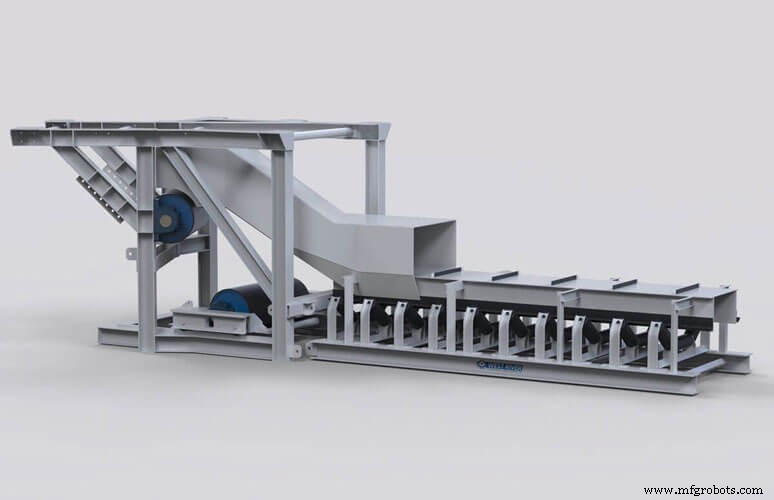
In mining, conveyor systems are engineered to move vast quantities of material with precision and durability. Yet even the most robust design can suffer chronic downtime, accelerated wear, and safety risks if the transfer point is overlooked.
Transfer points—where one belt hands material to another—are notoriously failure‑prone. They concentrate impact energy, change material flow dynamics, and expose components to harsh environmental conditions. Industry data shows that transfer points contribute up to 30% of conveyor downtime, underscoring their critical impact on overall system performance.
WHY TRANSFER POINTS ARE A COMMON SOURCE OF CONVEYOR PROBLEMS
These junctions are where multiple forces converge: material changes direction, speed, and trajectory while interacting with belts, liners, idlers, and structural elements. When these forces are not properly managed, the transfer point becomes a primary driver of unplanned downtime and equipment degradation.
Unlike other conveyor components, transfer points are not “plug‑and‑play.” Generic or undersized chute designs often ignore real‑world operating conditions—variable material size, moisture content, tonnage fluctuations, or drop height—leading to systemic problems rather than isolated failures.
COMMON MINING CONVEYOR TRANSFER POINT ISSUES
Most transfer point failures stem from poor material control during transfer. A chute that does not manage how material enters the receiving conveyor triggers multiple, interconnected problems:
- Uncontrolled material flow – uneven belt loading, mistracking, and rollback.
- Excessive impact energy – accelerated wear on belts, liners, idlers, and support structures.
- Dust and spillage – free‑falling material and displaced air create hazardous conditions.
- Premature downstream equipment wear – off‑center or unstable loads propagate damage through the system.
A frequent operator observation is belt misalignment downstream. While often corrected by replacing idlers or adjusting tracking, the root cause usually originates at the transfer point, where material is not centered or controlled as it enters the belt. Uneven loading can also cause localized liner wear, which, over time, magnifies into larger system‑wide failures. These symptoms are typically interrelated and rarely resolved with isolated fixes.
HOW THE RIGHT CHUTE DESIGN FIXES TRANSFER POINT ISSUES
The most effective solution is not a single component upgrade but a chute design that mitigates multiple failure mechanisms simultaneously.
A properly engineered transfer chute:
- Controls material trajectory and velocity.
- Reduces free‑fall distance and impact forces.
- Loads material centrally and evenly on the receiving belt.
- Limits air displacement, reducing dust generation.
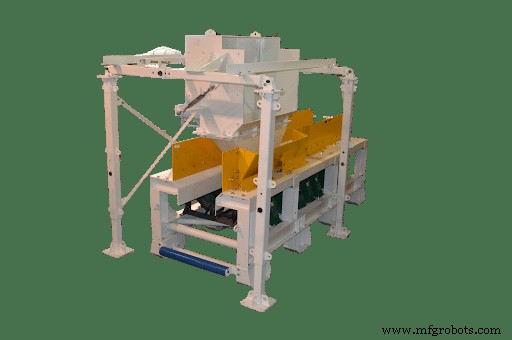
By stabilizing how material lands and flows, the chute prevents bouncing, spillage, and uneven loading—key contributors to misalignment and downstream wear. The result is a more predictable, controlled transfer that protects belts, idlers, and downstream equipment, breaking the chain reaction of failures that often originates at this critical location.
WHY CUSTOM CHUTE ENGINEERING MAKES THE DIFFERENCE
Generic designs rarely accommodate real‑world variables such as material size, moisture content, tonnage, and conveyor geometry. They may perform adequately on paper but falter under full operating conditions.
Custom chute engineering tailors the transfer point to:
- Actual material characteristics and throughput.
- Conveyor speed, belt width, and drop height.
- Integration with surrounding structures and components.
This holistic approach transforms the transfer point from a chronic problem area into a controlled, predictable element—even under variable, real‑world conditions.
TRANSFER CHUTES AS PART OF THE OVERALL CONVEYOR SYSTEM
At West River Conveyors, transfer chutes are engineered as an integral part of the entire conveyor and prep plant system, not as standalone components.
By coordinating chute design with belts, idlers, structures, and plant layout, WRC’s solutions:
- Improve system stability and reliability.
- Extend component life.
- Reduce maintenance and unplanned downtime.
This system‑level strategy addresses root causes rather than merely reacting to symptoms.
SOLVING TRANSFER POINT PROBLEMS AT THE SOURCE
Transfer point issues rarely arise from a single component failure. They result from inadequate or generic chute design that fails to manage material flow, impact energy, dust, and system interaction.
Unaddressed, even minor problems—such as inconsistent material impact or slight misalignment—can quickly evolve into system‑wide reliability issues, driving ongoing maintenance and downstream failures.
Understanding how the right chute fixes transfer point problems means looking beyond quick fixes and addressing the root cause through custom engineering. By designing transfer chutes as part of the complete conveyor and prep plant system, operators can eliminate recurring problems and improve long‑term reliability.
With decades of mining conveyor experience, West River Conveyors partners with operators to engineer transfer chute solutions that tackle multiple challenges simultaneously, keeping material moving, equipment protected, and operations running smoothly.
Explore Transfer Chute Solutions – Speak to an Expert
Industrial equipment
- Expert Gear Box & Fan Repair Services – Rapid Turnaround & Quality Reconditioning
- Modix BIG-40: High‑Volume DIY 3D Printer for Prototyping and Production
- Mobile Sanitary Bulk Bag Discharger – Dust‑Free, Stainless‑Steel, and Mobile
- Tablet Presses Explained: Precision Compression for Pharma and More
- Grinding Wheel Safety: Never Exceed the Rated Speed
- From Military Mechanic to Civilian Auto Technician: Your Step‑by‑Step Success Guide
- Top Silicone Molding Tips: Master the Art of Perfect Casts
- Top Wood CNC Machining Center Manufacturers for Precision Woodworking
- Minimize Repair Costs: The Critical Role of Proper Lubrication for Rotating Equipment
- Permanent Mold Casting Explained: Process, Types, and Advantages