



Optimizing Chute Geometry for Peak Mining Conveyor Performance
Posted on April 27, 2026 by admin
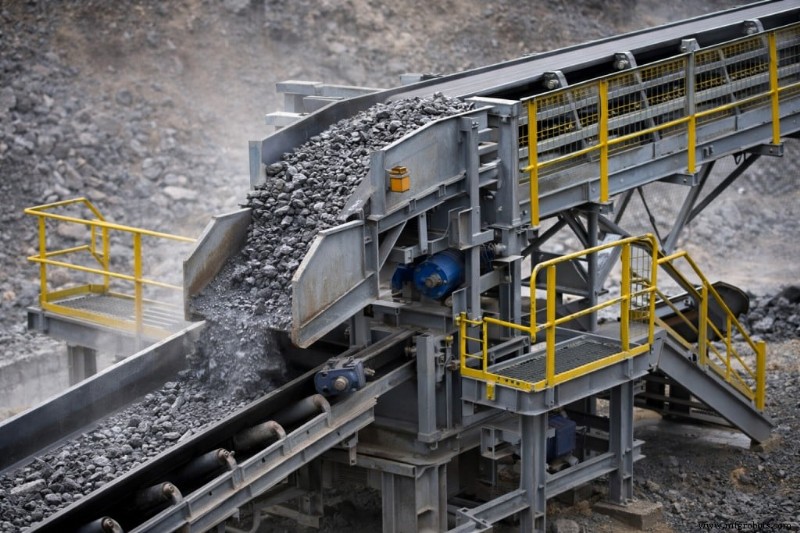
When a conveyor system isn’t delivering the expected throughput, the instinct is to scrutinize belt speed, capacity, or wear. In most cases, however, the root cause lies upstream—in the transfer chute. Even a seemingly “adequate” design can create spillage, buildup, or uneven loading once it’s in service.
Transfer chutes guide material from one belt to the next while keeping the stream centered and consistent. Mis‑aligned flow forces downstream equipment to compensate, leading to higher wear, frequent stoppages, and lost productivity.
HOW WIDTH, ANGLE, AND SHAPE CONTROL MATERIAL FLOW
Chute geometry is more than a fitting constraint; it shapes how material behaves during transit.
WIDTH: TOO NARROW VS. TOO WIDE
The width of a chute determines how freely material can move.
- Too narrow: Material crowds, flow slows, and plugging—especially with mixed particle sizes—becomes frequent.
- Too wide: The stream spreads, loses cohesion, and lands off‑center, increasing mistracking risk.
Signs of width mis‑match include buildup along the walls or intermittent blockages (narrow) and off‑center discharge or drifting across the belt (wide).
ANGLE: CONTROLLING VELOCITY AND TRAJECTORY
The chute angle governs acceleration and landing point on the next conveyor.
- Too shallow: Material may stall, fines can accumulate, and flow becomes inconsistent.
- Too steep: Over‑acceleration leads to unpredictable trajectories and overshoot of the loading zone.
A properly angled chute keeps material moving at a steady, predictable rate, ensuring a smooth handoff.
INTERNAL SHAPE: GUIDING THE MATERIAL STREAM
The internal contour of a chute directs material flow. Flat or poorly contoured surfaces can cause unpredictable bouncing, break the stream, and result in off‑center loading.
- Good geometry maintains a consistent trajectory, funnels material centrally, and reduces turbulence.
Effective transfer chutes discharge material in line with the receiving belt, preventing spillage and inefficiency.
COMMON SIGNS YOUR CHUTE GEOMETRY IS WRONG
Even if the rest of the system operates normally, geometry issues reveal themselves through:
- Persistent spillage at the transfer point
- Material buildup along chute walls
- Frequent plugging or restricted flow
- Uneven belt loading or off‑center discharge
- Conveyor mistracking shortly after loading
These symptoms hide in plain sight, making geometry a frustrating but critical focus area.
WHY “CLOSE ENOUGH” DOESN’T WORK
Mining operations are dynamic—material size, moisture, and throughput constantly vary. A chute that works at low capacity can choke under peak loads, leading to:
- Increased cleanup and maintenance
- Reduced throughput
- Greater strain on downstream components
Chute design should be a calculated part of the system, not an afterthought.
HOW WEST RIVER CONVEYORS APPROACHES CHUTE DESIGN
West River Conveyors customizes chute geometry based on:
- Material characteristics—size, density, variability
- Required tonnage and flow rate
- Conveyor layout, including height and transfer angle
By tailoring width, angle, and internal shape to real operating conditions, we keep material streams controlled, reducing spillage, plugging, and uneven loading.
Because transfer points often cause the most significant conveyor issues, precise geometry at the outset yields more stable, predictable performance across the entire system.
GET YOUR TRANSFER POINTS WORKING THE WAY THEY SHOULD
Chute geometry has a larger impact than many operators anticipate. When dimensions, angles, and internal shape align with actual operating conditions, material moves consistently and the rest of the system follows.
West River Conveyors specializes in custom transfer chute solutions for demanding mining environments. If you’re battling flow issues or planning a new system, evaluate your transfer points with our expert guidance.
Explore Transfer Chutes
Speak to an Expert
Industrial equipment
- Key Factors to Consider When Purchasing Angle (Profile) Rolls
- A Comprehensive Guide to Propane Fittings: Types, Uses, and Safety
- Advanced Milling Lathes & Turning Centers – HT, FTC, FT Series
- Advanced Screen Printing Equipment for High-Quality Production
- Understanding Foundation Walls: Purpose, Construction, and Importance
- VIBRA-CLEAN™ Vibratory Media Drum – High-Volume Mass Finishing & Casting Cleaning Solution
- How COVID-19 Is Reshaping Global Manufacturing: Challenges & Opportunities
- Directed Energy Deposition (DED) 3D Printing: Process, Advantages, and Applications
- Frame Gaskets: The Trusted Solution for Reliable and Versatile Sealing
- Understanding Thread Cutters: Types, Uses, and Applications