



Technopolymers: Definition, Properties, and Industrial Applications
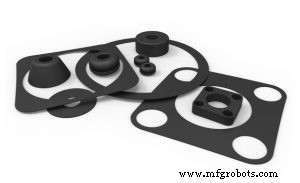
Technopolymers, also known as high‑performance engineering plastics, are engineered to retain structural integrity under extreme thermal and mechanical loads. Unlike conventional plastics, which can soften or deform when exposed to heat, technopolymers remain stable and robust, making them indispensable in demanding industrial settings.
Core Technopolymer Types
- Polyimide
- Acetal (Polyoxymethylene)
- Polypropylene
- Polycarbonate
- Polyester resin
Applications Across Industries
In manufacturing, technopolymers are employed in a wide array of components. Their heat‑resistant properties make them ideal for gaskets that must seal effectively around hot liquids or gases, preventing leaks and ensuring safety. Additionally, they are used to fabricate gears in machinery where high temperatures and mechanical stresses would compromise metal or alloy parts. Technopolymers offer the dual advantage of superior temperature tolerance and reduced weight, which can improve energy efficiency and extend component life.
When combined with fiberglass reinforcement, technopolymers form composites that further enhance strength and durability. The glass fibers act as internal reinforcements, enabling the material to withstand even more demanding mechanical forces while maintaining its lightweight character.
Conclusion
Not all plastics are created equal. Standard plastics lack the resilience needed for high‑heat, high‑stress environments. Technopolymers, with their advanced thermal stability, mechanical robustness, and lightweight nature, provide a reliable solution for a broad spectrum of industrial applications.
Industrial equipment
- How Dowel Pins Keep Your Projects Precise: Uses in Furniture, Shelves, and Machinery
- Coaching Cards: A Proven Tool for Sustaining Change Management Success
- How CNC Machines Revolutionize Manufacturing: Uses & Benefits
- Exploring Polyurethane: Types, Uses, and Why It Dominates Modern Industries
- Understanding Milling Machines: Functions, Applications, and Benefits
- PVA Filament: Definition, Applications, and Benefits for 3D Printing
- Understanding Potentiometer Circuits: Functionality, Applications, and Key Insights
- Understanding Plate Roll Machines: Function, Applications, and Benefits
- 1‑2‑3 Blocks Explained: Essential Tools for Precision Machining
- Applications and Advantages of Double-Acting Cylinders