



Choosing the Right Button Socket Cap Screws: A Practical Guide
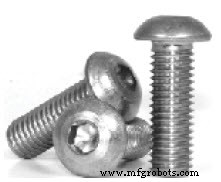
Button socket cap screws—often called “button” or “hex socket” fasteners—feature a recessed, circular head that is driven with a hex key. They are widely used in electronics, automotive, and structural applications where a clean, tamper‑resistant finish is required. Selecting the right screw involves evaluating material, length, thread, and specialized features such as pellet insertion or tamper resistance.
Material
The most common material for button socket cap screws is stainless steel, which combines iron with chromium to deliver superior corrosion resistance. In humid or marine environments, stainless steel screws remain reliable for years. Other options include alloy steel for high‑strength applications and carbon steel for cost‑effective, low‑corrosion tasks.
Standard vs. Pellet
Standard button socket cap screws are driven directly into a pre‑drilled hole. Pellet, or “insert” screws, come with a tapered, self‑locking body that is first threaded into the material. The pellet design reduces the risk of loosening and allows for a more precise fit in tight or delicate assemblies.
Length
Lengths vary from as short as 0.25 in (6 mm) to over 1 in (25 mm). Choose a length that matches the thickness of the joined materials plus a minimal engagement of 1–1.5 in to ensure a secure hold without over‑drilling.
Thread Type
Coarse threads provide a stronger, more secure engagement, especially in softer or composite materials, and are less prone to loosening under vibration. Fine threads can be advantageous in high‑precision or high‑tension applications but may slip if not torqued correctly. For most general uses, a coarse‑threaded button socket cap screw is the safest choice.
Tamper‑Resistant Designs
In security‑critical assemblies, tamper‑resistant button socket cap screws feature a non‑standard drive—such as a unique slot or a recessed key—to deter unauthorized removal. These screws are commonly used in electronic enclosures, public infrastructure, and government equipment.
Industrial equipment
- How to Choose the Right Instrument Knobs for Your Equipment
- Expert Guide to Selecting Durable Marine Lighting
- How to Pick the Perfect Lock Rod – Expert Buying Guide
- Choosing Magnetic Hooks: Expert Tips for Homes and Businesses
- How to Choose the Right Strap Hinge for Your Project
- Choosing the Right Machine Screw: A Practical Guide
- Choosing the Perfect Fiber Optic Cable: A Practical Guide
- How to Select the Optimal Conveyor Structure for Your Industry
- Choosing the Right Hydraulic Pump: Key Factors & Expert Tips
- Choosing the Right Pump for Your Irrigation System: A Practical Guide