



Backup O‑Rings: What They Are and Why They’re Essential for Leak Prevention
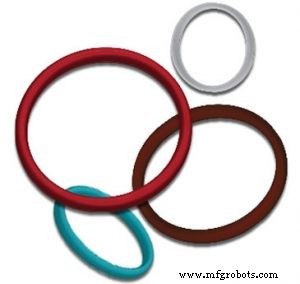
O‑rings—also called toric joints—provide a simple, reliable seal that prevents leaks in a wide range of machinery.
Made from durable elastomer, an O‑ring forms a donut‑shaped seal that bridges the mating surfaces of two components. When a channel allows gas or liquid to flow, a single O‑ring typically suffices, but in critical or high‑pressure applications a backup O‑ring is added for extra assurance.
The Basics of Backup O‑Rings
Backup O‑rings serve as a secondary seal that steps in if the primary O‑ring fails. By working in tandem with the main ring, they provide a failsafe layer that keeps fluid or gas from escaping the system.
Adding a backup ring gives you an additional margin of safety, guaranteeing that leaks are contained even if the first seal fails.
How Backup O‑Rings Work
Like all O‑rings, backup rings are round and constructed from heat‑resistant elastomer, ensuring they can endure the operating conditions of most industrial systems.
Their key role is passive: a backup ring remains idle until the primary seal is compromised, at which point it immediately engages to block the flow.
Industrial units routinely circulate coolants, oils, and even combustion gases. If the seal between two components is breached, these fluids can escape along the joint. A single O‑ring generally holds up under typical heat and pressure, but in high‑volume or high‑temperature settings the added redundancy of a backup ring mitigates the risk of catastrophic leaks.
The backup ring sits just behind the primary seal, sharing the same mating surface but positioned so that it contacts the flow path only when the main O‑ring is compromised. This arrangement ensures that any leaked fluid or gas is caught before it can exit the machine.
In Conclusion
In summary, installing a backup O‑ring is a proven strategy for preventing leaks in critical equipment. It offers peace of mind by providing a second line of defense, ensuring that your machinery remains sealed even if the primary O‑ring fails.
Industrial equipment
- Plate Clamps: Design, Function, and Benefits for Heavy‑Duty Lifting
- Thrust Bearings Explained: Types, Functionality, and Selection Guide
- Cup Magnets: Design, Function, and Selection Guide
- Flat Springs Explained: Design, Function, and Selection Guide
- Adjustable Glides: What They Are, How They Work, and Their Benefits
- Locking Washers Explained: Types, Functions, and Why They Matter
- CNC Machines Explained: How They Operate and Drive Modern Manufacturing
- I/O Cards Explained: How They Work and Why They Matter
- Understanding Drum Brakes: Function, Features, and Maintenance Tips
- Port Cranes Explained: How They Operate and Drive Global Shipping Efficiency