



Choosing the Right Hoist Ring: 5 Key Factors for Safe and Efficient Lifting
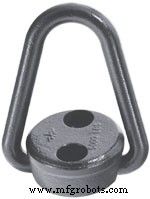
Whether powered by electricity or compressed air, a hoist requires a dedicated load‑centering fastener known as a hoist ring. This ring—mounted on the end of the lifting chain or rope—provides the secure point where a load is attached before it is lifted.
Hoist rings come in many configurations, each designed to meet specific lifting demands. Selecting the correct ring is crucial for operational safety and efficiency. Below are five critical considerations to guide your choice.
#1) Material Selection
Most hoist rings are fabricated from high‑strength alloys. Carbon steel is the industry standard for its balance of cost and durability, while stainless steel is preferred for environments prone to corrosion or where hygiene is paramount. If the application involves exposure to salt spray, chemicals, or high humidity, a stainless or corrosion‑resistant alloy is essential.
#2) Load Rating and Certification
The load rating indicates the maximum weight a hoist ring can safely support. Manufacturers determine this rating through rigorous testing in accordance with ANSI/ASME B30.11 or ISO 10653 standards. Ratings typically range from 500 lb (≈227 kg) to over 5,000 lb (≈2,268 kg). Always verify that the chosen ring’s rating exceeds the actual load by a safety factor of at least 1.5, as recommended by OSHA.
#3) Swivel vs. Pivoting Mechanism
Swivel rings rotate freely in all directions, making them ideal for applications requiring 360° movement, such as bulk material handling. Pivoting rings allow motion only in a single plane, which is suitable for linear lifting tasks where full rotation is unnecessary. Match the mechanism to the motion profile of your lift.
#4) Diameter and Shackle Size
The shackle diameter determines how the ring accommodates the load. A larger shackle provides a more robust grip and better load distribution, which is especially important for irregular or heavy items. Ensure the shackle size is compatible with the load’s shape and the hoist’s attachment points.
#5) Corrosion‑Resistant Finish
Even the strongest alloys can corrode if left untreated. Many manufacturers apply a protective coating—such as zinc plating, epoxy paint, or anodizing—to extend service life. Verify that the finish meets the environmental requirements of your site and complies with industry standards for corrosion resistance.
Industrial equipment
- 5 Key Factors for Selecting the Right Plastic Hinges
- Choosing the Right Pull Handles: 5 Key Factors to Consider
- Choosing Marine Hinges: 5 Essential Factors for Durable Performance
- 5 Key Factors for Selecting the Right O‑Ring Seal
- 5 Key Factors to Evaluate When Selecting a Lifting Magnet
- 5 Key Factors to Evaluate Before Buying Wing Knobs
- 5 Key Factors to Evaluate When Selecting a Refrigeration Lock
- Choosing the Right Piano Hinges: 5 Essential Considerations
- 5 Key Factors to Choose the Right Padlock for Your Business
- 5 Key Factors for Selecting the Right Dowel Pins