



Pneumatic Presses in Manufacturing: Applications, Advantages, and Comparison to Hydraulic Presses
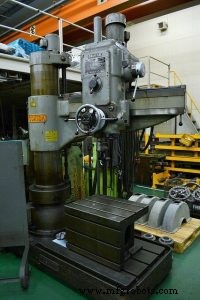
Industrial manufacturing relies on powerful, precise machines to shape metal, plastic, and composite workpieces. One of the most versatile tools in this arsenal is the pneumatic press, which delivers controlled force through compressed air to perform cutting, punching, bending, drawing, and forming operations.
What Is a Pneumatic Press?
A pneumatic press is a form‑handling device that uses a pressurized air system to move a workpiece within a rigid rectangular frame. Once the part is positioned in the center of the press, a piston‑driven ram descends, applying uniform pressure until the desired shape is achieved. The process is repeatable, fast, and highly adaptable to different material thicknesses and hardness levels.
The core principle is simple: compressed air forces the ram downward, creating a controlled compression on the workpiece. Because the force is delivered by air rather than liquid, the system can be quickly cycled, shut down, and maintained, making it ideal for high‑volume production.
Key Benefits of Pneumatic Presses in Manufacturing
- Versatile material support—from thin sheet metal to thick structural panels
- Low energy consumption and no heat generation, preserving material properties
- Cost‑effective for mass‑production runs due to rapid cycle times
- Quiet operation, improving workplace safety and comfort
- Fine control over dimensions, ensuring tight tolerances
- Easy maintenance with fewer moving parts compared to hydraulic systems
Pneumatic Press vs Hydraulic Press
Both pneumatic and hydraulic presses perform the same core tasks, but they differ fundamentally in the medium that transmits force.
Hydraulic presses use a pressurized liquid—usually oil—to move a piston into a sealed reservoir, generating pressure that is then transferred to the workpiece. Because liquids are incompressible, hydraulic systems can deliver very high forces and maintain a steady load, but they require heavy piping, complex seals, and regular fluid replacement.
Pneumatic presses, by contrast, employ compressed air or gas. Air is highly compressible, allowing for faster cycling and easier shut‑off. The lower system weight, reduced heat buildup, and simpler maintenance give pneumatic presses an edge in many light‑to‑medium duty applications.
When selecting a press, consider factors such as required force, cycle speed, material sensitivity to heat, and maintenance budgets. For many manufacturers, pneumatic presses provide the optimal balance of speed, cost, and reliability.
Conclusion
In modern manufacturing, pneumatic presses offer a fast, energy‑efficient, and versatile solution for shaping and forming a wide range of materials. Their advantages over hydraulic systems—especially in terms of speed, maintenance, and noise—make them a preferred choice for cost‑effective mass production.
Industrial equipment
- The Critical Role of Gaskets in Automotive Engine Performance
- How Bridges Stabilize Overhangs in 3D Printing
- Revolutionizing Manufacturing: AR & IIoT Empower Workers & Boost Efficiency
- The Role of Dunnage in Manufacturing: Protecting Products During Transport
- The Millennial Revolution: Reshaping Manufacturing with Digital Expertise
- Revolutionizing Mold Production: 3D Printing in the Mold Manufacturing Industry
- Proportional Solenoid Valves: Precision Control in Modern Manufacturing
- Maximize Production Efficiency with Used Machinery
- Revolutionizing Auto Production: The Role of Additive Manufacturing
- Harnessing Big Data to Drive Efficiency and Innovation in Manufacturing