



How Copper Pipes Are Made: From Smelting to Finished Product
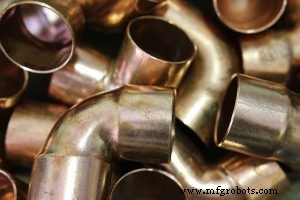
Copper tubing—widely used in plumbing and HVAC—combines strength, durability, and natural corrosion resistance. With a 100% recyclable lifecycle, it’s a sustainable choice for modern infrastructure.
According to the Copper Development Association, copper is 100% recyclable, underscoring its environmental advantage.
1. Smelting Raw Copper
The journey begins in a high‑temperature furnace where raw copper is heated above 2,400 °F (1,300 °C). This melting process not only turns the metal into a liquid but also drives out trace impurities such as nickel, zinc, and sulfur. The result is a high‑purity copper stream that meets industry standards for pipe production.
2. Casting the Pipe
Next, the molten copper is poured into a precision‑machined pipe mold. As the metal cools, it fills every cavity, capturing the exact dimensions required for the final product. Once solidified, the newly formed pipe is extracted from the mold and inspected for dimensional accuracy.
3. Finishing and Quality Control
After extraction, the pipe undergoes a series of finishing operations. It is threaded or cut to the desired lengths using calibrated dies, then rigorously cleaned with water and approved solvents to remove any residual scale or flux. Finally, each pipe is inspected against strict dimensional and surface‑finish tolerances before it is packaged for shipment.
These three stages—smelting, casting, and finishing—ensure that every copper pipe delivers reliable performance and longevity, while maintaining the environmental benefits that have made copper a staple in the industry for decades.
Industrial equipment
- How Ceramic (Ferrite) Magnets Are Manufactured
- How Modern Magnets Are Made: From Rare‑Earth Mining to Final Magnetization
- How Bridges Stabilize Overhangs in 3D Printing
- Pneumatic Presses in Manufacturing: Applications, Advantages, and Comparison to Hydraulic Presses
- Copper Brazing Explained: Techniques & Tips for Strong, Reliable Connections
- Understanding Copper-Filled Vias: Their Role and Benefits in PCBs
- Inside the Manufacturing of Electronic Circuits
- Copper in Industry: Production, Alloys, and Key Uses
- Master Copper Brazing: A Complete Guide to Joining Tubes & Fittings
- High-Quality Pogo Pin Manufacturing: Key Processes and Standards