


Industrial manufacturing
Industrial equipment

A toolbox is a smart investment for any DIY enthusiast or full-time tradesman. It will allow you to store and organize your tools. Rather than tossing them on an open counter, you can place your tools in a toolbox. While all toolboxes have storage space such as drawers, however, they are avai
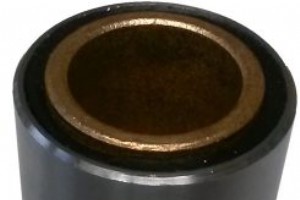
Bushings offer a simple and effective way to dampen vibrations. As shown in the adjacent photo, they consist of a cylindrical sleeve with an exterior of rubber or rubber-like padding. You can place a part like a shaft or control rod in a bushing. Even if the shaft or control rod moves aggress
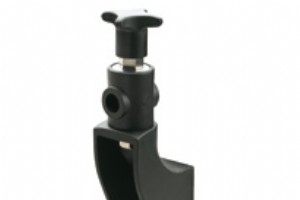
If you’re thinking about implementing guide rails in your business’s operations, you may want to invest in a set of brackets. Guide rail brackets are commonly used in the construction, transportation and manufacturing industries. They allow for the mounting, as well as the adjustment, of guid
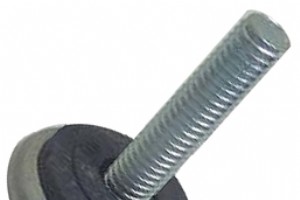
Machinery, equipment and furniture need to be level. If one side is higher than the opposite side, it may become unstable. Vibrations may cause the unlevel object to shake uncontrollably or even tip over, creating a serious safety hazard. Rather than using traditional leveling feet, however,
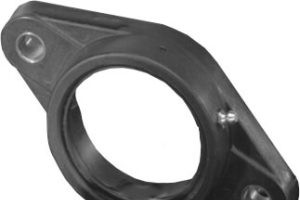
Bearings play an important role in many machines. Consisting of enclosed rings with balls, they are designed to support rotating shafts. Machines with a rotating shaft will often feature a bearing to reduce friction. Bearings, however, are typically used in conjunction with an assembly known
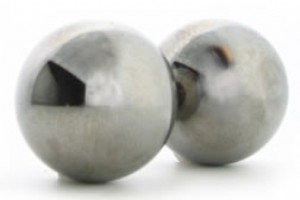
Tooling balls are commonly used in machining operations. Consisting of a heavy-duty metal construction — typically tungsten carbide — they provide a fixed reference point. To learn more about tooling balls and what they are used for, keep reading. Positioning One of the most common applicatio
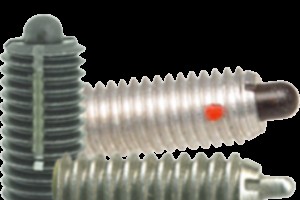
Spring plungers are used in a variety of indexing and positioning applications. Also known as spring-loaded plungers, they feature a they feature a ball or nose and a spring. The spring is designed to apply pressure so that the ball or nose stays in position. Whether you’re planning to use th

In tap testing, an instrumented hammer is used to excite a structure and measure the vibration response with a transducer, such as an accelerometer. The purpose of this test is to identify the frequency response function (FRF) for the selected mechanical structure. Given the FRF, we can calculat

The food industry demands absolute efficiency alongside safety and quality standards in its current competitive market. The production of packaged supermarket products relies on complex operations which use advanced used industrial food processing equipment. Modern machinery enables food manufactu

In the spice and masala industry, consistency is everything. Customers expect the same taste, aroma, and color in every pack, whether it’s garam masala, curry powder, or chili blend. Achieving that uniformity depends heavily on the spice mixing machine you choose. The wrong mixer can lead to uneve

The industrial sector is responsible for nearly one-third of global greenhouse gas emissions, with heavy manufacturing and equipment production among the largest contributors. As industries strive to balance productivity with sustainability, reducing the carbon footprint has become a critical oper

In today’s highly automated food manufacturing facilities, conveyors serve as the central nervous system of the production process. They move ingredients, semi-finished materials, and packaged goods smoothly from one stage to another reducing manual handling, ensuring hygiene, and improving overal
In commercial kitchens, mixing is rarely seen as a problem until something goes wrong. Dough behaves differently from one batch to the next. Batters separate. Prep time stretches longer than planned. Staff compensate by remixing, scraping bowls, or starting over. These issues may seem small, yet t
Choosing the right pneumatic conveying system is one of the most critical decisions in pharmaceutical manufacturing. Powder handling directly affects product quality, batch consistency, operator safety, and regulatory compliance. A poorly selected system can cause segregation, degradation, contami
Choosing the right industrial mixer can make or break a dry powder blending process. In manufacturing environments where consistency, efficiency, and product integrity matter, the debate around ribbon blender vs paddle mixer systems remains highly relevant. Both machines are widely used across ind
Pump cavitation is a widespread and serious issue in industrial pumping systems, often responsible for performance loss, premature equipment failure, and costly unplanned downtime. In real-world industrial operations, cavitation rarely appears as a sudden failure. Instead, it develops gradually, q

Selecting the right industrial fan has a direct impact on airflow efficiency, energy consumption, noise levels, and long-term system reliability. Among the most commonly compared options, the axial fan vs centrifugal fan debate remains central to ventilation, cooling, and process air movement appl
Bulk material handling systems play a critical role in industrial production environments, where the efficient movement of raw materials, intermediate products, and finished goods directly impacts operational throughput and production costs. Among the range of material handling solutions, the drag
At the heart of the waterjet cutting technology lies the garnet, a natural mineral known for its hardness and durability, making it the abrasive of choice for waterjet cutting applications. This article will delve into the mechanics of waterjet cutting and explore why garnet stands out from other
Choosing the right cutting technology is a critical decision for any manufacturer, whether you’re working with metals, plastics, or specialized materials. The cutting method you select can dramatically affect your production speed, cost, and the overall quality of your output. With so many options
Industrial equipment

Impact of Gold Nanoparticle Size and Concentration on Root Development in Arabidopsis thaliana

Step‑by‑Step Guide to Wiring a 3‑Way Combo Switch with Grounded Outlet

Ensuring Sterile Precision: Dry Swiss Machining for Class II/III Medical Devices

How to Hire Veterans to Close Manufacturing Skills Gaps

