



How Competitors are Leveraging Electronics Assembly Robots for Growth
You want to keep up with other companies in your industry… but is are electronics assembly robots the right option?
If you haven’t deployed assembly robots already, you might wonder if they are suitable for your electronics business.
What do your competitors already know about assembly robots?
The electronics industry is currently one of the most rapidly growing industries for robot usage. After the impacts of the 2020 global pandemic, signs indicate that demand for robots in the industry is rising as electronics companies seek to improve their operations and increase productivity.
Across the industry, companies are using robotic automation to streamline their assembly processes.
Are you missing out if you don’t use electronics assembly robots?
Don’t Assembly Robots Require a Lot of Investment?
If you haven’t invested in assembly robots already, you might be wondering if they are the right way to spend your budget.
Like any new technology, robots have both upfront costs and some ongoing costs.
Does it make sense for your profit margins to invest in assembly robots?
Electronics is one of the most competitive industries in the world right now. Margins are tight. It might feel difficult to justify purchasing one or more assembly robots, especially with the various pressures your company has probably experienced recently. It can be hard to keep up with the complex supply chains, fluctuating product demand, and increased sustainability regulations.

Some electronics manufacturers think that the solution is just to move more of their operations to lower-labor markets. However, this is no longer enough to maintain that competitive edge. Even in those markets, people are using robots.
China, for example, has huge growth in robot usage. It’s estimated that by 2024, demand for robots in China alone will be the size of the rest of the global robotics market.
If you want your company to stay ahead, robots are a key factor.
Why an Electronics Assembly Robot is a Safe Bet
Of all robot applications, electronics assembly is probably one of the most tried and tested tasks in the industry.
Assembly robots have been used in the electronics industry for years and their benefits have long been understood by manufacturers.
Modern electronics assembly relies on consistency and accuracy.
Even back in 2011, a decade ago now, assembly robots were already a great option for electronics companies thanks to their speed, accuracy, and precision.
If you’re looking to increase the use of robotics in your business, adding an assembly robot is now a pretty safe bet.
5 Ways Electronics Manufacturers Get More from Assembly Robots
Those electronics companies that are already maximizing their use of assembly robots tend to follow these 5 tips:
1. Pick the Type of Robots for the Specific Job
Various types of robots can be used in electronics manufacturing. Depending on your specific task, one robot might be more suitable than another.
Two common robots for electronics assembly are:
- Scara robots — The classic option for electronics assembly, Scara robots have a small footprint and can be very precise, which is perfect for most assembly tasks.
- Delta robots — These high-speed robots are very useful for pick and place but the precision of some models makes them suitable for some assembly tasks.
2. Use the Right Programming Tools
Many electronics companies make a mistake when they deploy robots — they only use the programming options that come shipped with the robot by the manufacturer. This can become very restrictive and means that you are tied into a programming system that doesn’t fully meet your needs.
By using a more flexible programming software, you can get your assembly robot up and running quicker. You will also be able to update the robot’s programming more easily to respond to changes in the marketplace, which are common at the moment in the electronics industry.
3. Start With High-value Assembly Tasks
If you want to maximize the return on investment of your robot, it’s a good idea to focus on those assembly tasks that bring the most value to your operations.
For example, is there a task that takes your human workers many hours of repetitive work and stops them from performing other tasks in the business? Or is there a manual assembly task that regularly produces wastage? Such tasks could be good candidates as they are likely to add immediate value to your process.

4. Start Small and Build Up
When you start thinking about the possibilities of robots, it is tempting to “think big”. You want to automate many tasks.
However, those companies that have had the most success with assembly robots are often those that have started with just one small robot application. When this robot proved its worth, they then scaled their assembly automation to build on this success.
5. Iterate and Optimize Over Time
Traditionally, it was difficult to update your robot’s program because of the high skill and experience required to program robots. This meant that, once a robot had been deployed, it usually wasn’t feasible to make changes to the program.
Easy robot programming tools now allow you to program your robot yourself. Even if you work with a robot integrator for the initial deployment, this means you can iterate your assembly application and optimize it over time. This is often where the biggest improvements come.
How to Deploy Your Electronics Assembly Robot Quickly
Want to start with your own electronics assembly robot?
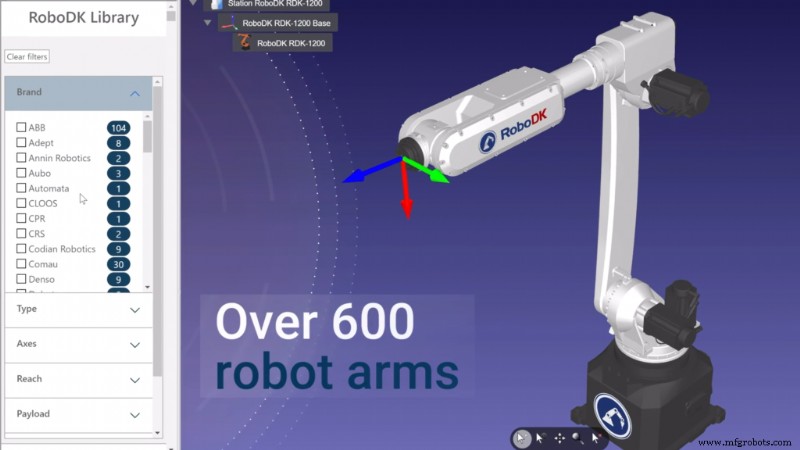
A good option to test out your chosen task is to build the application in a robot simulator, like RoboDK. In the software, you can validate the application, choose the best type of robot for the task, and create the robot program at the same time, before you have even purchased the physical robot.
You can download a free trial copy on our download page.
What assembly tasks would you like to automate? Tell us in the comments below or join the discussion on LinkedIn, Twitter, Facebook, Instagram, or in the RoboDK Forum.
Industrial robot
- Transform Your Assembly Line: Boost Speed & Accuracy with Cutting-Edge Robots
- How Manufacturers Can Leverage Chatbots for Lead Generation & Customer Engagement
- Unlock Your Business’s True Value: A Guide for Small and Mid‑Sized Manufacturers
- Essential Guide to PCB Assembly: From Design to Production
- Polyurethane Foam: From WWII Innovation to Everyday Essentials
- Mastering Analog Electronics: Essential Knowledge for PCB Design
- Equipment Financing 101: Save Money, Reduce Risk, and Secure Your Business
- Silicon Bronze Explained: Key Properties and Benefits
- Essential Guide to Chip Vacuum Cleaners for Industrial Safety
- Precision Assembly Robots: Revolutionizing Electronics Manufacturing