



Building Industrial Robot End‑of‑Arm Tooling: A Practical Guide
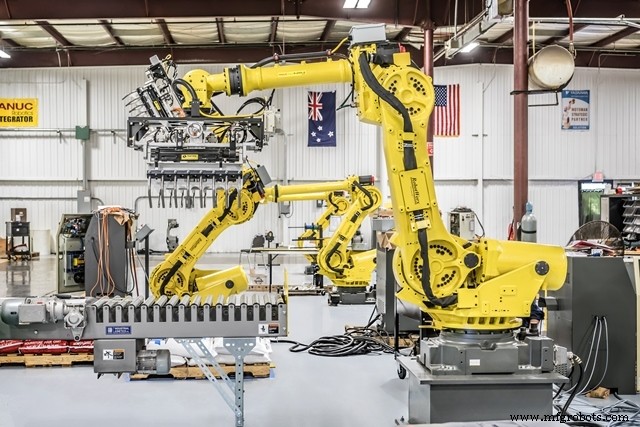
An industrial robot serves little purpose without robotic end-of-arm-tooling (EOAT). EOAT attaches to the wrist of an industrial robot (J6 axis for Fanuc robots; T axis for Motoman robots) and provides the connection between the robot and the product. Selecting and building the correct EOAT is paramount to the success of automating the industrial application.
Step One: The first step is to decide what type of robot end-of-arm-tooling would best fit the application. Grippers are often used in material handling applications. Welding torches and welding guns are used in arc welding and spot welding applications. Spindles attached to the robot’s wrist can drill, cut, or mill material. There are a multitude of options available for automating many types of industrial applications.
Step Two: Next, the user needs to decide whether the EOAT will be manufactured in-house or whether an outside source will design and manufacture it. Building EOAT in-house often saves money, but expertise and quality might be sacrificed in the process. Outsourcing EOAT manufacturing with an expert or industrial robot integrator can save headaches and possibly money if packaged with the purchase of a robot arm.
Whether the EOAT is manufactured in-house or by an expert in robotic integration, specifications of the part being handled, welded, or otherwise manipulated need to be addressed. Weight, length, material, and other factors affect the type, size, and orientation of the EOAT. These are very important details in the decision and installation of the EOAT.
RobotWorx manufactures and includes many robotic end-of-arm-tooling for many of the industrial robots we sell. For help choosing the right EOAT and industrial robot arm, contact the experts at RobotWorx by contacting them online or calling 877-762-6881.
Industrial robot
- Bridging the Gap: Collaborative Standards Between Industrie 4.0 and the Industrial Internet Consortium
- Industrial IoT: Key Building Blocks Driving Industry 4.0
- 3 Key Trends in Robotic End‑of‑Arm Tooling You Must Know
- Machine Vision: The Driving Force Behind Modern Industrial Robotics
- Optimizing End‑of‑Arm Tooling for Peak Robot Performance
- Reduce Assembly Costs with End‑of‑Arm Tooling Solutions
- Unlocking Efficiency: How Industrial Robots Transform Manufacturing
- How End‑of‑Arm Tooling Enhances Robotic Deburring Performance
- Standard vs. Custom End-of-Arm Tooling: Which Choice Boosts Your Robotics Efficiency?
- The Fourth Industrial Revolution: Transforming Industry with Smart Automation