



Bridging the Gap: Collaborative Standards Between Industrie 4.0 and the Industrial Internet Consortium
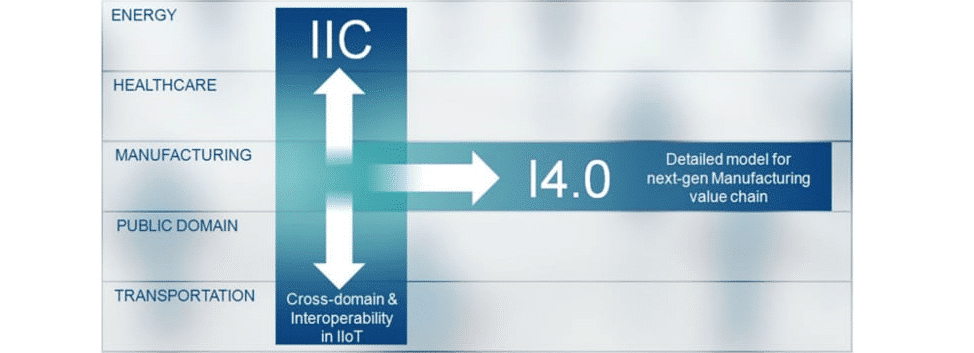
The Industrial Internet is reshaping industries worldwide, and two key players—Plattform Industrie 4.0 and the Industrial Internet Consortium (IIC)—are steering this transformation. While Industrie 4.0 focuses on manufacturing excellence, IIC takes a cross‑domain, enterprise‑wide perspective.
Clarifying the Debate
Over the past 18 months, technical leaders have debated the relationship between these frameworks. By mid‑2015, frustration grew as discussions lacked concrete technical grounding. Companies were increasingly active in both communities, amplifying the need to resolve ambiguities and reduce market confusion.
In late 2015, executives from major players—Bosch, Cisco, SAP, Siemens, Pepperl + Fuchs, Steinbeis Institute, and ThingsWise—convened in Zurich. The informal session aimed to compare reference architectures and identify shared foundations.
Decoding Reference Architectures
Plattform Industrie 4.0 introduced its Reference Architecture Model Industrie 4.0 (RAMI 4.0), a layered framework that defines how industrial assets connect to the internet. It emphasizes manufacturing hierarchies that differ from process control or telecommunications.
IIC presented the Industrial Internet Reference Architecture (IIRA), organized around four viewpoints—business, usage, functional, and implementation—aligned with ISO/IEC/IEEE 42010:2011. IIRA highlights core system characteristics, including safety, security, and resilience, and addresses cross‑cutting concerns such as connectivity, data management, analytics, and interoperability.
While RAMI 4.0 delves deeply into manufacturing, IIRA spans multiple application domains. Industry must enable seamless operation across these domains—for example, an electric vehicle that integrates factory‑built components, connects to a smart grid at home, and communicates with traffic infrastructure on the road.
Finding Common Ground
Participants quickly noted overlapping terminology—such as the business viewpoint—and differences in terms like “connectivity” versus “communication.” They agreed that reconciling definitions would require ongoing, detailed collaboration.
Key questions emerged: Should the Industrie 4.0 component concept be explicitly incorporated into IIRA? Should IIRA’s functional viewpoint be refined to match RAMI 4.0’s granularity? Addressing these required a deeper shared understanding and a coordinated effort to influence global standards.
Both groups recognized that a full merger of architectures would be impractical. Instead, they endorsed extending cooperation: regular technical exchanges, mapping differences, joint testing, and unified standard‑setting initiatives to promote interoperability across domains.
Next Steps
The inaugural Zurich meeting proved fruitful, illustrating how technical collaboration can generate actionable proposals. The alliance will continue to refine the frameworks, fostering a cohesive Industrial Internet ecosystem.
We look forward to further progress and invite stakeholders to join the conversation.
Industrial Technology
- Industrial Internet of Things (IIoT): What It Is, Why It Matters, and How It Drives Industrial Transformation
- Architecting Connectivity in the Industrial Internet of Things
- Optimizing IIoT Connectivity with the Industrial Internet Reference Architecture
- Industrial Internet Consortium Celebrates 1 Year: Demo, Keynote & Testbed Insights
- Europe’s First IIC Track & Trace Testbed Showcases Connected Power Tools
- Unlocking Industrial Growth: How IoT Drives the New Industrial Revolution
- Securing Industrial IoT: Practical Strategies for Cyber‑Physical Systems
- Harnessing Industrial IoT for Growth: Beyond Cost Savings
- PLCs: The Key Enabler of the Industrial Internet of Things
- Building Industrial Robot End‑of‑Arm Tooling: A Practical Guide