



Industrial Internet of Things (IIoT): What It Is, Why It Matters, and How It Drives Industrial Transformation
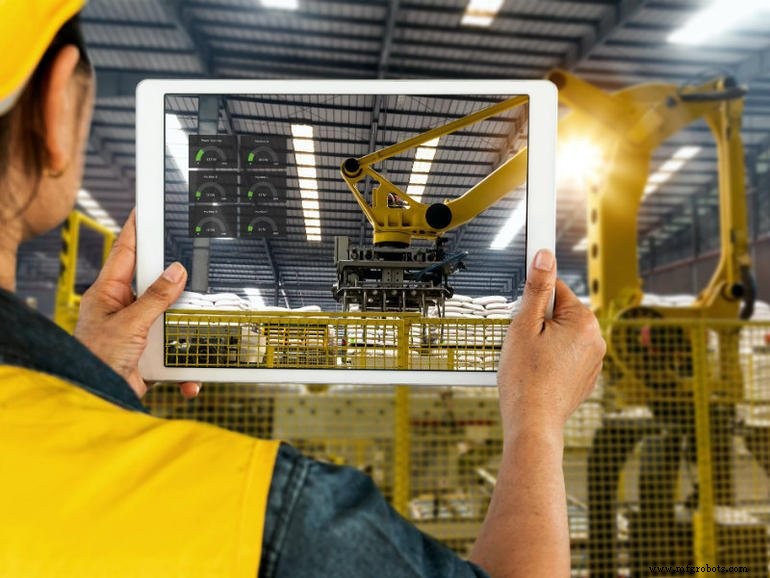
Five years after the Industrial Internet of Things (IIoT) burst into corporate consciousness, much has been discussed and written about this powerful new era of connected, intelligent machines and devices. Since most of that information is scattered across the digital landscape, RTI has consolidated the what, why, how, and where of the IIoT. Your feedback on this material is welcome; please contact us at info@rti.com.
Introduction to the Industrial Internet of Things (IIoT)
The Internet has transformed how people communicate, work, and collaborate. Now the focus has shifted to doing the same for machines. Over the past decade, systems developers have concentrated on interconnecting sensors, edge nodes, and analytics to create smart systems that elevate operations into high‑productivity environments. These connected ecosystems form what we call the Industrial IoT (IIoT).
This fourth industrial revolution is the most disruptive in industrial automation history, affecting sectors from healthcare to energy, transportation to manufacturing. The pace of change is accelerating, and new capabilities are emerging from more powerful compute and analytics platforms. Engineers in every industry will soon be leveraging these advances to connect machines and processes, unlocking unprecedented efficiency and reliability.
What is the Industrial Internet of Things (IIoT)?
IIoT refers to the automated, interrelated use of machines, devices, and sensors that run industrial applications. With a strong emphasis on big data and machine learning, IIoT enables organizations to increase operational efficiency, reduce human‑to‑machine interactions, and unlock new revenue models from actionable data. According to a 2023 IDC report, the IIoT market is projected to reach $1.7 trillion by 2027.
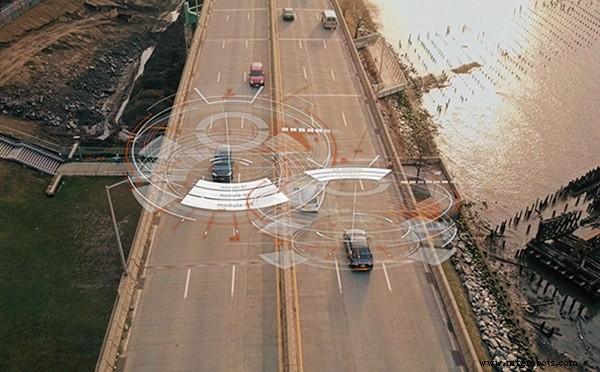
The Industrial Internet Consortium defines IIoT systems as: “The Internet of Things, machines, computers, and people, enabling intelligent industrial operations using advanced data analytics for transformational business outcomes.”
For a deeper dive, download RTI CEO Stan Schneider’s e‑book The Rise of the Robot Overlords. For a concise video overview, watch the IDG clip linked below.
IoT vs. IIoT: What’s the Difference?
The term “Internet of Things” was first coined by Kevin Ashton in 1999 during a presentation to Procter & Gamble. Early IoT work focused on consumer applications—think connected refrigerators that alert you when you’re low on eggs.
IoT is a superset of all connected applications, from wearables to home security systems to travel‑planning apps. It has disrupted industries across the spectrum, with a market size in the hundreds of billions of dollars. The consumer demand for convenience drives corporate interest in leveraging data for new growth opportunities.
IIoT, by contrast, is a specialized subset of IoT that targets industrial sectors such as transportation, manufacturing, energy, and agriculture. Because industrial applications involve higher levels of complexity, interoperability, and security, the technical requirements differ significantly from consumer IoT. While both domains face challenges, the stakes and risks are far greater for autonomous industrial systems.
Across the past few years, universities, companies, consortia, and standards bodies have collaborated to drive secure, scalable, and reliable IIoT solutions.
Industrie 4.0 and IIoT
Industrie 4.0—launched by the German government under its “High‑Tech Strategy 2020”—promotes connected value chains where machines and processes automatically integrate into cyber‑physical systems. The goal is to increase manufacturing value and reduce waste through advanced technologies.
While early discussions sought to distinguish Industrie 4.0 from IIoT, the consensus today is that they share more similarities than differences. Both terms describe the convergence of machines, devices, and analytics to boost productivity and outcomes.
Top IIoT Industries and Applications
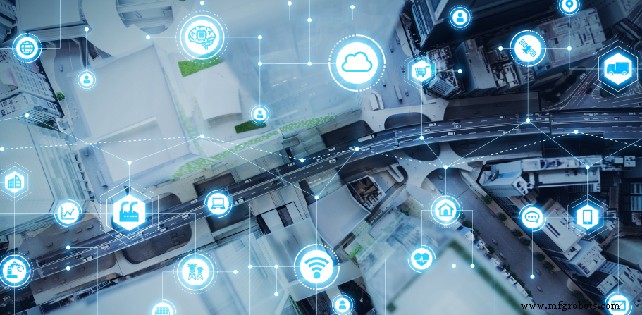
IIoT applications are pervasive across nearly every industry:
- Aerospace – airports, airplanes, drones, and unmanned aircraft
- Agriculture – precision farming and livestock monitoring
- Automotive – connected, semi‑autonomous, and autonomous vehicles
- Energy – smart grids, distributed energy resources, and renewables
- Healthcare – connected medical devices, robotic surgery, and imaging
- Manufacturing – connected factories and digital twins
- Military – simulation, training, and autonomous operations
- Oil & Gas – exploration, refining, and pipeline monitoring
- Smart Cities – citizen services, parking, and infrastructure
- Transportation – buses, subways, trains, and emerging Hyperloop
Cross‑industry use cases include autonomous systems, communications networks, robotics, drones, and haptic interfaces.
How IIoT Works?
A typical IIoT system shares data across multiple devices and networks—from edge sensors to centralized cloud analytics. Managing the sheer volume of data while meeting stringent safety and security requirements is challenging. The Industrial Internet Consortium’s databus architecture addresses this by managing real‑time data in motion, enabling devices to communicate through shared, filtered data objects rather than exchanging messages.
For more on the databus, visit RTI’s dedicated webpage.
IIoT Connectivity

Connectivity is the backbone of data‑dense IIoT applications. The Industrial Internet Connectivity Framework (IICF) maps and clarifies the fragmented landscape of connectivity solutions, recommending a reference architecture that unlocks data in isolated systems and accelerates new application development across industries.
IICF promotes gateway‑based integration with core connectivity standards, preserving the fidelity of domain‑specific technologies while providing syntactic interoperability.
IIoT for Engineers, Developers and Architects
IIoT is not just a technology upgrade—it rewrites vendor relationships, redefines profitability, and transforms delivery models. Engineers and architects must design systems that can operate flawlessly in uncertain environments and scale for decades. The Industrial Internet Reference Architecture (IIRA), first published in 2015 and updated in 2019, offers a standards‑based framework for creating future‑proof IIoT solutions.
DDS in IIoT Systems
The Object Management Group’s Data Distribution Service (DDS) is a middleware standard designed for complex, distributed systems. Its data‑centric architecture is ideal for implementing a layered databus in IIoT. DDS powers thousands of applications—from undersea robotics to NASA’s space launches—providing extreme reliability, scalability, and contextual data integrity.
DDS has open interfaces and is adopted by standards across automotive (AUTOSAR Adaptive), avionics (FACE), grid modernization (OpenFMB), and medical (OpenICE, MD PnP). It is also a core connectivity standard of the Industrial Internet Consortium.
The ROI of IIoT
Internet of Things Technology
- Fog Computing: The Future of Industrial IoT for Real‑Time, Reliable Operations
- Revolutionizing Industrial IoT Connectivity: DDS Architecture That Cuts Costs & Boosts Reliability
- How the Internet of Things Is Reshaping Businesses: A Dual Perspective
- Industrial IoT Platform (IIoT): Transforming Manufacturing with IXON Cloud
- Internet of Things Explained: A Product Manager’s Guide
- Monitoring the Internet of Things: Ensuring Secure, Reliable IoT Networks
- Industrial IoT & Smart Pneumatics: Accelerating Predictive Maintenance in Manufacturing
- Securing Industrial IoT: Practical Strategies for Cyber‑Physical Systems
- 3 Key Obstacles to Successful Industrial IoT Implementation
- The Ultimate IIoT Handbook: Strategies, Use Cases, and Success Tips