



How the Internet of Things Is Reshaping Businesses: A Dual Perspective
Across sectors—from start‑ups to telecom operators, established manufacturers to software giants—the Internet of Things (IoT) is redefining business models, culture, and technology. As I watched the evolution from 2009 onward, I recognized that the IoT speaks to two distinct audiences: the “things” companies that build physical devices, and the “internet” companies that provide connectivity and services.
Simply connecting a fan to the internet adds no real value. The true benefit emerges when that connection delivers a tangible service—whether it’s predictive maintenance, remote monitoring, or a new customer experience that supports sustainable development and climate action.
The Key Insight: Data Volume and Velocity Matter Differently
One of our earliest lessons was that data collection is not a one‑size‑fits‑all problem. Questions such as “Do we capture data in milliseconds, months, or years?” and “Is a few bytes enough or do we need petabytes?” dictate entirely different architectural choices. For instance, a fleet of connected vehicles may need to log all telemetry initially, while a video‑streaming application must filter locally to avoid transmitting redundant frames. Each scenario demands its own protocols, databases, and service buses.
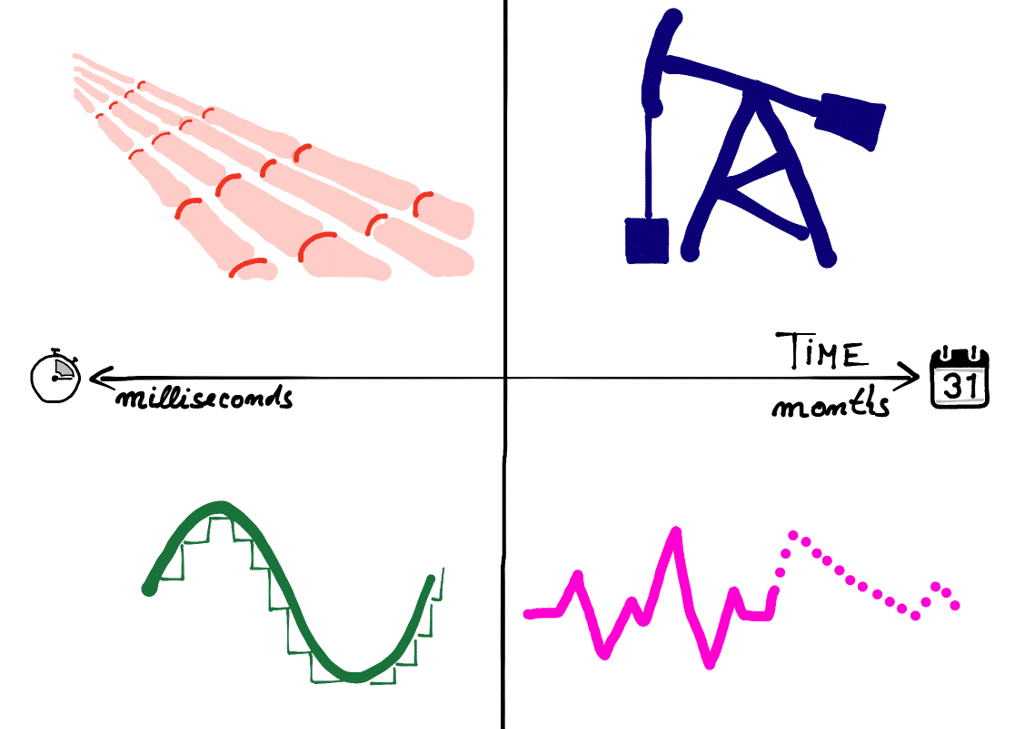
Source: Stefan Ferber
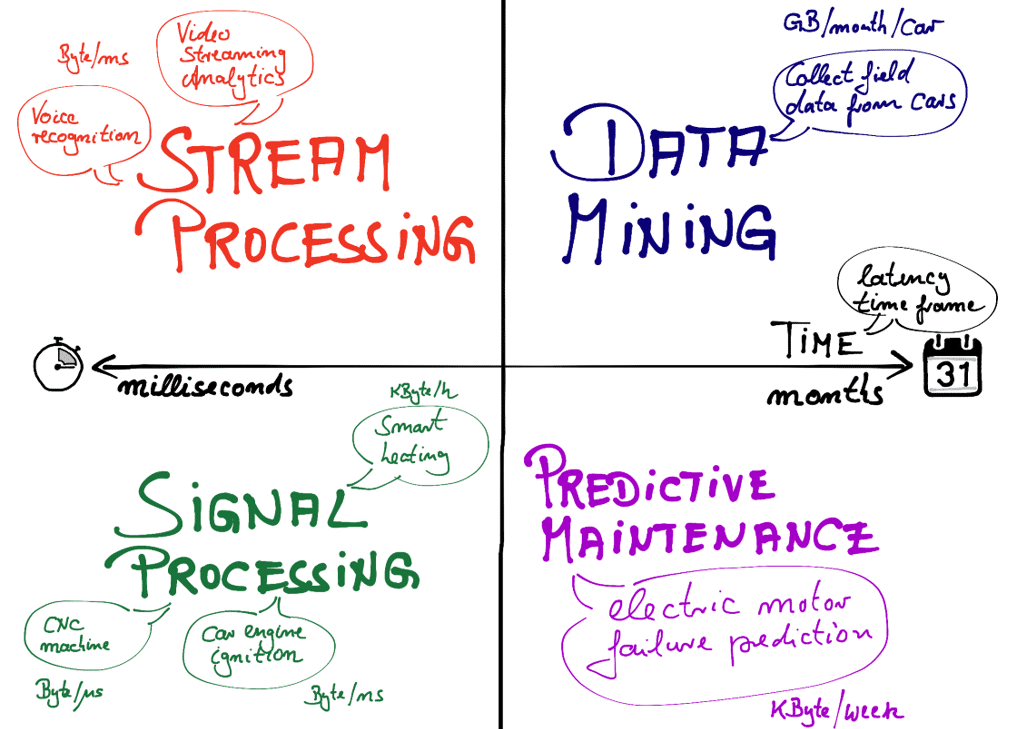
Source: Stefan Ferber
Connectivity Patterns Have Evolved
In the 1970s, Machine‑to‑Machine (M2M) connections relied on VPNs to corporate IT, limiting scalability and multi‑tenant support. Consumer electronics introduced the smart remote control pattern—Wi‑Fi or Bluetooth links that let a smartphone act as a controller, but this one‑to‑one model struggles with multi‑user data sharing.
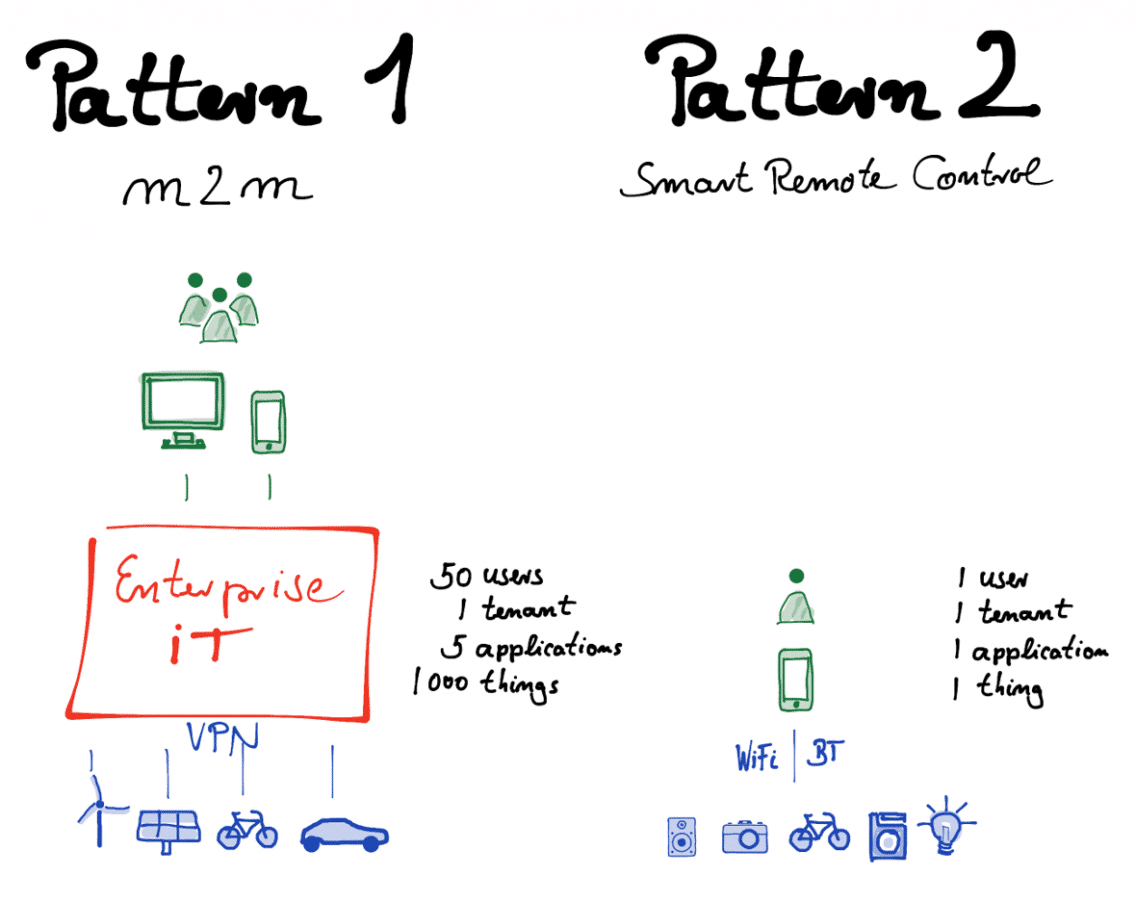
Source: Stefan Ferber
IoT Gateways: Bridging Local and Cloud Worlds
Smart home technology exemplifies the third connectivity pattern: a central gateway that translates local protocols, aggregates data, and scales to the cloud. Gateways offer independent operation when connectivity drops, reduce bandwidth costs, and enable local data processing for privacy compliance. Yet, many users juggle multiple gateways—one for home, one for car, another for appliances—highlighting the need for unified platforms.
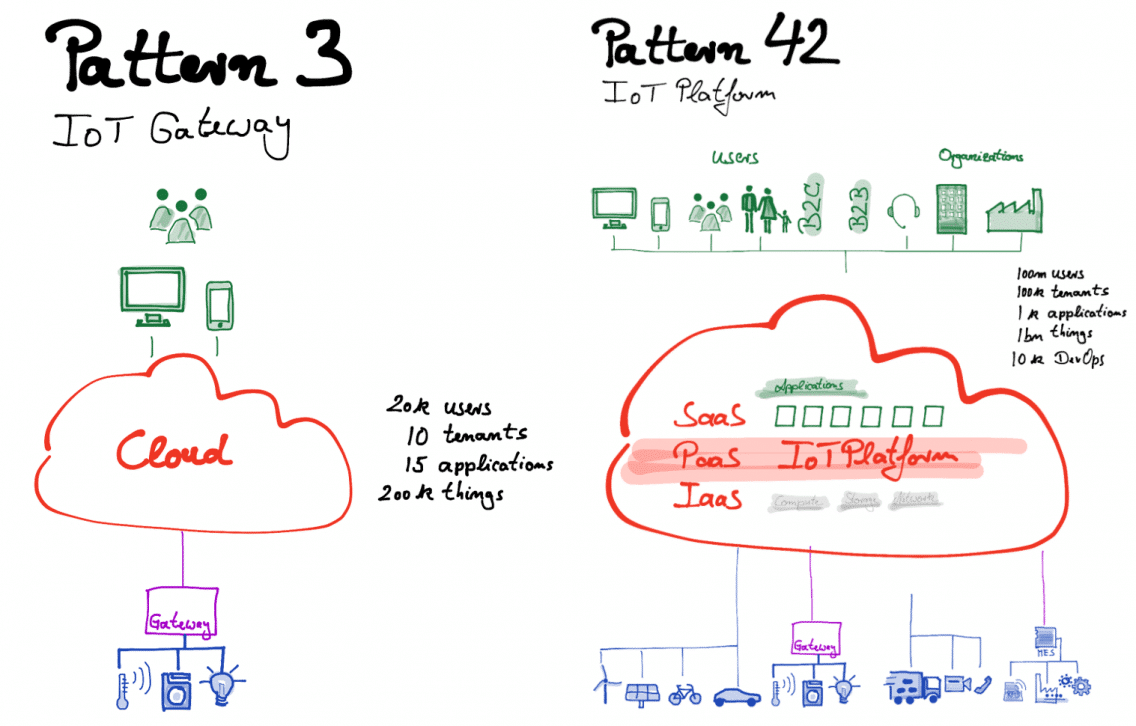
Source: Stefan Ferber
IoT as an Open Platform: The “Pattern 42” Solution
To unlock IoT’s full potential, all devices should expose semantic interfaces to a shared platform. This approach invites thousands of developers to create interoperable applications, avoiding siloed, vertical solutions. Achieving this requires open‑source ecosystems, industry standards, and collaboration across corporate, governmental, and community stakeholders.
What’s Different for Internet and Things Companies?
- Internet Companies: Originally built for openness and interoperability, the internet now faces heightened demands for reliability, security, and privacy. Transforming it into a trust‑worthy infrastructure for real‑world IoT applications necessitates a cultural shift toward long‑term service delivery and rigorous liability frameworks.
- Things Companies: Adapting to the “always‑on” expectations of internet customers requires new business models—recurring revenue, subscriptions, or premium services. Continuous customer feedback loops and a developer‑centric mindset are essential; by 2020, the ecosystem will need roughly five million IoT developers, a scale no single company can achieve alone.
Internet of Things Technology
- Industrial Internet of Things (IIoT): What It Is, Why It Matters, and How It Drives Industrial Transformation
- What Drives IoT Practitioners? Insights from Industry Leaders
- IoT Essentials: A 2015 Reference Guide for Professionals
- Harnessing Data in the Internet of Reliability: Strategies for Effective Management
- Internet of Things Explained: A Product Manager’s Guide
- Monitoring the Internet of Things: Ensuring Secure, Reliable IoT Networks
- Hyperconvergence and IoT: Unlocking Edge Computing Power (Part 1)
- How Artificial Intelligence Amplifies the Power of the Internet of Things
- IoT: Mastering the Data Surge for Business Transformation
- Industrial IoT & Smart Pneumatics: Accelerating Predictive Maintenance in Manufacturing