



Revolutionize Maintenance with IoT: Predictive Analytics, Real‑Time Data, and Smarter Inventory
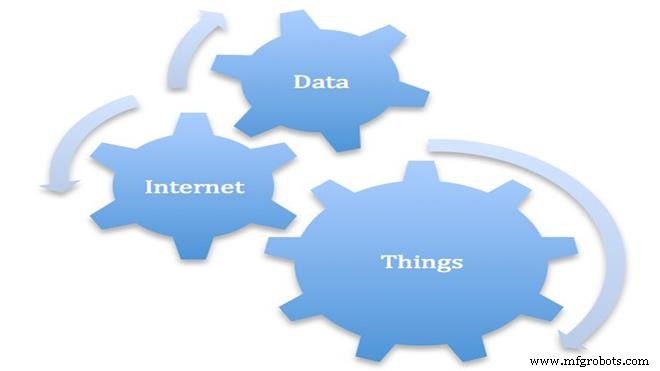
The Internet of Things (IoT) is no longer a buzzword; it’s the next industrial leap that connects everyday equipment to the internet, enabling real‑time monitoring and intelligent decision‑making. According to Gartner, nearly 26 billion devices were projected to be IoT‑enabled by 2020—an expansion driven by faster, more reliable wireless networks that eliminate the need for fixed‑line connections.
IoT is reshaping maintenance by shifting from reactive, calendar‑based checks to predictive strategies that detect impending failures before they occur. This proactive approach reduces downtime, cuts parts and labor costs, and extends equipment life.
Below are seven key ways IoT enhances asset management, delivering measurable ROI for any organization.
1. Predictive Maintenance Adoption
IoT sensors continuously monitor equipment conditions, automatically triggering work orders when performance deviates from safe limits. This means maintenance is performed only when necessary, eliminating unnecessary replacements and labor.
2. Real‑Time Data Analysis
Machine‑to‑machine (M2M) communication, amplified by IoT, aggregates data across a virtual network. OEMs can analyze this data to build precise predictive models, allowing them to anticipate failures and design more reliable products—leading to higher customer satisfaction and fewer warranty claims.
3. Precise Performance Metrics
Automated calculations of key reliability metrics—availability, MTBF, MTTR—feed directly into dashboards, removing manual data capture errors. Cross‑site comparisons reveal best practices and inform global strategy.
4. Seamless Software Updates
Connected machinery can receive firmware or software patches over the air, ensuring all units run the latest, most efficient code without onsite technician intervention.
5. Intelligent Repair Guidance
When an asset fails, cloud‑based analytics combine real‑time sensor data, CMMS history, and wear patterns to recommend the optimal repair path and spare parts, enabling technicians to resolve issues faster and more accurately.
6. Optimized Parts and Inventory Control
IoT‑enabled stockrooms track inventory in real time, ensuring sites maintain only necessary spare parts. Predictive insights help vendors fine‑tune spare lists, freeing capital and improving service levels.
7. Remote Asset Management
IoT transforms service of geographically dispersed equipment—wind farms, substations, pumps—by generating work orders and spare lists automatically, drastically reducing mean time to repair and emergency repair costs.
For businesses, the value of IoT emerges when it seamlessly integrates with CMMS and other enterprise systems. OEMs, too, can redefine their business models by bundling hardware, data analytics, and software services, delivering ongoing reliability improvements and cost savings.
Ultimately, a holistic IoT strategy—leveraging cloud networks, real‑time data, and predictive analytics—provides the intelligence needed to preempt failures, keep systems online, and drive substantial cost reductions. The transition to an IoT‑driven organization may take time, but the benefits are undeniable, and the time to act is now.
Internet of Things Technology
- How the Internet of Things Is Reshaping Businesses: A Dual Perspective
- Connecting 10 Million Devices: Bosch IoT Suite’s Landmark Growth
- IoT Essentials: A 2015 Reference Guide for Professionals
- Link Labs Explores IoT Innovations in Businessweek Interview
- Revolutionizing Cardiac Care with IoMT: Continuous Monitoring for Better Outcomes
- Monitoring the Internet of Things: Ensuring Secure, Reliable IoT Networks
- How IoT Can Transform Your Supply Chain: Five Proven Strategies
- Revolutionizing Education: Leveraging IoT to Enhance Learning and Teaching
- Transforming Hospitality: How IoT Drives Guest Experience and Operational Excellence
- Leveraging PLM Software to Drive Industrial IoT Adoption